Events
Past Events
High-Impact Panel on the Future of U.S. GCCs at Bengaluru Tech Summit 2025
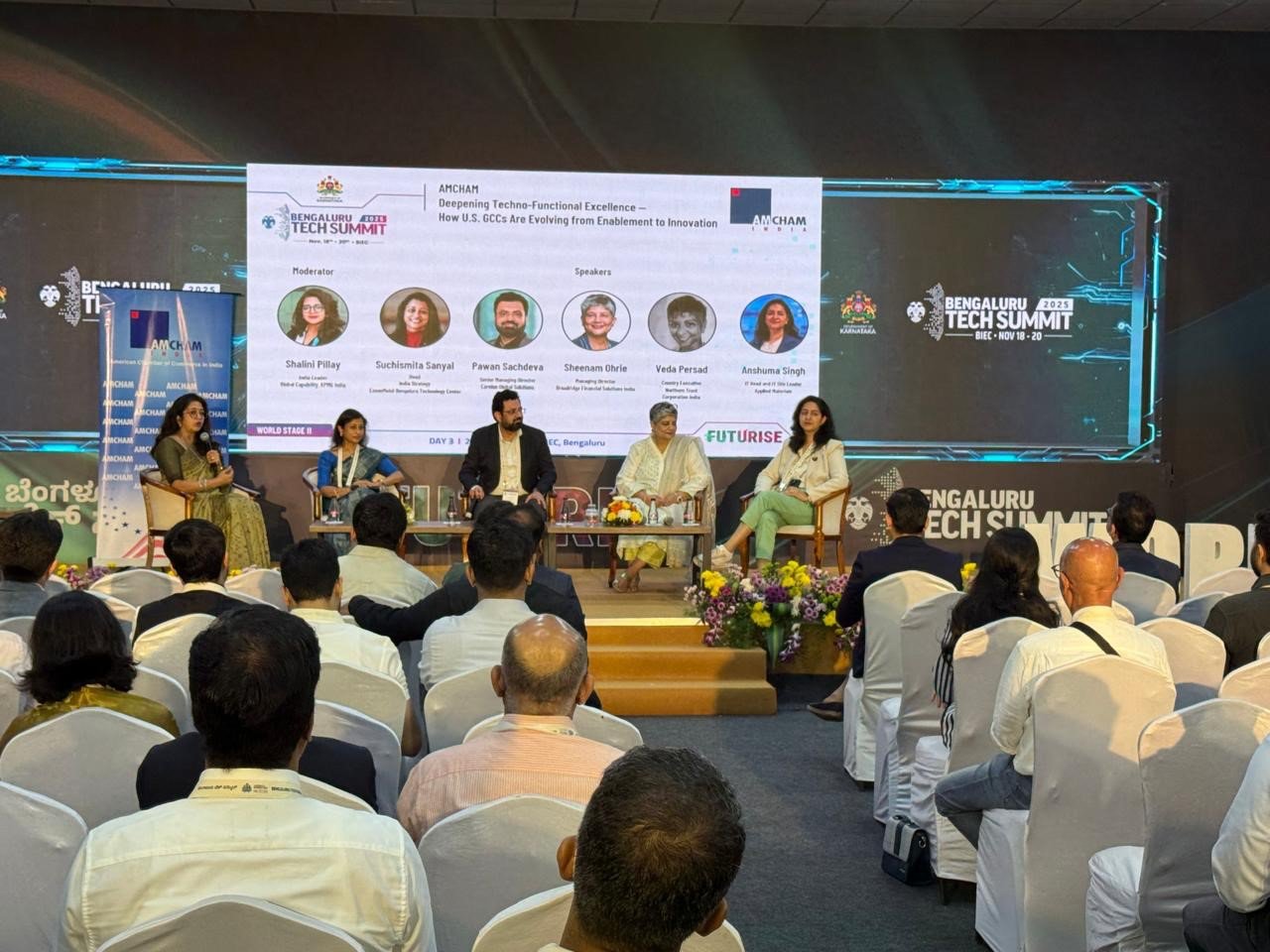
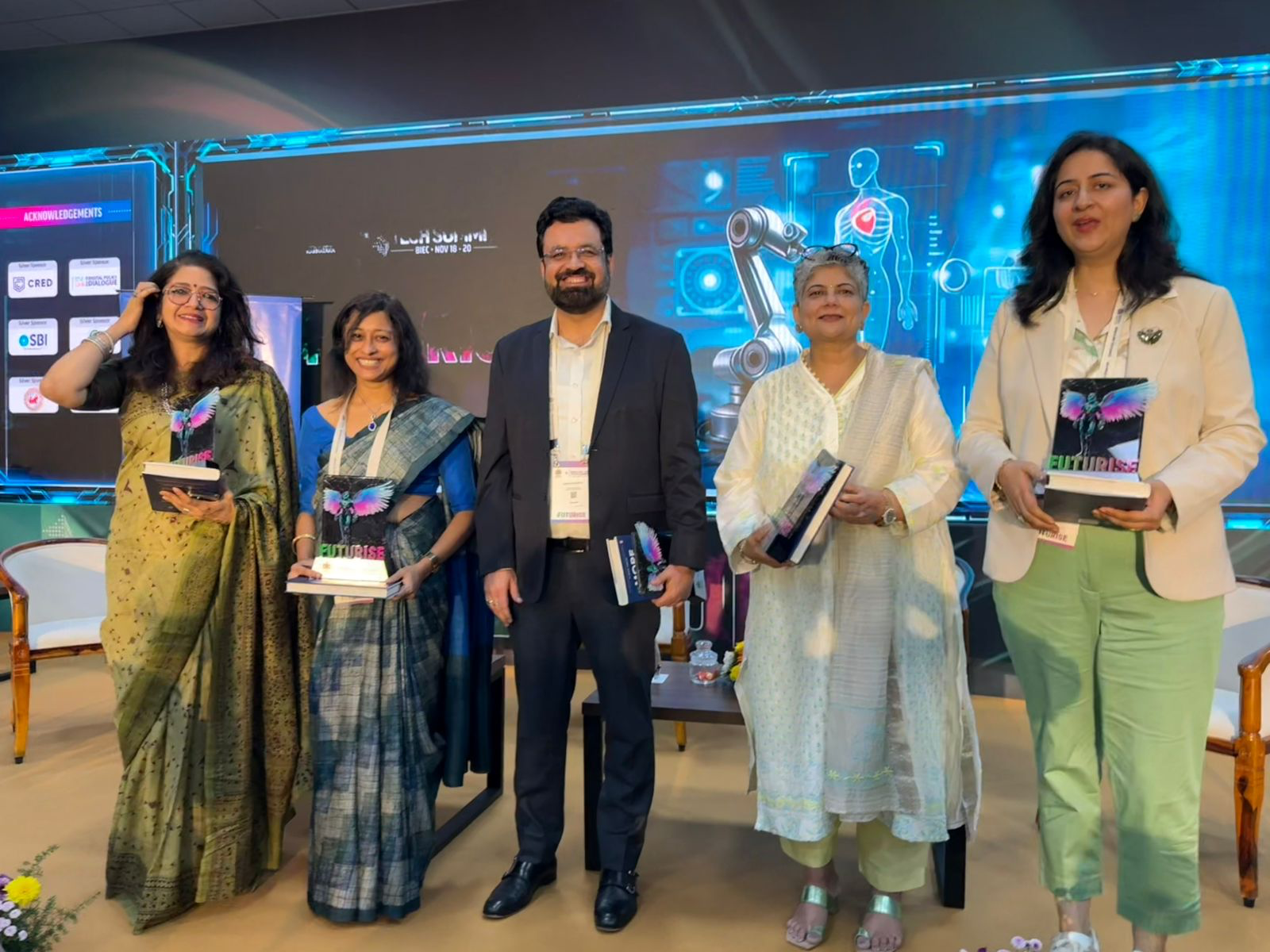
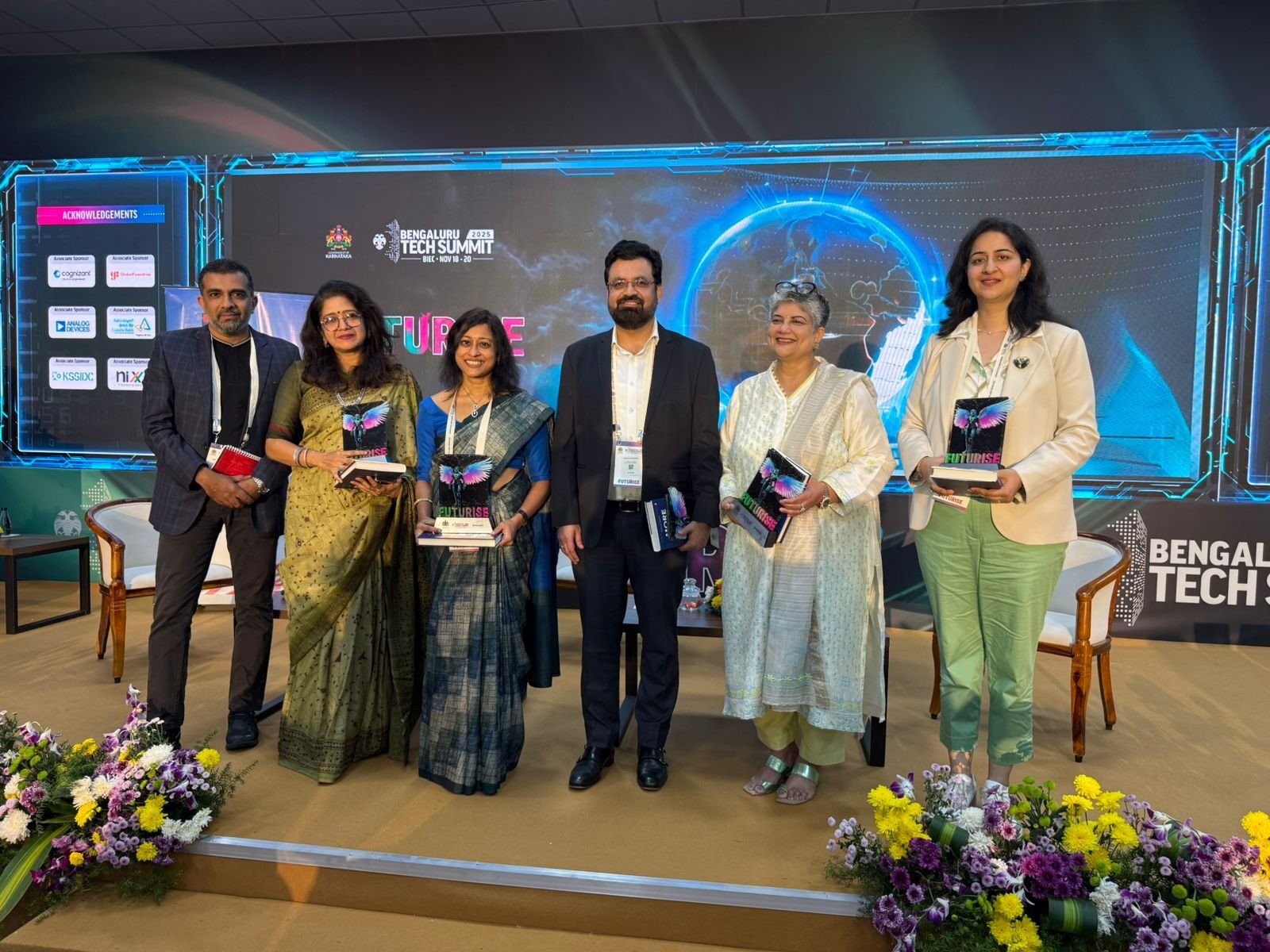
AMCHAM curated a high-impact cross-industry panel of senior leaders from U.S. industry at the Bengaluru Tech Summit (BTS) 2025 on November 20th at the Bangalore International Exhibition Centre. The session titled ‘Deepening Techno-Functional Excellence — How U.S. GCCs are Evolving from Enablement to Innovation’ featured a distinguished panel comprising Ms. Shalini Pillay, India Leader – Global Capability, KPMG India (moderator), Ms. Suchismita Sanyal, Head – India Strategy, ExxonMobil Bengaluru Technology Center, Mr. Pawan Sachdeva, Senior Managing Director, Carelon Global Solutions, Ms. Sheenam Ohrie, Managing Director, Broadridge Financial Solutions India, and Ms. Anshuma Singh, IT Head and IT Site leader, Applied Materials India.
The discussion explored how U.S. global capability centers (GCCs) in India are rapidly transitioning from cost-driven enablement models to becoming strategic innovation hubs. Speakers underscored the growing emphasis on combining domain expertise with technological fluency to deliver high-value outcomes. They highlighted real-world examples such as the use of AI to enhance production processes, support sustainability goals, accelerate R&D, strengthen digital infrastructure, and drive faster decision-making. The conversation also examined India’s expanding fintech ecosystem — reinforced by over 380 billion annual digital transactions — and the rising importance of blockchain and distributed ledger technologies. Additionally, the panel noted the significant increase in patents being filed from India, reflecting the country’s deepening innovation capabilities.
A key theme was the need to cultivate a techno-functional mindset within GCC teams by investing in domain knowledge, customer understanding, and end-to-end product expertise. Panelists emphasized that India’s talent pool can be effectively leveraged across sectors, and that leadership roles in specialized domains need not be restricted to traditional degree backgrounds as long as strong functional knowledge is present. They also stressed the importance of cross-cultural collaboration, with U.S. companies increasingly focusing on culture training to build cohesive global teams.
The session emphasized that GCCs in India are not only supporting, but also increasingly shaping global transformation within their parent organizations. To accelerate this progress, companies must develop strong ecosystems involving academia, customers, and start-ups, build AI-ready infrastructure, and strengthen emerging skills such as prompt engineering. In discussing the true meaning of innovation, panelists pointed to customer-centricity, cyber security, time-to-market, and product reliability — affirming that while rapid innovation is essential, it must always be balanced with robust, high-quality product development. The session concluded with a spirited and engaging Q&A, where participants sought deeper insights on innovation pathways, the future of AI adoption, and the evolving role of Indian GCCs in shaping global organizational strategy. The enthusiastic audience interaction further highlighted the significance of the topic and the value of the perspectives shared by the panel.