Events
Past Events
GCC Summit 6.0: Next Gen GCCs: Architecting the Future of Global Enterprises
AMCHAM’s GCC Committee organized the sixth edition of its annual flagship program, GCC Summit, on March 13 th in Hyderabad themed ‘Next Gen GCCs: Architecting the Future of Global Enterprises.’ GCCs are no longer just operational hubs, they have become strategic engines powering transformation, innovation, and enterprise-wide value.
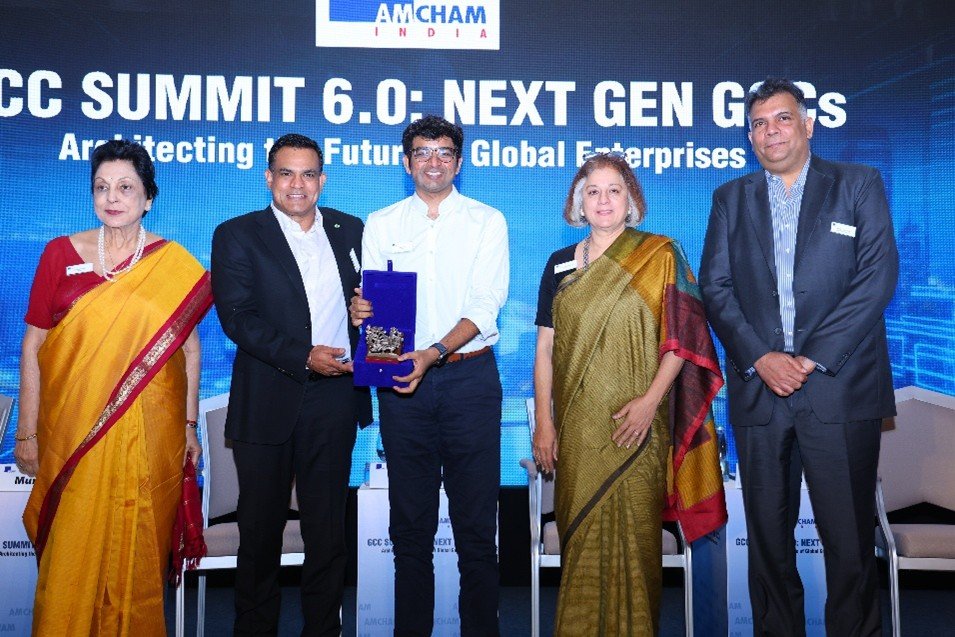
In the inaugural session, Ms. Ranjana Khanna, Director General CEO, AMCHAM delivered the welcome remarks highlighting the GCC landscape in India, rise of Hyderabad as a preferred GCC destination and the key asks from policy makers. Mr. Murali Krishna, Co-Chairman – Hyderabad Chapter, AMCHAM and Chief Global Officer and Country Head – India, Providence, in his opening remarks spoke about the efforts being executed at all levels to make Hyderabad the preferred hub for GCCs. He credited the thriving ecosystem to infrastructure, talent, technology and sharing of best practices. He emphasized the huge role AI has played in the success. Ms. Uma Ratnam Krishnan, Chairperson – GCC Committee, AMCHAM and Managing Director, Optum India, while setting the scene outlined the context and objectives of the program. She highlighted how the GCC ecosystem sits at the core of global enterprises and how cross-country learnings allow transfer of knowledge. A pertinent point about shifting global leadership roles to India and their strategic importance in drafting policies, entrusting leaders, and creating tangible impact was also discussed. Ms. Krishnan called out that the future of GCCs will be based on capability densities or intelligent densities. The keynote address was delivered by Mr. Kavikrut, CEO, T-Hub who spoke about how Hyderabad has been able to attract a GCC every week, attributing to two major drivers – significant ease of being in Hyderabad, enabling them to be ahead of the curve including infrastructure and the abundant talent availability especially with the presence of all reputed educational institutions. He credited the massive innovation ecosystem which is constantly shaping the entire value chain. The inaugural session concluded with a vote of thanks from Mr. Nanda K. Lakkaraju, Co-Chairperson – GCC Committee, AMCHAM and Managing Director, Carrier Technologies India Limited.
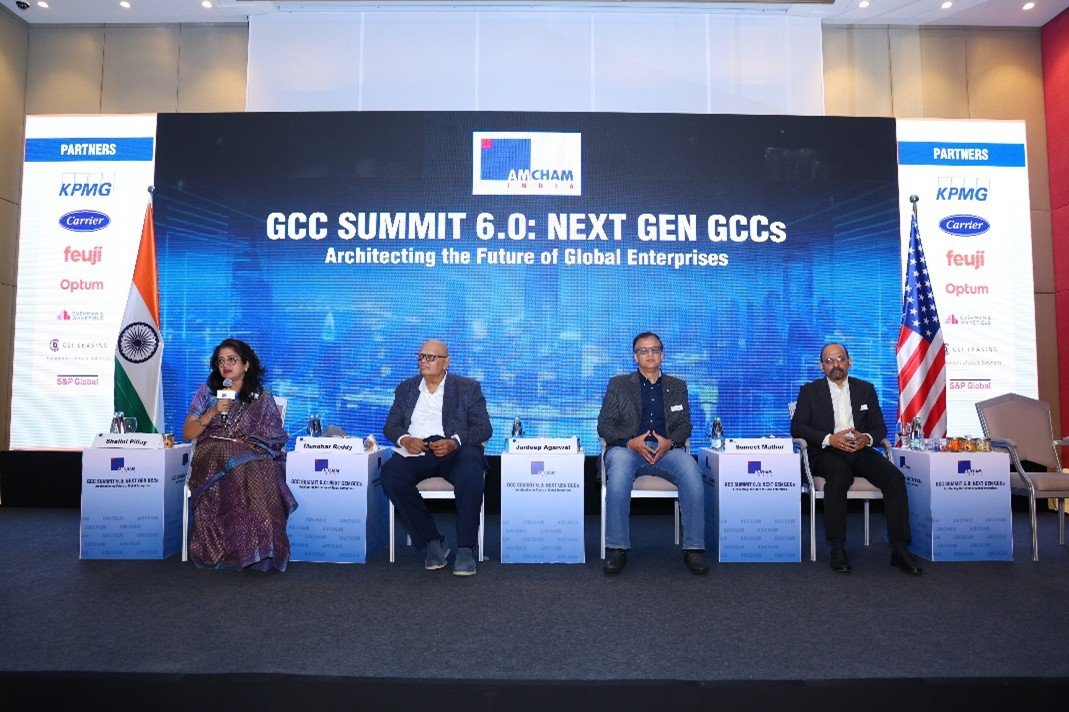
The opening panel on ‘Enabling & Transforming at the Core: What Making Real Strategic Impact Looks Like’ featured Mr. Manohar Reddy, Founder & CEO, Feuji, Mr. Sumeet Mathur, SVP & Managing Director, ServiceNow India Technology & Business Centre, Mr. Jaideep Agarwal, India Global Business Services (GBS) Leader, Warner Bros. Discovery and was moderated by Ms. Shalini Pillay, India Leader – Global Capability Centers, KPMG in India. The session explored how global capability centers evolved from execution units into strategic partners driving growth, innovation, and competitive advantage. It examined what “strategic impact” meant, the capabilities that differentiated high-performing GCCs, and how leaders earned a seat at the strategy table. The discussion covered GCC evolution and maturity, defined the organizational “core,” shared tangible transformation examples, highlighted key capabilities, and reflected on future opportunities amid technological and global changes.
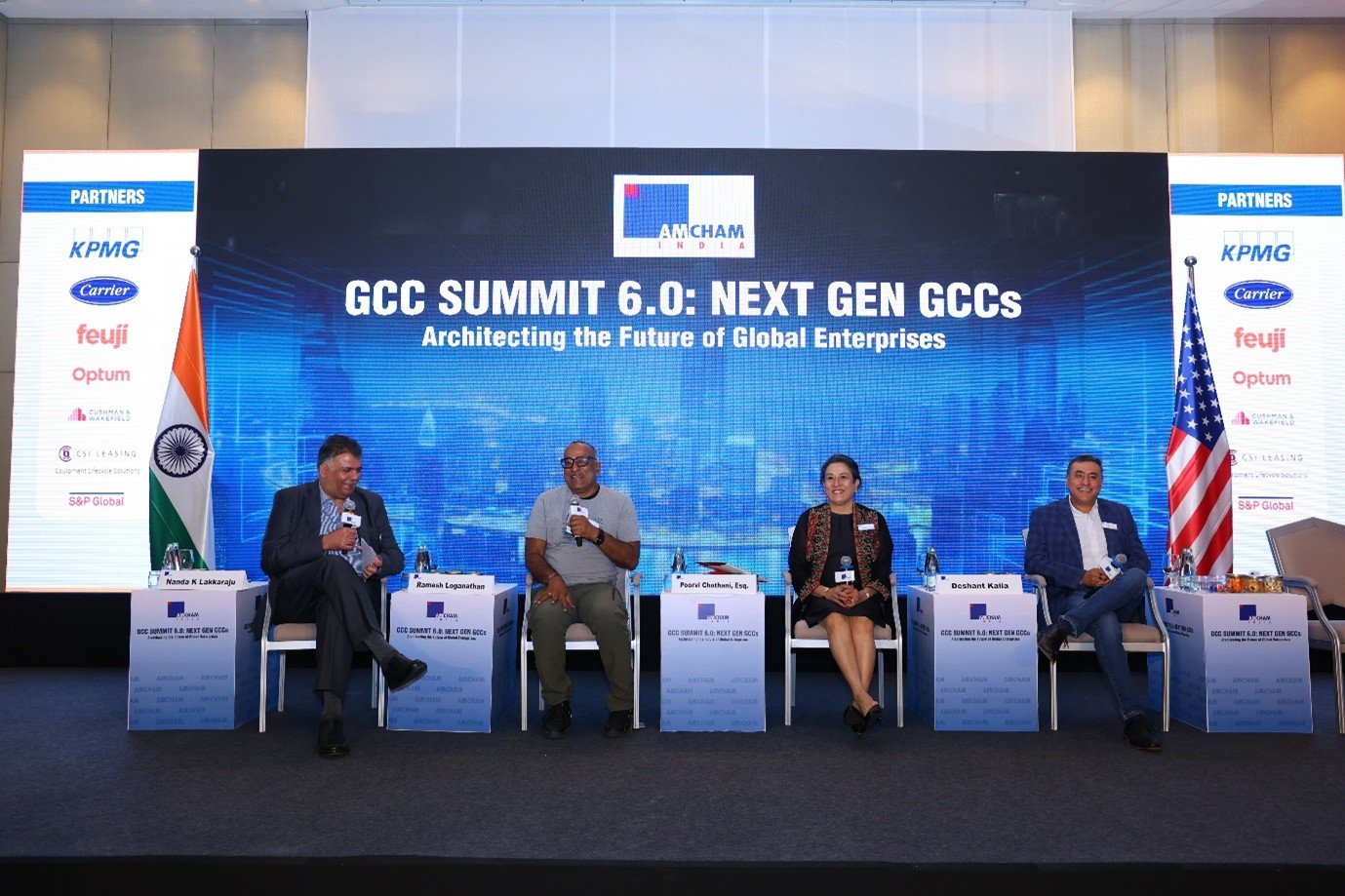
The second panel, ‘Rethinking Talent Strategy: Powering Future-Ready GCCs from India’ was moderated by Mr. Nanda K. Lakkaraju, Co-Chairperson – GCC Committee, AMCHAM and Managing Director, Carrier Technologies India Limited with Mr. Ramesh Loganathan, Professor and Head of Research/Innovation Outreach, IIIT Hyderabad, Ms. Poorvi Chothani, Managing Partner, LawQuest & LawQuest Global, and Mr. Deshant Kaila, Head GBS Operations, McDonald’s. The panel discussed rethinking talent strategy beyond AI, focusing on how GCCs shifted from headcount and cost efficiency to capability-driven value creation. It highlighted the need to build deeper domain expertise, prepare leaders for global roles, and define value through impact rather than scale. The conversation emphasized evolving learning and development as a continuous, leadership-driven effort combining technical and soft skills. It also explored enhancing employee experience, strengthening ecosystems, and building leadership pipelines through culture, mobility, and partnerships. The session examined how AI accelerated changes in talent strategy—impacting hiring, development, and retention—require GCCs to adapt quickly to drive global impact.
‘Securing the Shift: Cyber Risk Management in an Expanding GCC Footprint’ was the third panel featuring Mr. Sourav Chanda, Cybersecurity Platform Engineering and India Lead, American Airlines, Ms. Megan McCabe, Chief Security Officer, Vanguard India, and Mr. Mubin Shaikh, Partner – Cybersecurity – Technology Consulting, EY LLP as moderator. The session showed that GCCs have become central to global operations, making cyber risk globally impactful. It highlighted rising risks from expansion and the need for strong governance and clear ownership. Panelists discussed building core cyber capabilities, scaling maturity, managing third-party risk, and adopting practical zero trust, with AI increasingly shaping decisions. It concluded that cyber security had become mission-critical for trust, resilience, and uninterrupted operations.
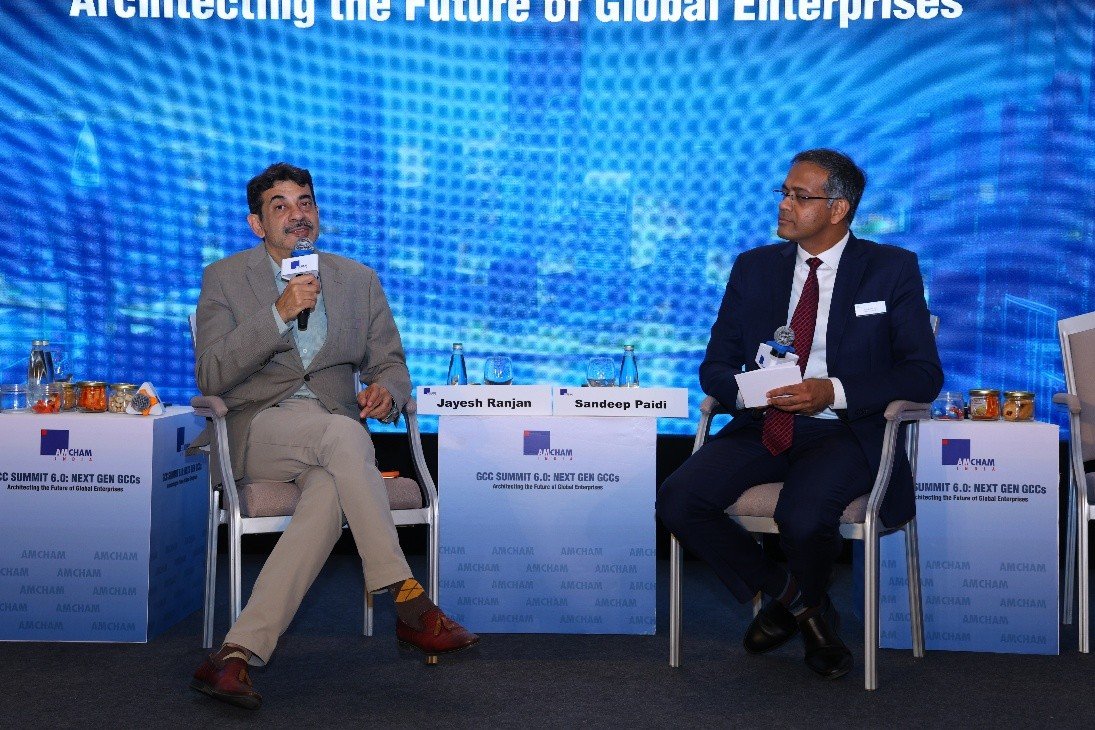
The fireside chat on ‘Hyderabad 2030: The Future of Work and Innovation’ with Mr. Jayesh Ranjan, IAS, Special Chief Secretary for Metropolitan Area and Urban Development, and Youth Advancement, Tourism, Culture and Sports, Government of Telangana was conducted by Mr. Sandeep Paidi, Office Managing Partner – Hyderabad, KPMG in India. Their discussion focussed on India’s GCC ecosystem reaching a structural inflection point, expanding to over 1,900 centers and 2 million professionals while evolving into strategic hubs for innovation, global mandates, and enterprise transformation. Mr. Ranjan also highlighted how Hyderabad has emerged as a major growth engine, attracting significant greenfield investments and advancing capabilities in AI, engineering, and data-driven functions. GCCs shifted from execution-focused roles to intelligence-led, strategic contributions, supported by strong collaboration across government, industry, and academia. The discussion accentuated Telangana’s multi-city expansion strategy, enabling distributed and resilient operations through infrastructure, policy support, and talent development. It also highlighted Hyderabad’s evolution into a leading innovation and product engineering hub, with emphasis on sustaining growth through continued focus on urban planning, innovation, and talent to reinforce India’s position as a global enterprise leadership center.
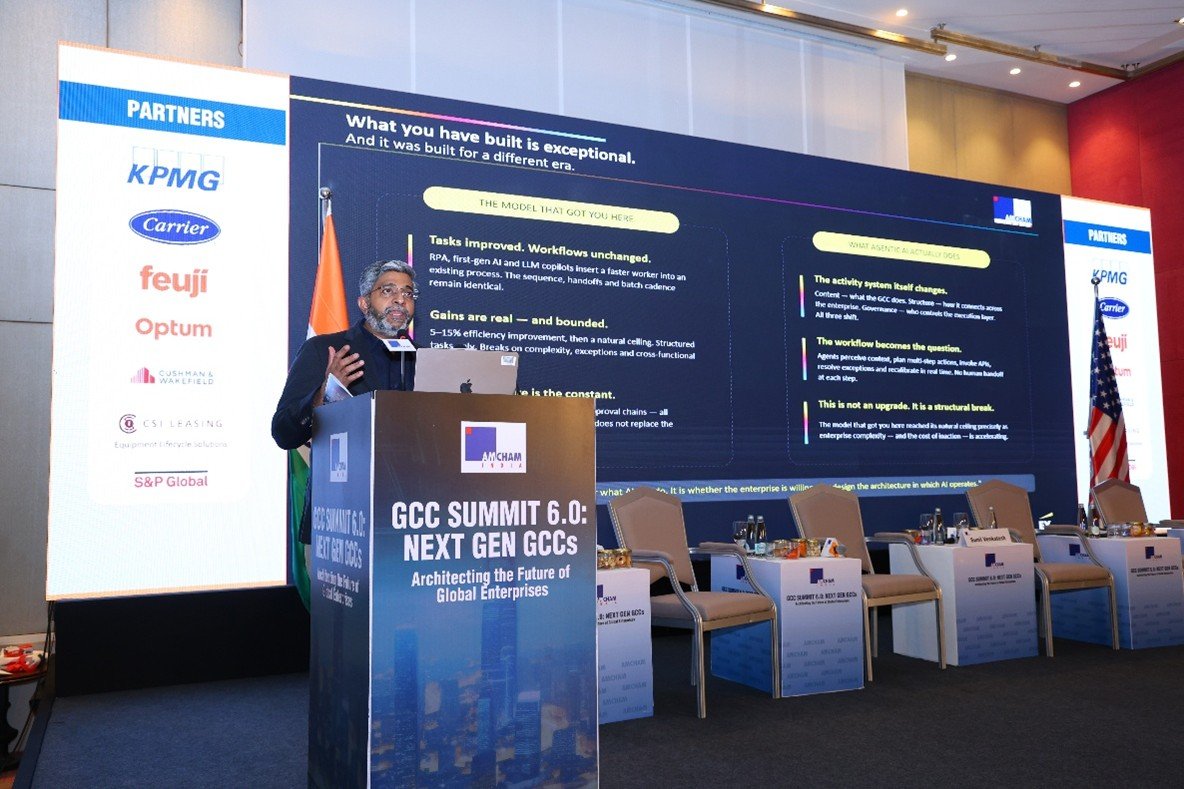
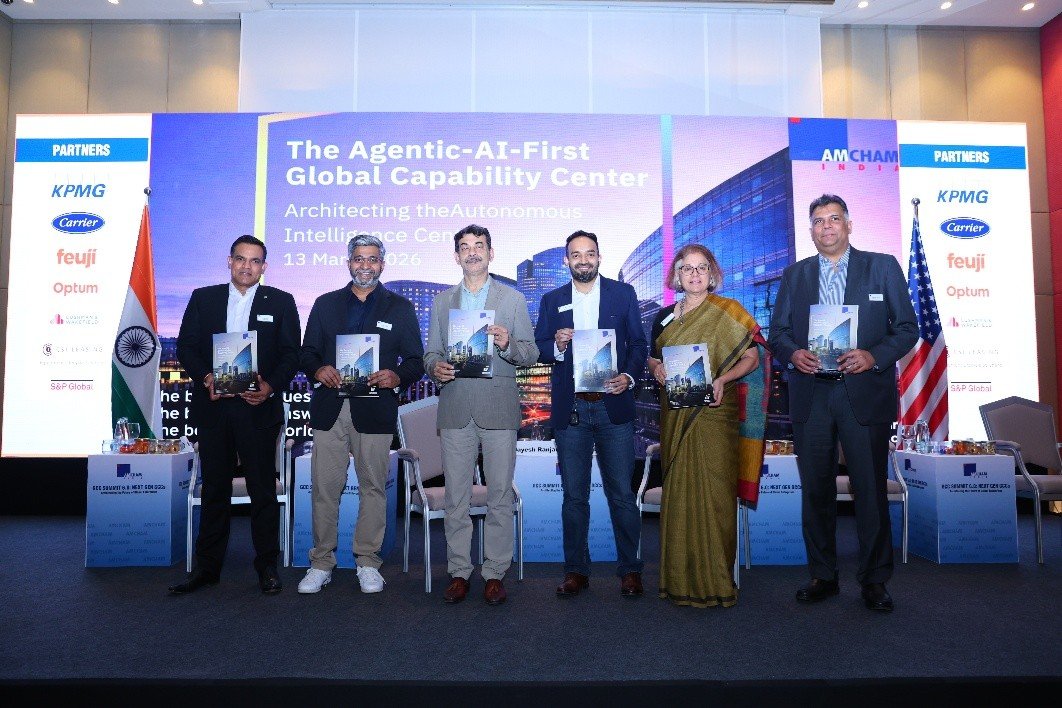
AMCHAM, in collaboration with EY, released the knowledge paper ‘The Agentic AI-First Global Capability Center’ which explores how the next generation of global capability centers are evolving into AI-first, intelligence-driven hubs that are transforming enterprise operations and creating strategic global impact. With the rise of generative AI and autonomous agents, enterprises must move beyond incremental automation and redesign core activity systems and operating models around AI. Future GCCs will embed AI as a structural execution layer, reorganize processes around orchestration rather than hierarchy, and shift human roles toward oversight and augmentation. This transformation can deliver significant economic value but depends on factors such as technology readiness, innovation culture, and investment in transformation. The paper was released by Mr. Jayesh Ranjan, IAS, Special Chief Secretary, Metropolitan Area and Urban Development Department and Youth Advancement, Tourism, Culture and Sports Department, Government of Telangana. Mr. Sunil Venkatesh, Partner – Technology Consulting and Hyderabad GCC Sector Lead, EY India, presented key insights.
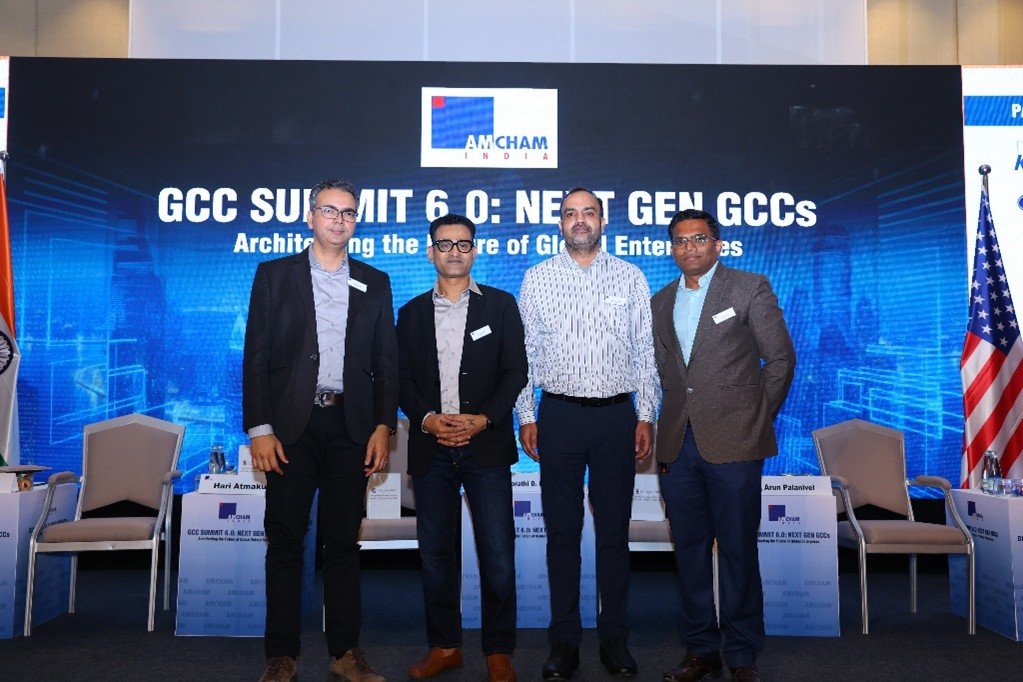
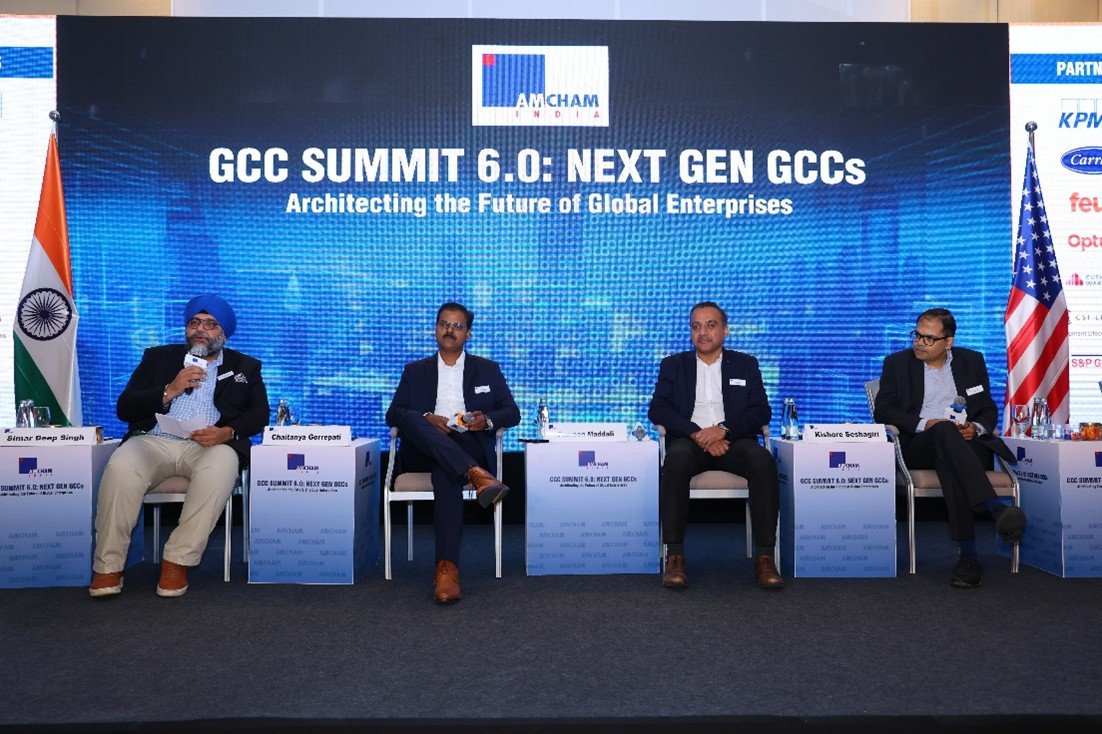
There were two focus sessions around fintech and healthcare. The first panel, ‘From Capability to Capital: GCCs Powering Growth Through Fintech’ featured speakers Mr. Kishore Seshagiri, Chief Digital Officer, Broadridge India, Mr. Chaitanya Gorrepati, Managing Director, D.E. Shaw Group, Mr. Praveen Maddali, Senior Director, EDO, S&P Global, and Mr. Simar Deep Singh, Partner and National Leader for Financial Services GCC, KPMG in India, as moderator. The session examined how GCCs used digital platforms, AI, and fintech talent to drive innovation and global impact. It highlighted their shift into strategic value creators, their role in scaling digital platforms, and the growing importance of AI and data. It also addressed fintech disruption, ecosystem partnerships, and the rise of GCCs as hubs for talent and leadership. The second panel, ‘Building the Digital Backbone of Global Healthcare: Innovation, Intelligence & Impact,’ featured Mr. Arun Palanivel, Engineering Director, Medtronic India, Mr. Hari Atmakuri, Group Vice President – Engineering, Providence India, Dr. Harathi D. Srinivas, Director – Process Research, Schrödinger, Inc., and Mr. Saurabh Singh, Vice President and Country Leader – Government Affairs, Optum India, as moderator. The session explored how India-based GCCs built the digital backbone of global healthcare by connecting data, workflows, and decision-making to improve outcomes and scalability. It highlighted their evolution into innovation hubs shaping digital products, AI-led insights, and global platforms. Discussions focused on defining this backbone across care, operations, and analytics, ensuring responsible AI through strong governance and trust frameworks, and developing interdisciplinary talent to sustain future growth. The conversation underscored GCCs’ role in architecting global healthcare systems and driving long-term impact.
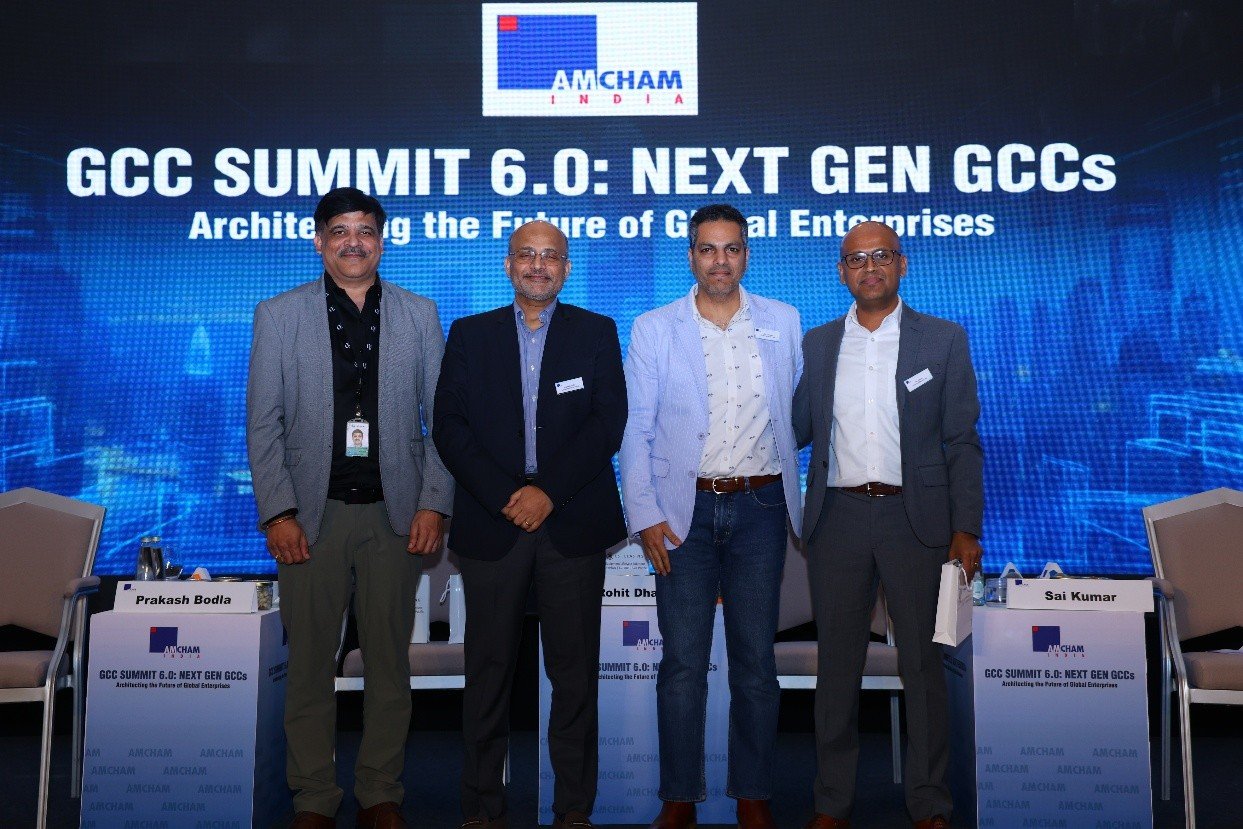
The last panel, ‘Enabling New Growth Hubs: The Next Wave of GCC Expansion’ wasmoderated by Mr. Sai Kumar, Executive Director and Head of Tenant Representation – Hyderabad, Cushman & Wakefield with Mr. Prakash Bodla, Founder & CEO, aAROHAN Consulting, Mr. Rohit Dhawan, Head – National Alliance, Vendor Programs & Equipment Lifecycle Services, CSI Leasing, Inc. and Mr. Sekhar Konidena, Vice President – Product and Services, Octave. The discussion examined why emerging hubs became strategically important, focusing on recent shifts driving expansion. It explored challenges in building mid-to-senior leadership, identified key ecosystem gaps, and emphasized the role of government partnerships and policy support. It also assessed which hubs were likely to succeed over the next five years and the factors that would drive their growth.
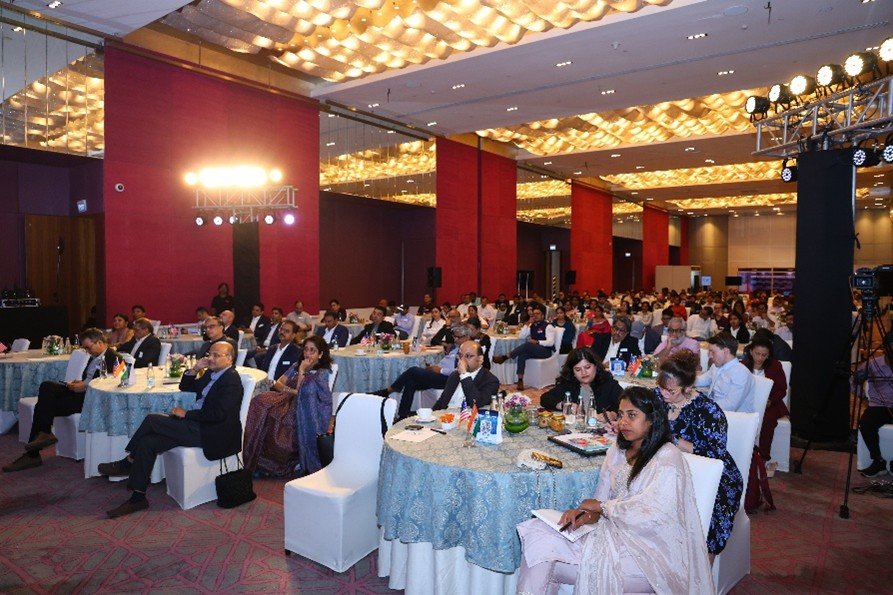
A record breaking 200+ members participated. The program was supported by KPMG, Carrier, Feuji, Optum, Cushman & Wakefield, CSI Leasing and S&P Global.