Events
Past Events
Union Budget 2026–27: Key Announcements, Implications & Opportunities
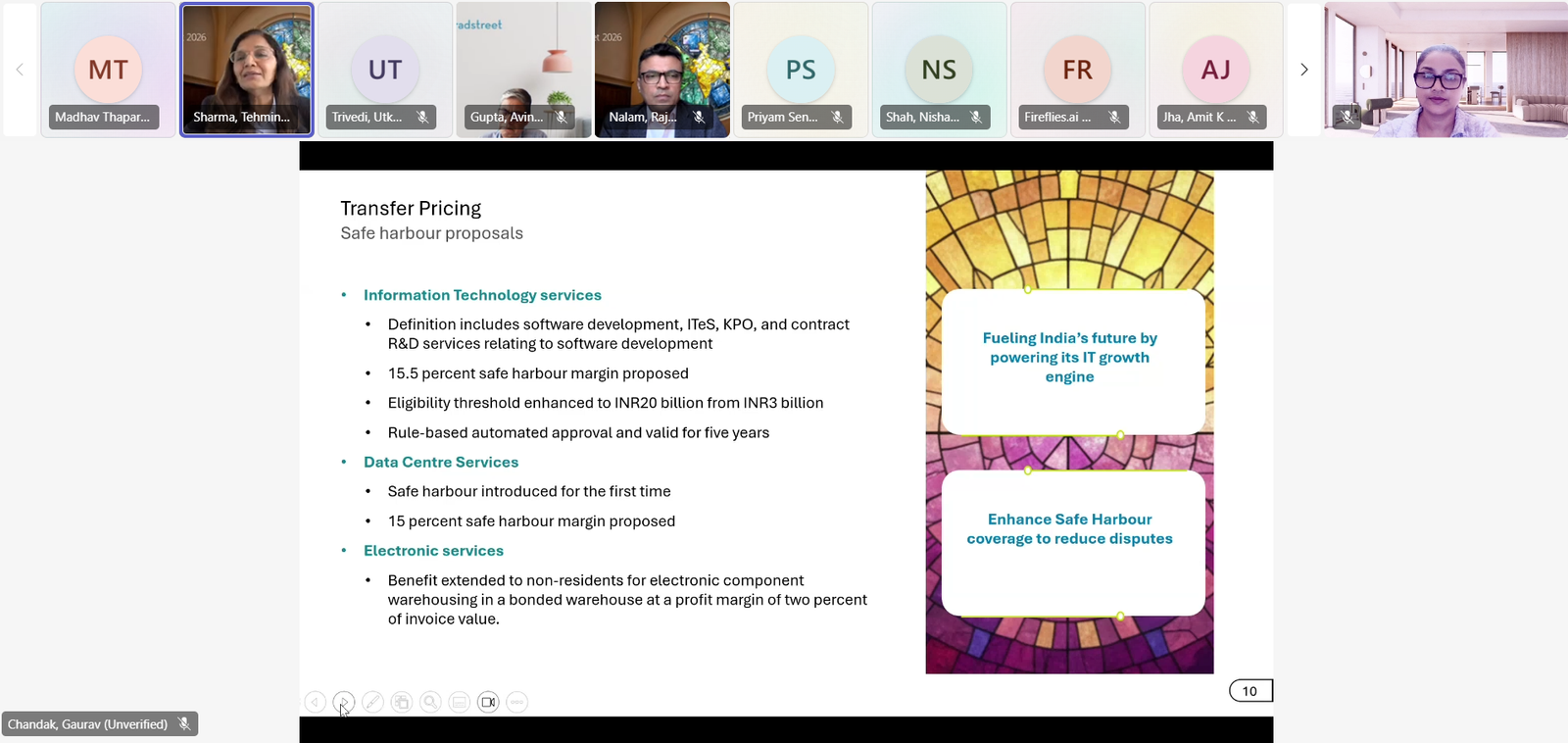
AMCHAM’s Western Region, in collaboration with Deloitte, successfully organized a post Union Budget 2026 briefing session, ‘Union Budget 2026–27: Key Announcements, Implications & Opportunities’ on February 2nd to provide members with a comprehensive understanding of key tax and policy announcements and their implications for businesses operating in India. The virtual session commenced with opening remarks and a warm welcome by Mr. Avinash Gupta, Chairman – Western Region, AMCHAM and Managing Director, Dun & Bradstreet India, who underscored the importance of timely industry interpretation of the budget proposals in the context of evolving policy priorities and global economic developments. The session featured expert presentations by Mr. M.S. Mani, Partner, Deloitte India (Indirect Tax – GST, SEZ & Customs), Mr. Utkarsh Trivedi, Partner, Tax, Deloitte India (Direct & Personal Tax), and Mr. Rajendra Nalam, Partner, M&A, Deloitte India (Mergers & Acquisitions and Capital Markets), and was moderated by Ms. Tehmina Sharma, Partner & US Corridor Leader, Deloitte India.
Speakers provided a multi-dimensional overview of significant proposals and policy signals emerging from Union Budget 2026, including liberalization of export rules and simplification of post-supply discount mechanisms under GST reducing uncertainty and tax costs; measures to strengthen SEZ manufacturing and improve working capital through expanded provisional and IDS refund mechanisms; customs reforms focused on digital trade facilitation, trusted and risk-based clearance, warehousing reforms, and a strengthened AEO ecosystem; fiscal prudence with the fiscal deficit maintained below 4.5% and continued emphasis on infrastructure-led growth; tax proposals aimed at improving ease of doing business, including reduced litigation pre-deposit, simplified penalty and prosecution framework, and stronger dispute prevention and resolution mechanisms; key M&A drivers arising from capex-led growth, clearer tax and regulatory frameworks, and ecosystem-led policy support; expansion of safe harbour regimes and faster resolution mechanisms in transfer pricing, including fast-track unilateral APAs; corporate tax proposals such as MAT being treated as final tax, incentives for data centres and electronics toll manufacturing, and targeted reliefs for professional services; and rationalization of withholding taxes and selected personal tax compliance timelines. The session also highlighted forward-looking incentives for data centers and AI infrastructure, electronics manufacturing, and strengthening IFSC as a global hub, aligning with India’s long-term Viksit Bharat 2047 vision.