Events
Past Events
Securing the AI Frontier: A New Era of Cyber Resilience
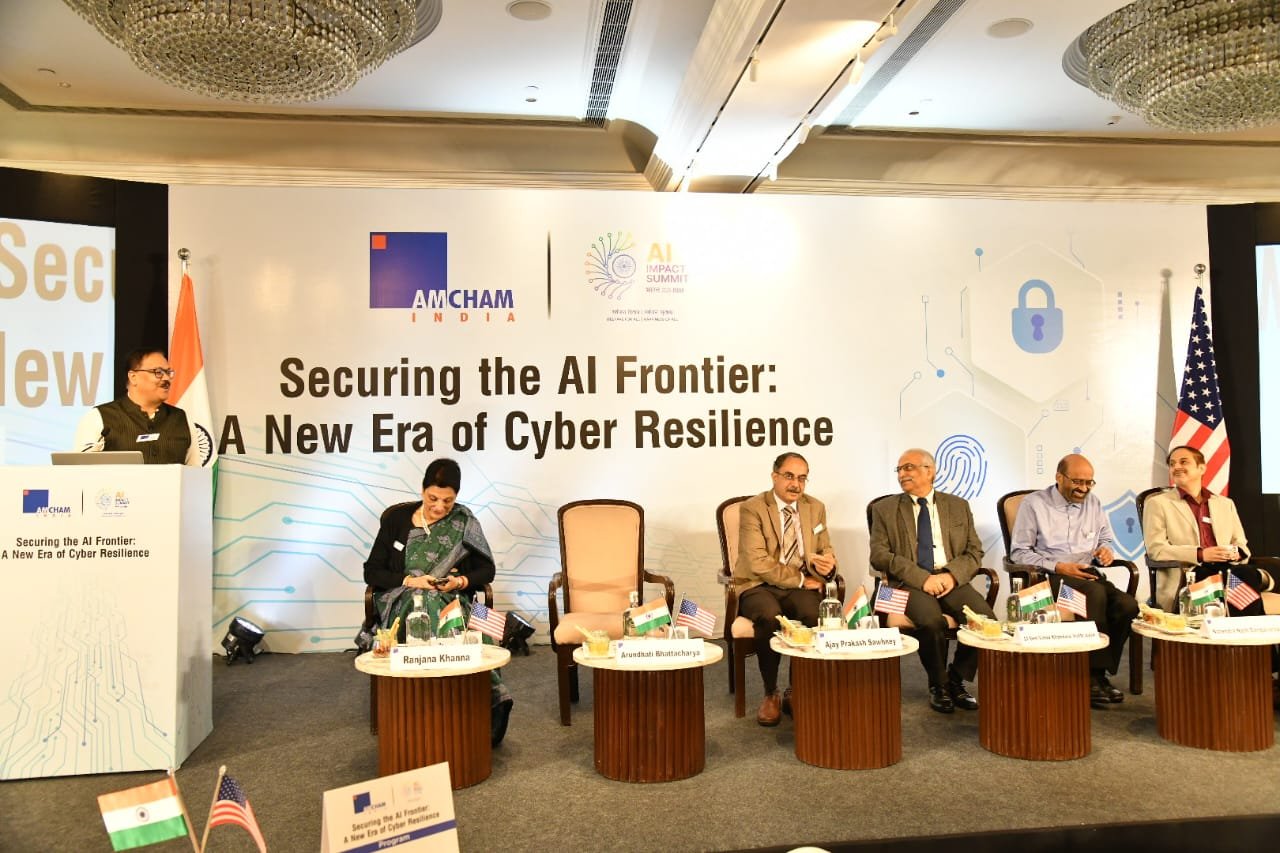
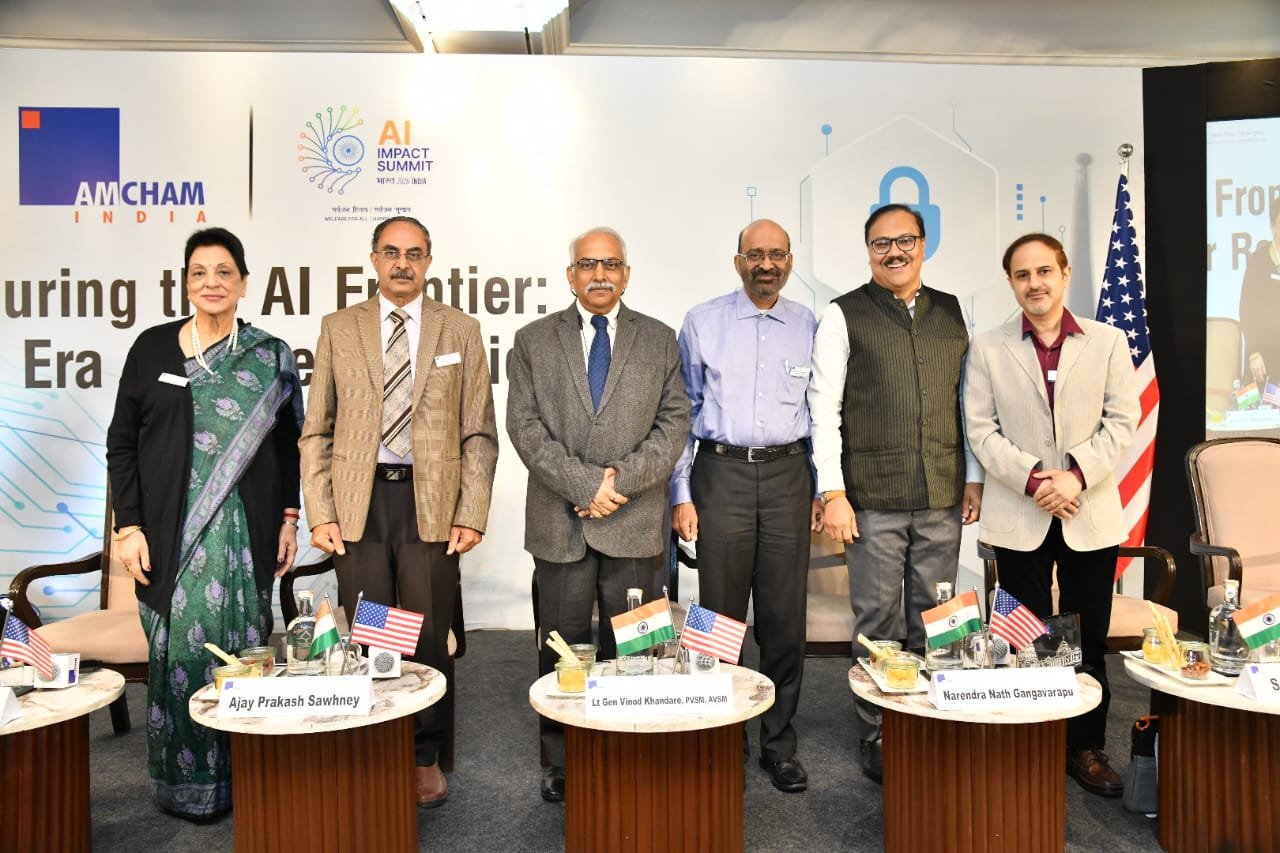
AMCHAM India organized ‘Securing the AI Frontier: A New Era of Cyber Resilience’ on November 12, 2025, under the aegis of the Ministry of Electronics and Information Technology (MeitY) as an official pre-summit event to the India AI Impact Summit 2026. Aligned with the India AI Mission’s pillar on trusted and safe AI, this strategic collaboration brought together senior government officials from the National Security Council Secretariat, Ministry of Defence, Department of Telecommunications, NITI Aayog, and AICTE, alongside technology leaders from Salesforce, Intel, IBM, Google, Meta, PaloAlto Networks, Fortinet, Cisco, and Mastercard. The conference served as a critical platform for establishing AI security and cyber resilience frameworks that will inform India’s national AI strategy, with discussions providing foundational input for the larger India AI Impact Summit 2026 and reinforcing the essential role of public-private partnerships in India’s journey toward Viksit Bharat 2047.
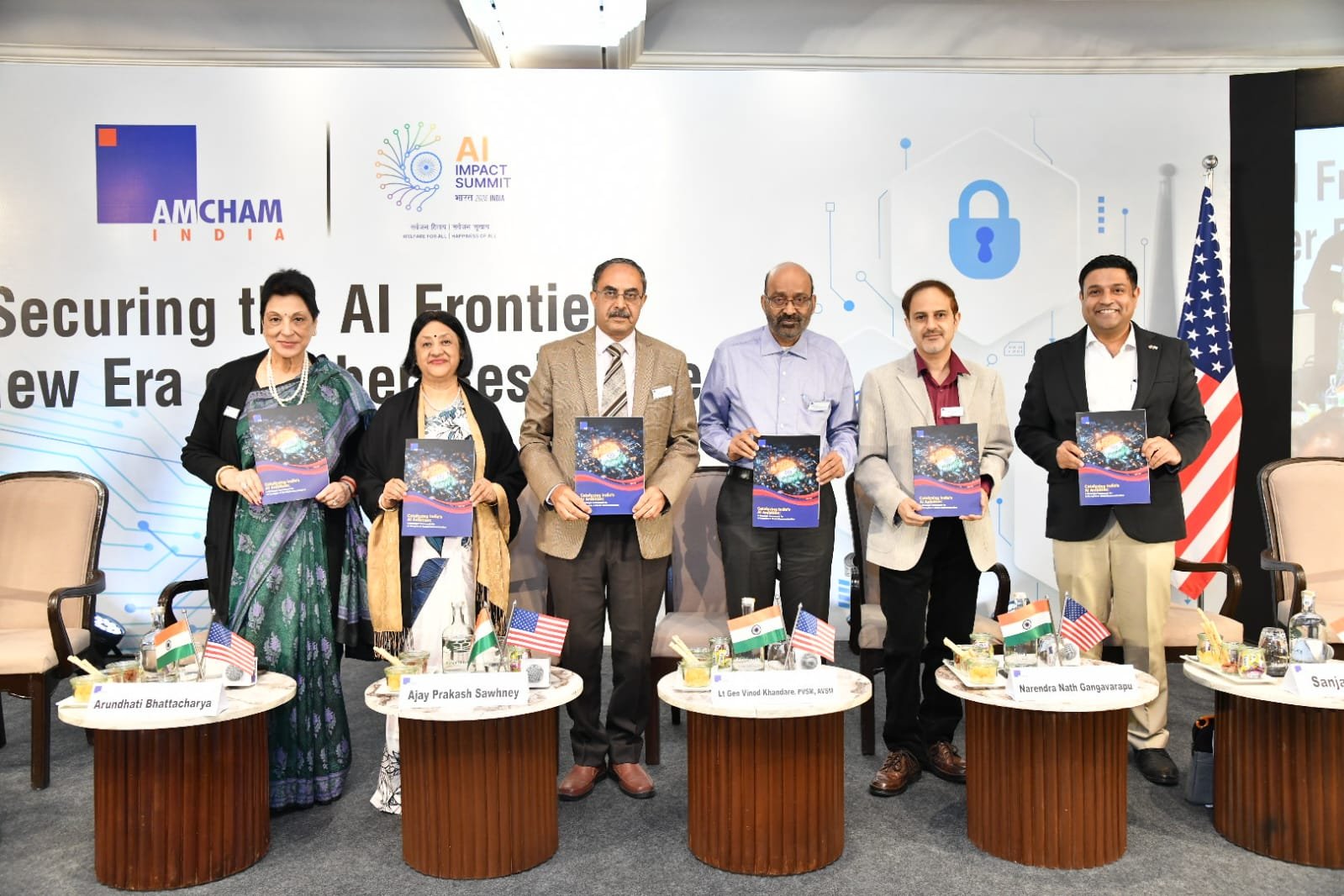
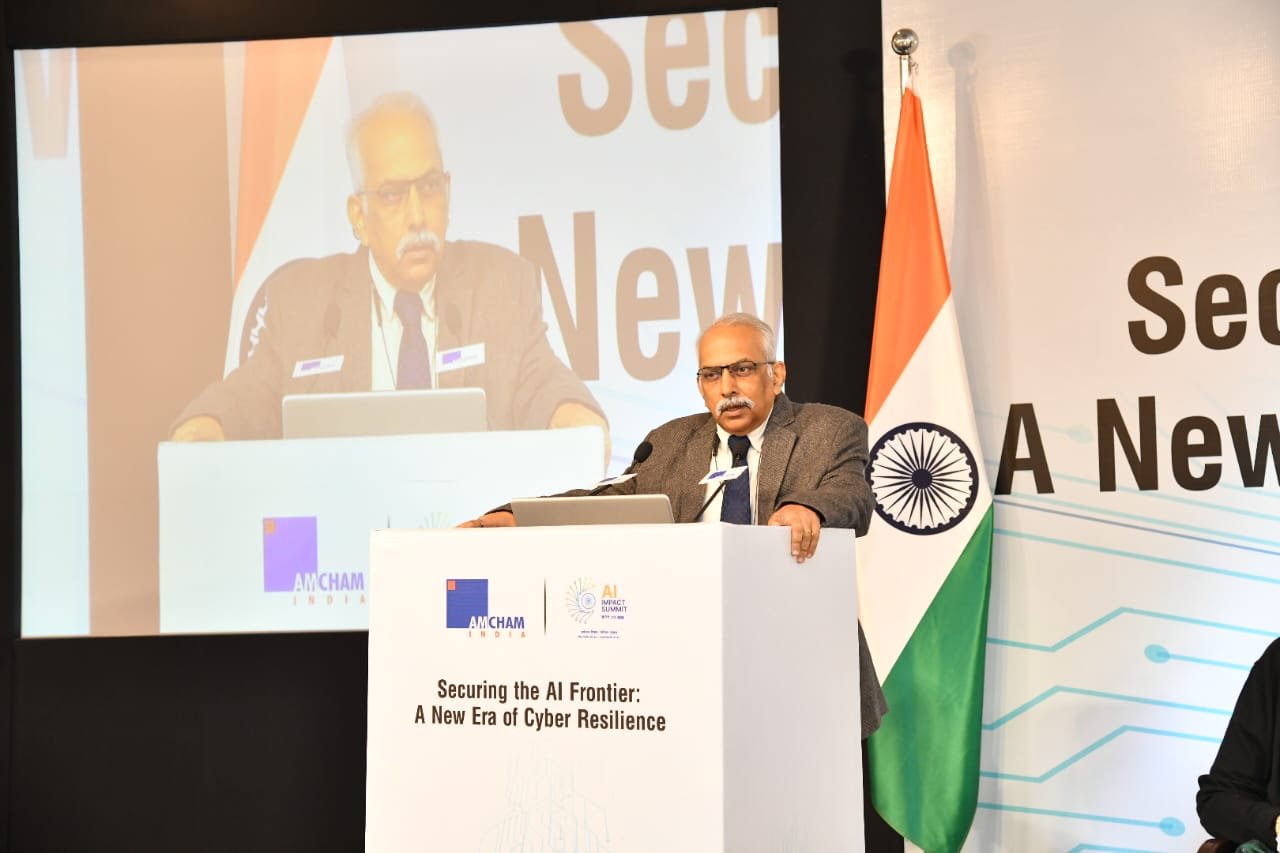
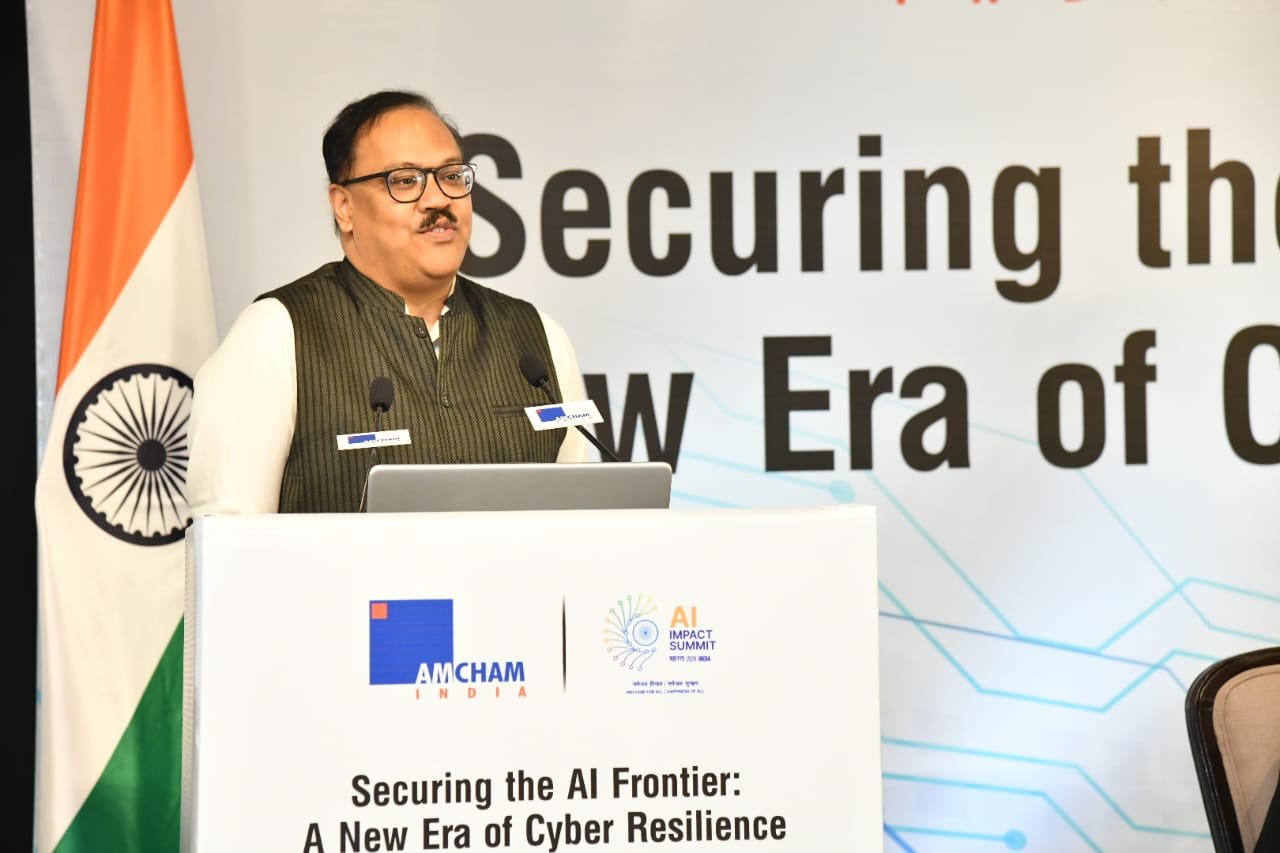
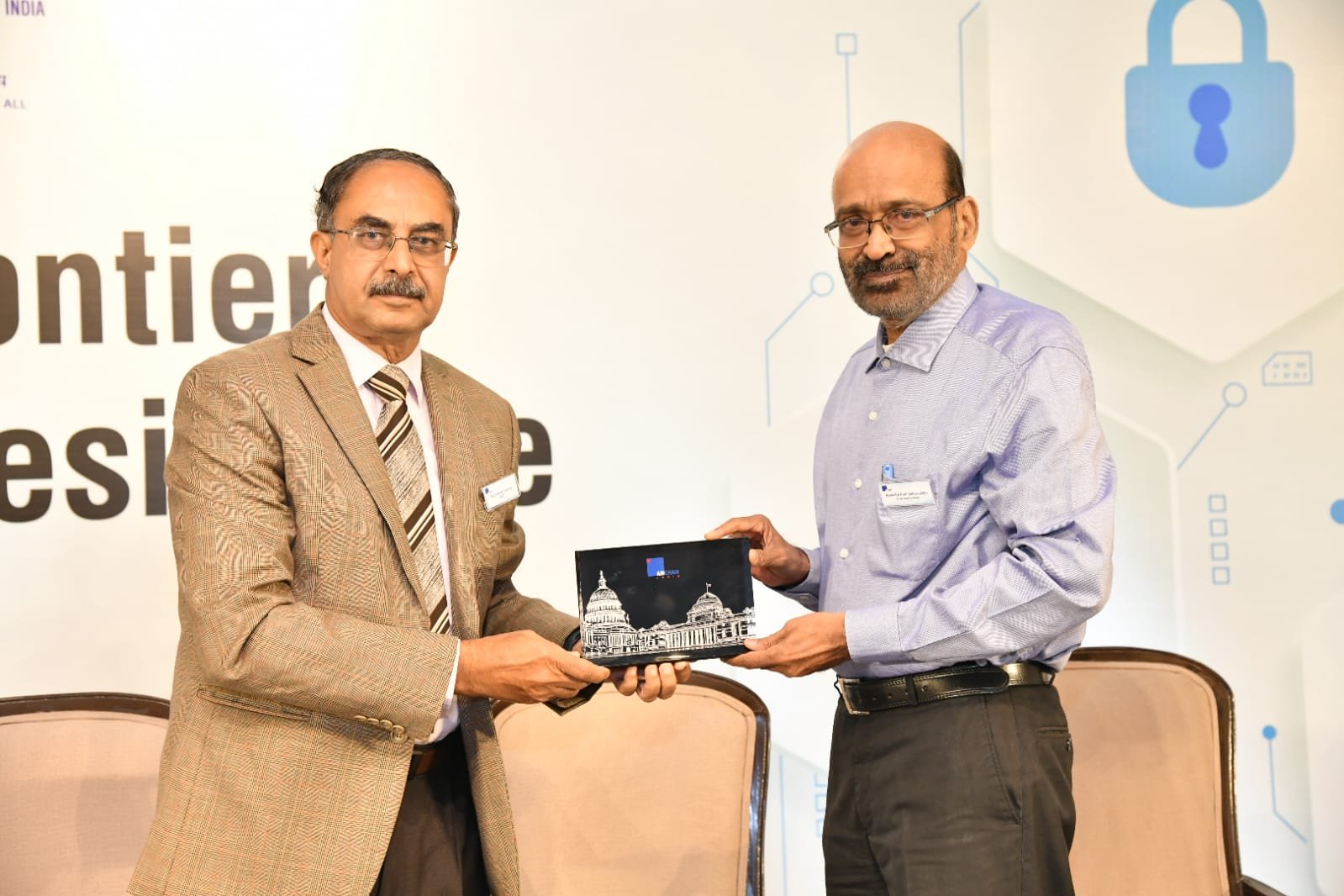
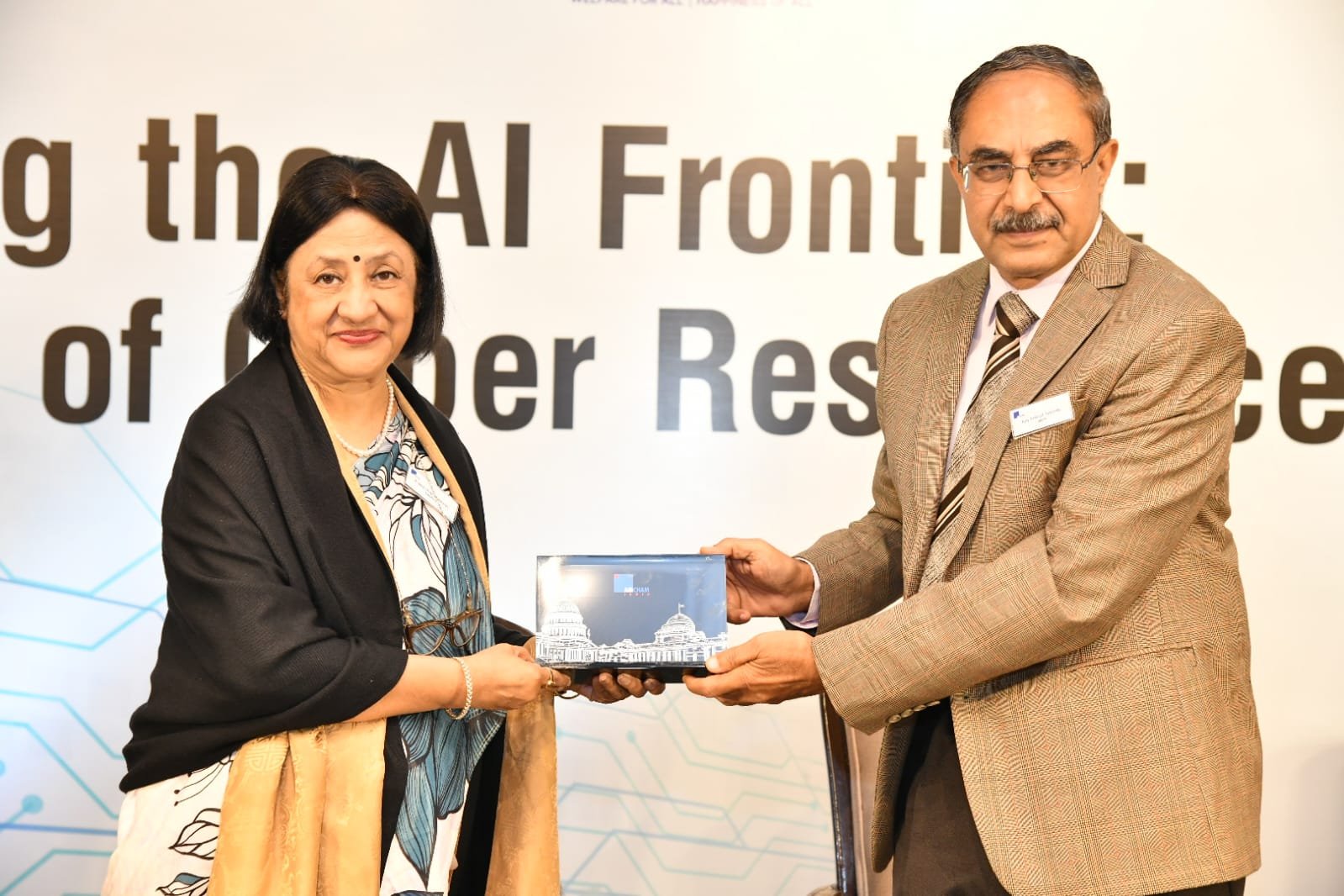
In the inaugural session, Ms. Ranjana Khanna, Director General CEO, AMCHAM, opened the conference by highlighting AI’s dual role in preventing cyber attacks through pattern recognition while also creating new vulnerabilities. She emphasized the conference’s focus on AI security governance frameworks, supply chain security, and public-private partnerships. In a special address, Lt Gen Vinod Khandare, PVSM, AVSM, former Principal Advisor, Ministry of Defence (Cyber Security) touched upon these key themes: integration over silos — advocated for the “Gati Shakti” model of interconnected operations, comprehensive national security — positioned AI and cyber security as critical components of India’s comprehensive national power and the surface area challenge — vulnerability of 1.4 billion connected Indians with massive digital prevalence. Lt Gen Khandare stressed importance of indigenous development in critical technology infrastructure and emphasized that cyber resilience requires assuming attacks will occur and planning accordingly.
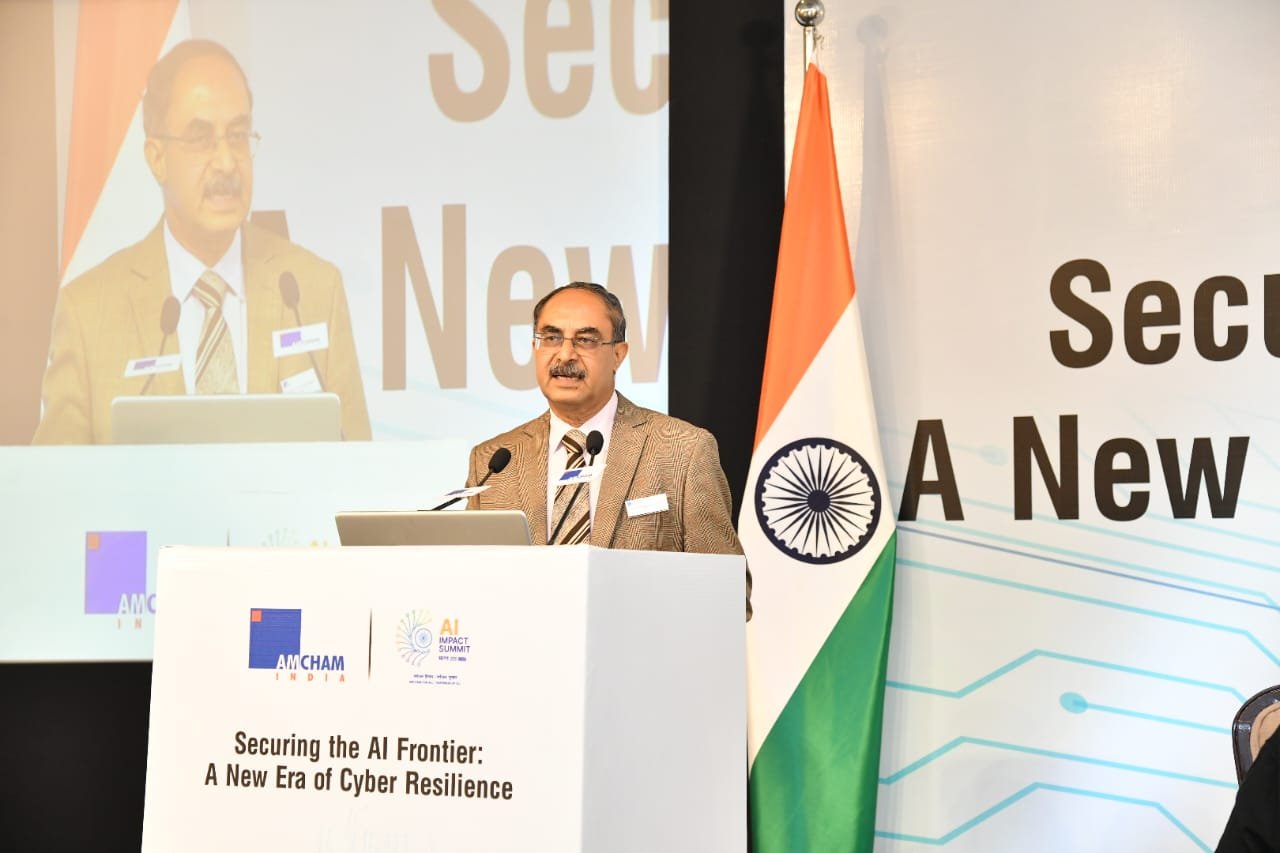
Mr. Satyajit Mohanty, Joint Secretary, Defence Policy, Armed Forces Wing, Ministry of Defence, Government of India, emphasized the shift from “cyber security” to “cyber resilience” and highlighted India’s democratic dividend with a vast AI talent pool. He affirmed that U.S.-India relations remain strong and positioned government as a catalyst, not driver, with industry leading innovation. Mr. Ajay Sawhney, former Secretary, Ministry of Electronics and Information Technology, discussed India’s digital public infrastructure (Aadhaar, UPI, GeM, Aarogya Setu) as models for trustworthy, resilient systems. He highlighted that security and resilience must be intrinsic to AI infrastructure design and extend from semiconductors through the entire hardware and software stack. He called for unified resilience framework across all sectors, especially as AI becomes central to operations, and encouraged periodic reality checks.
In the keynote address, Mr. Narendra Nath Gangavarapu, Joint Secretary, National Security Council Secretariat, Government of India, discussed the digital divide, how AI will create new societal divisions requiring reskilling and workforce repurposing. He emphasized the importance of security and critical infrastructure considerations. He shared about assessment framework initiatives and quantum security integration.
Ms. Arundhati Bhattacharya, President & CEO, Salesforce South Asia, provided the industry perspective highlighting trust as a technology layer — which includes trust in governance, trust in physical foundations and trust in digital services. She shared about the complimentary nature of the U.S.-India relationship with AI research (U.S.) and digital infrastructure scale (India). Mr. Sanjay Krishen, Regional Director IT, Intel provided an overview of AMCHAM’s knowledge paper ‘Catalyzing India’s AI Ambition: A Strategic Framework for AI Compute & Model Democratization.’ He highlighted the GPU-centric problem and heterogeneous computing strategy which included the technology-neutral principle and cost optimization. He expounded on the four pillars of democratization: 1) workload-centric classification, 2) strategic architectural mapping, 3) cross-interaction paradigm, and 4) progressive implementation.
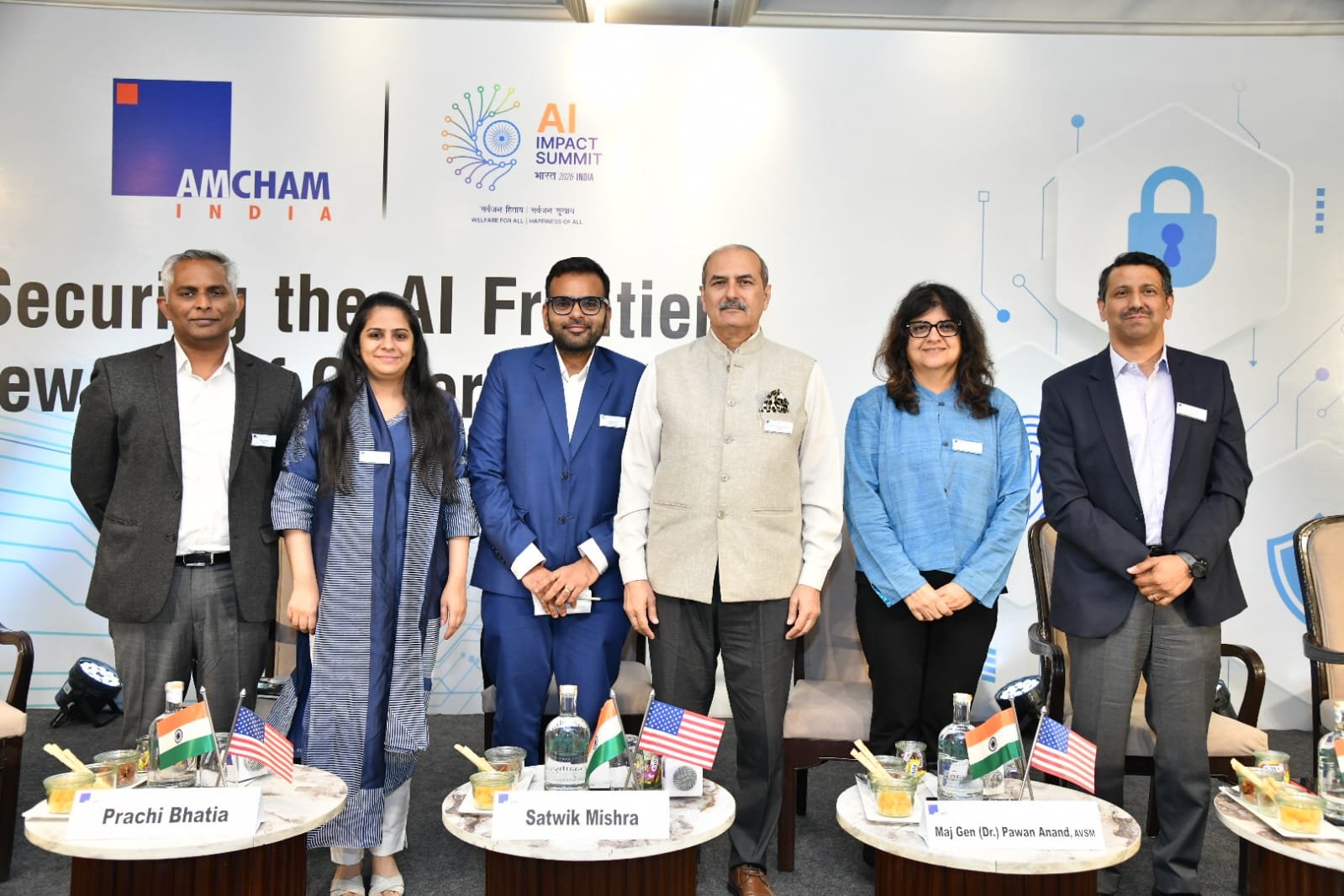
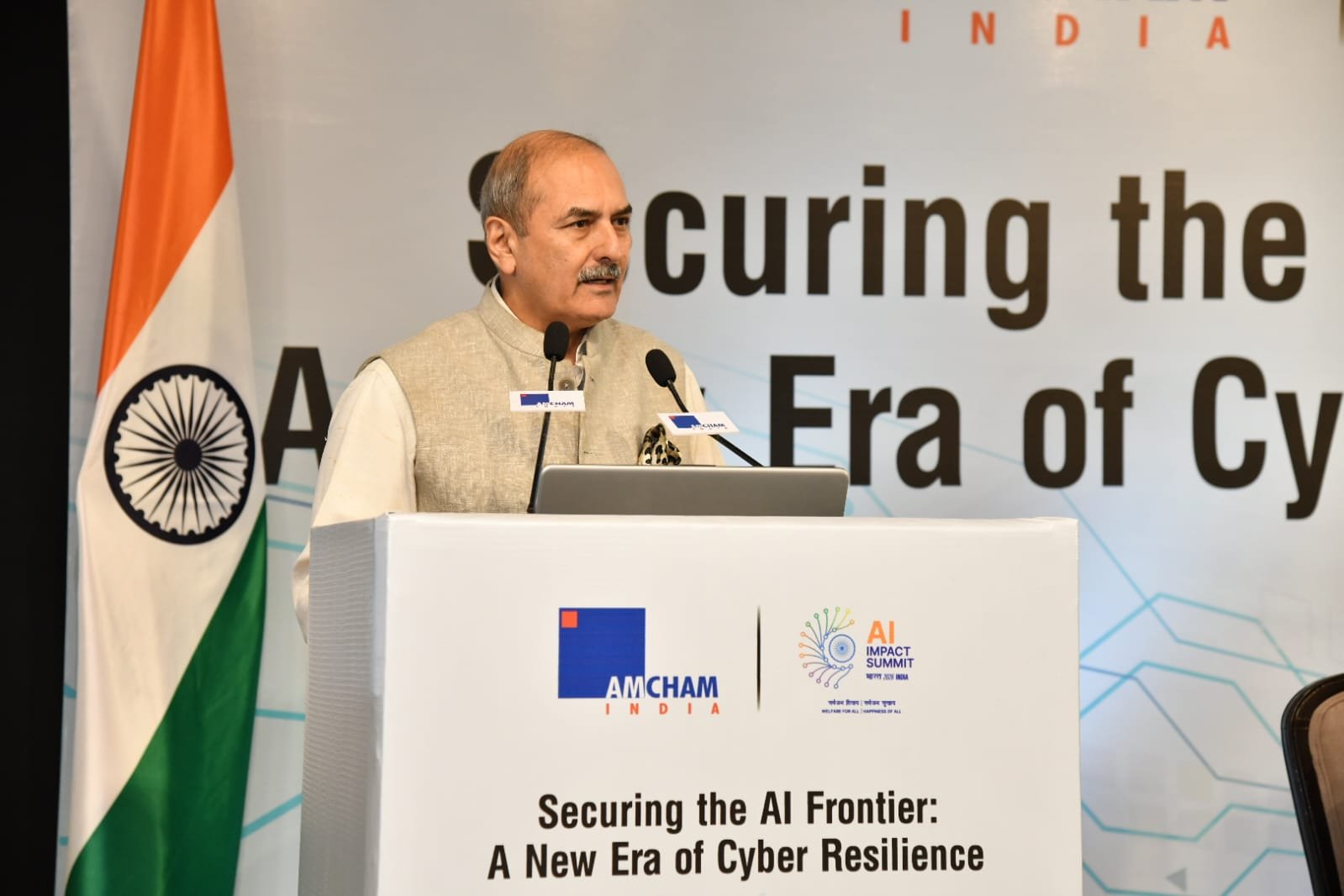
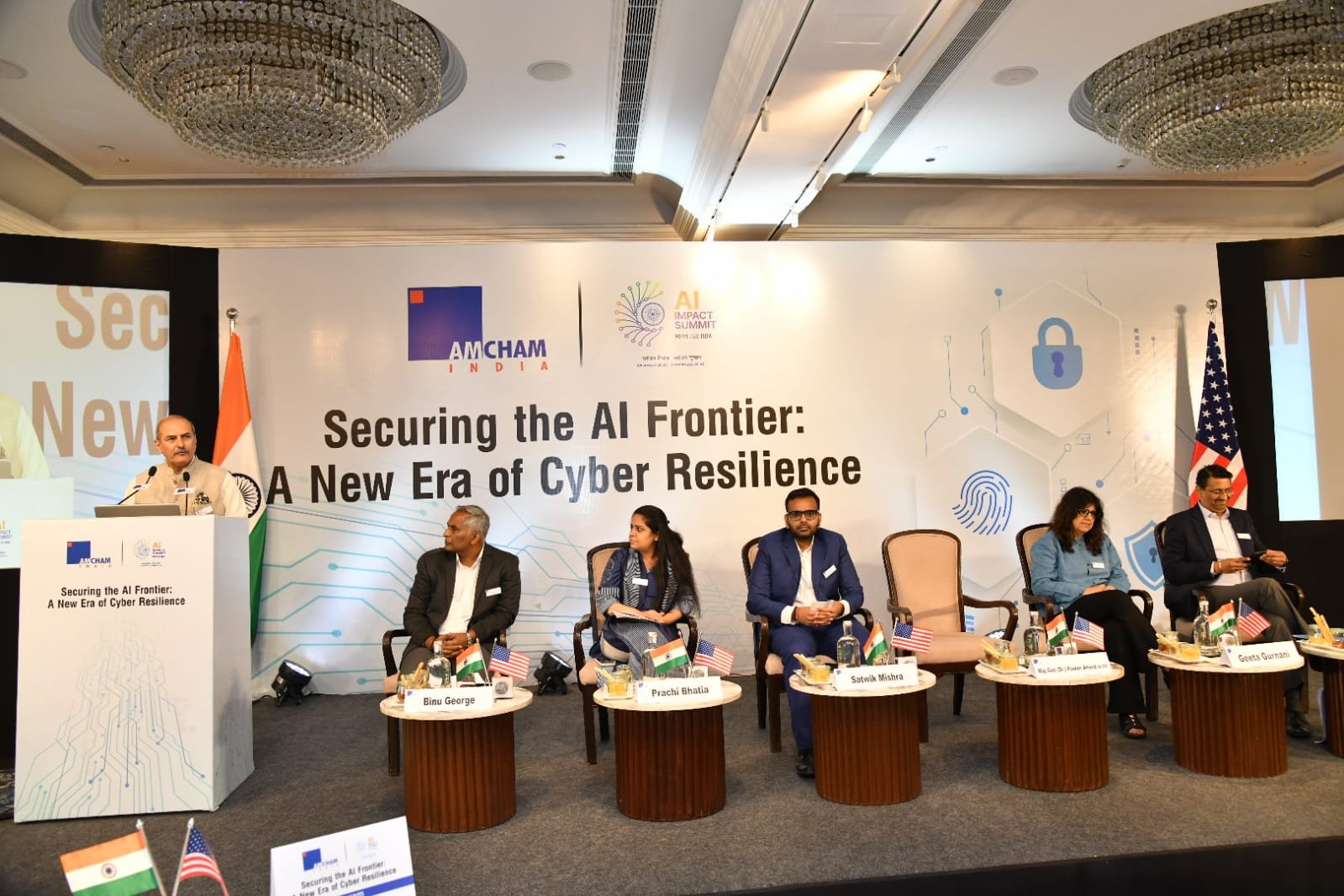
In the first session, ‘AI Security & Governance Frameworks: Ensuring Regulatory Readiness and Resilience for Viksit Bharat 2047,’ Maj Gen (Dr.) Pawan Anand, AVSM, Director, Centre for Emerging Technology for Atma Nirbhar Bharat, United Service Institution of India, gave a special address. He began describing the fragmented world order in the digital sovereignty race and highlighted emerging AI blocks while alluding to AI in warfare. He pointed out India’s AI trajectory — 30% CAGR in AI market, $600 billion economic benefits by 2035, 6,200 AI start-ups (2024) and an ever-growing talent pool. He thoroughly defined governance framework from the perspective of AI security, responsible AI framework (ethics, transparency and accountability), and technical controls like data governance and model governance. He cautioned on open-source risk, supply chain vulnerability, training transparency, liability questions and version tracking.
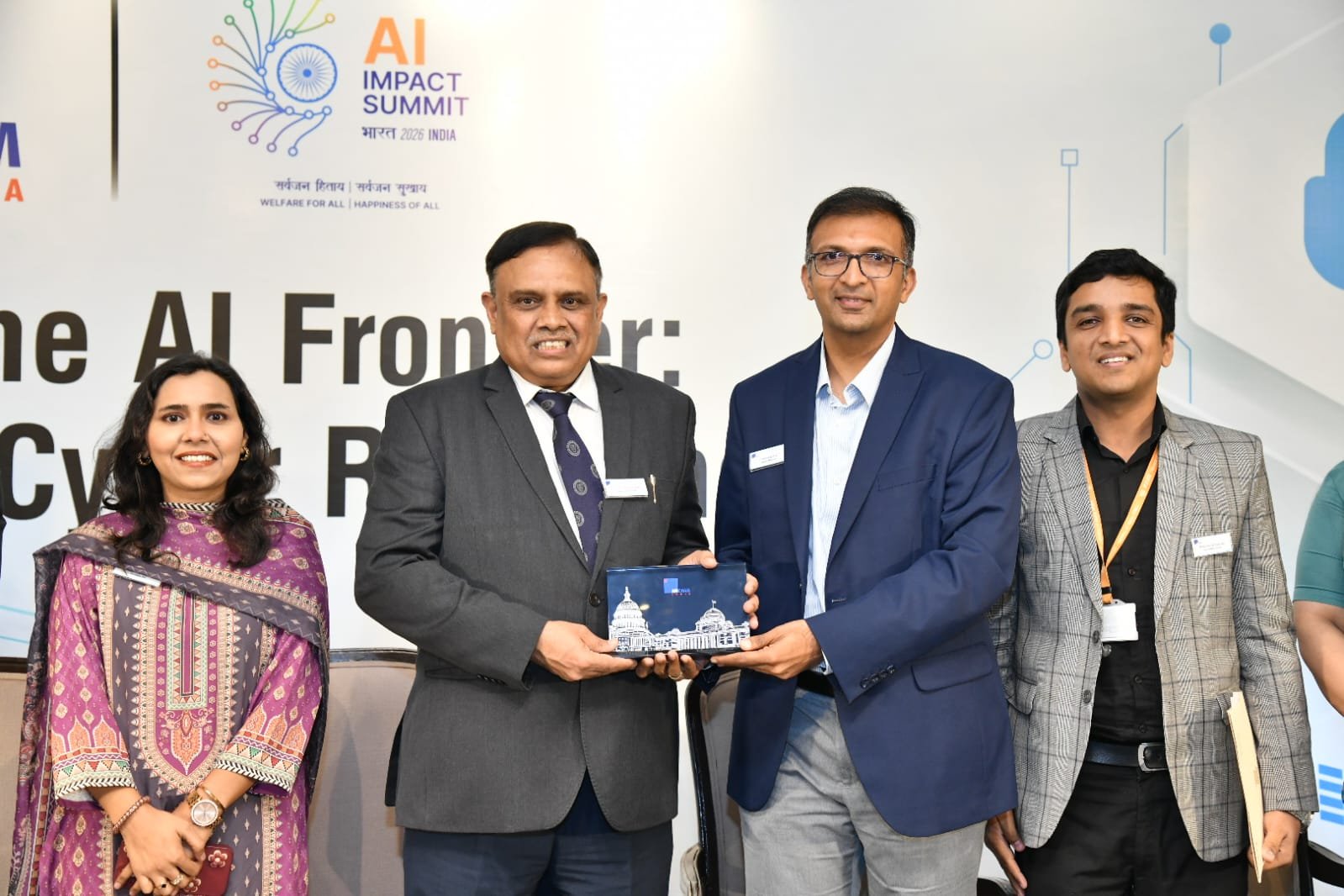
The panel discussion was moderated by Mr. Binu George, Head of Government Affairs, India & Southeast Asia, Fortinet with Ms. Geeta Gurnani, CTO, IBM Technology India & South Asia, Mr. Satwik Mishra, AI Policy Manager, Google, Ms. Prachi Bhatia, Public Policy Manager, Meta and Mr. Bhanu Saini, Director, Public Policy & Government Relations, PaloAlto Networks. The discussion covered hard-coding governance into AI architecture, evolution of awareness, trust in technology stack, policy as code and automation necessity. Speakers shared successful project learnings and best practices in education while emphasizing government-industry-civil society collaboration was crucial to scale. The session touched on deepfakes and misinformation and detection standards for the same. Continuous security risk assessment and active defense and runtime protection were discussed.
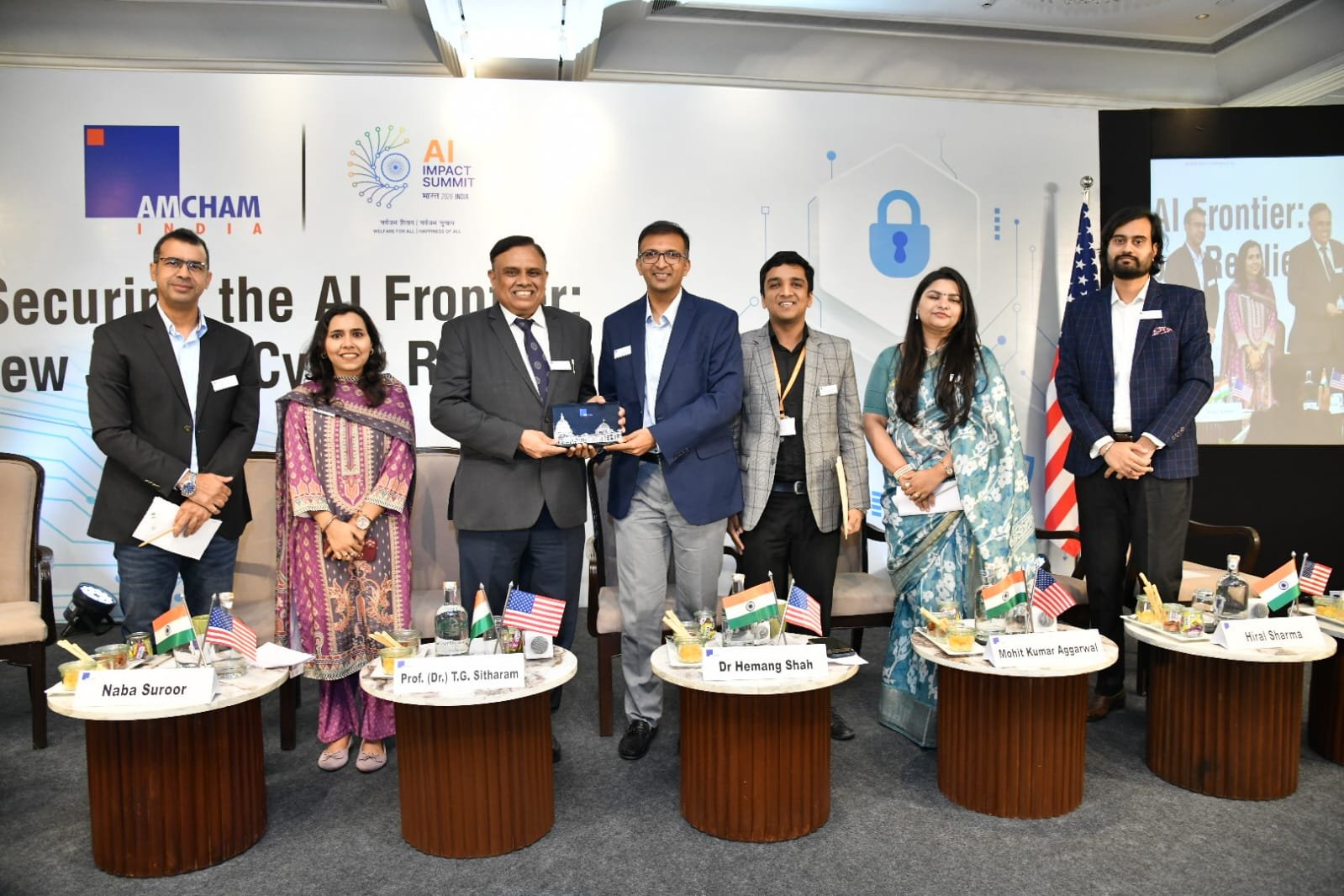
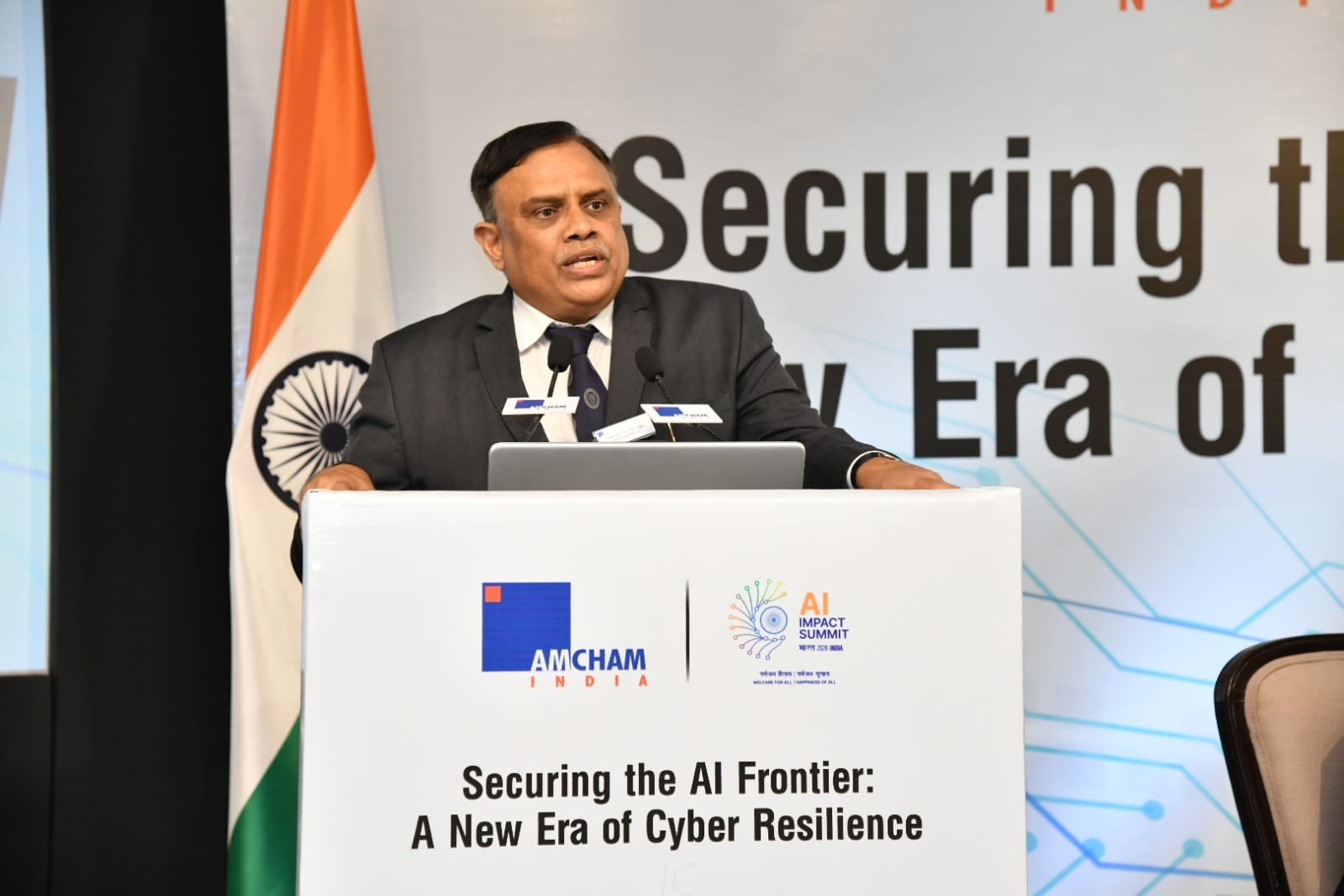
Prof. (Dr.) T.G. Sitharam, Chairman, All India Council for Technical Education (AICTE), Government of India, gave a special address which highlighted that India must prepare for 50 million additional students entering higher education by 2035, while the nation targets a $150 billion semiconductor ecosystem by 2030. India already contributes 20% of the global semiconductor workforce, but the critical gap remains infrastructure, the GPUs, computing power, and AI systems needed to match this human capital scale.
The second session, ‘Securing AI Infrastructure Supply Chain: Public-Private Partnership Frameworks for Critical Infrastructure,’ featured a special address by Mr. Mohit Kumar Aggarwal, ITS, Director, AI & Digital Intelligence Unit, Department of Telecommunications, Government of India, who provided an overview of the supply chain threat landscape and shared architecture requirements of secure design validation, trusted component sourcing, cryptographic provenance tracking and end-to-end monitoring. He showcased how the cyber resilience philosophy works in practice through its successful Public-Private-Citizen Participation model, which prevented ₹400 crores in fraud within just two months by integrating 800+ organizations including banks, law enforcement agencies, and payment platforms. Ms. Naba Suroor, Consultant, Science & Technology, NITI Aayog, in her special address walked the audience through the historical evolution of AI from the 1950s, noting the growth factors and economic impact projections. She touched on the semiconductor sovereignty imperative and highlighted how India is emerging as a semiconductor player.
Dr. Hemang Shah, Sr. Director Government Affairs, Applied Materials India moderated a panel with Ms. Hiral Sharma, Head – Solution Architecting, Public Sector, India & SAARC, Fortinet, Mr. Deepak Singh, Sr. Director for Enterprises Business in India & SAARC, PaloAlto Networks and Mr. Tapendra Dev, Founder & CEO, Secure Blink. The session discussed cyber security scale challenges in software, hardware design and manufacturing. The skilling crisis, vulnerability landscape, the trusted platform module (TPM) and dual reality (attackers and defenders) in cyber security were dissected. Phases of the security lifecycle, zero trust in manufacturing and implementation framework, along with many ecosystem challenges were brought to the fore. The critical principle that was emphasized was ‘trust but verify on a regular basis.’
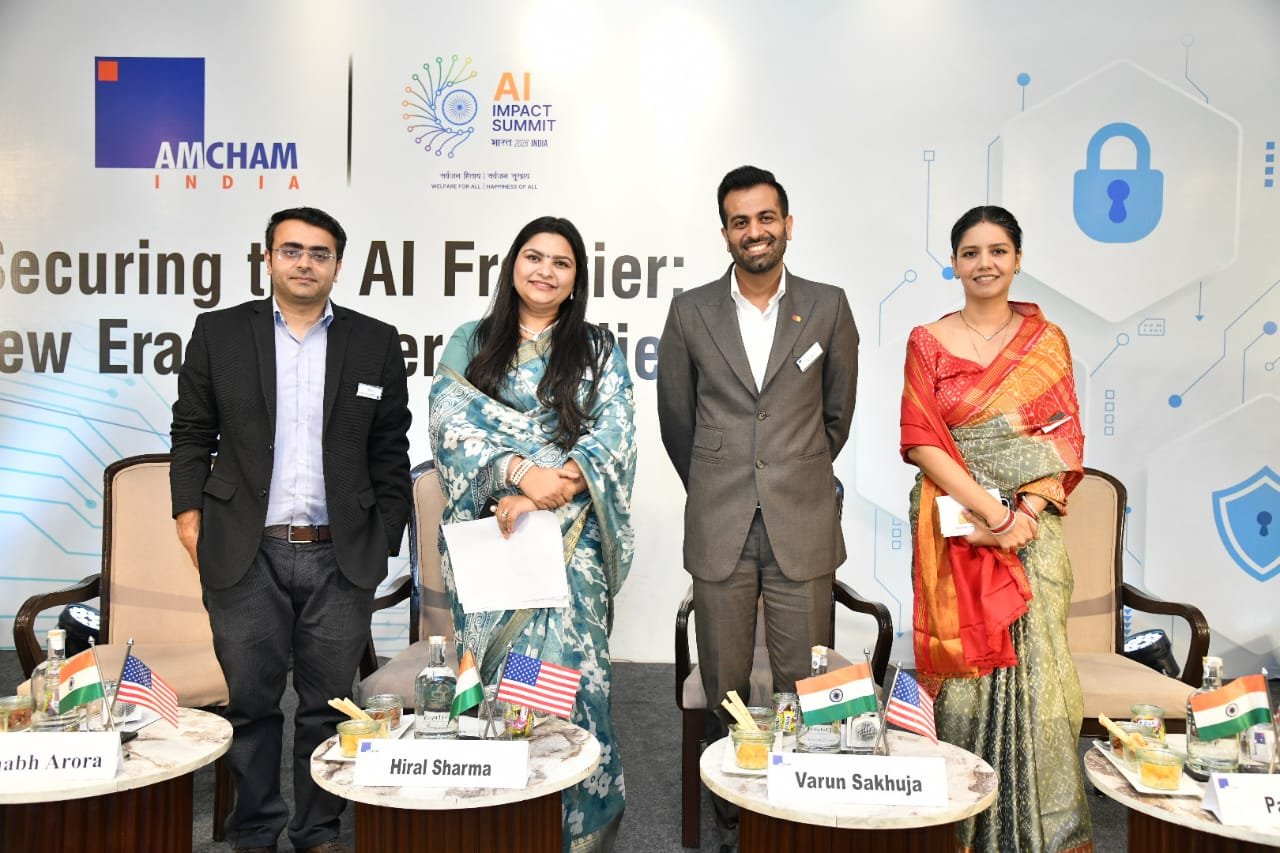
The final session, ‘Digital Payments: Building U.S.-India AI Cyber Security Payments Framework & Cooperation,’ was moderated by Ms. Hiral Sharma, Head – Solution Architecting, Public Sector, India & SAARC, Fortinet with Mr. Rishabh Arora, Senior Cyber Security Architect, Cisco, Ms. Parnal Vats, Lead Payments – Government Affairs & Public Policy, Google, and Mr. Varun Sakhuja, Director Government Affairs for South Asia, Mastercard. Speakers explored how AI-powered payments demand new security paradigms and why U.S.-India cooperation is critical. The session highlighted zero trust evolution to include AI models, pipelines, and APIs as first-class entities requiring continuous verification. Ecosystem trust extends beyond transaction security through real-time intelligence scoring, merchant risk assessment, and consumer behavior analysis. Speakers agreed that no single payment aggregator can fight fraud alone – success requires multi-stakeholder collaboration across NPCI, MeitY, ministries, etc. As AI threats escalate with grammatically perfect phishing and adversarial ML bypassing detection, there remains U.S.-India partnership opportunities in joint infrastructure and harmonized standards.
The conference was well attended and made possible with partners: Google, IBM, Applied Materials and Fortinet.