Events
Past Events
Tamil Nadu: Accelerating to a $1.5 Trillion Economy: AI, Innovation and Technology
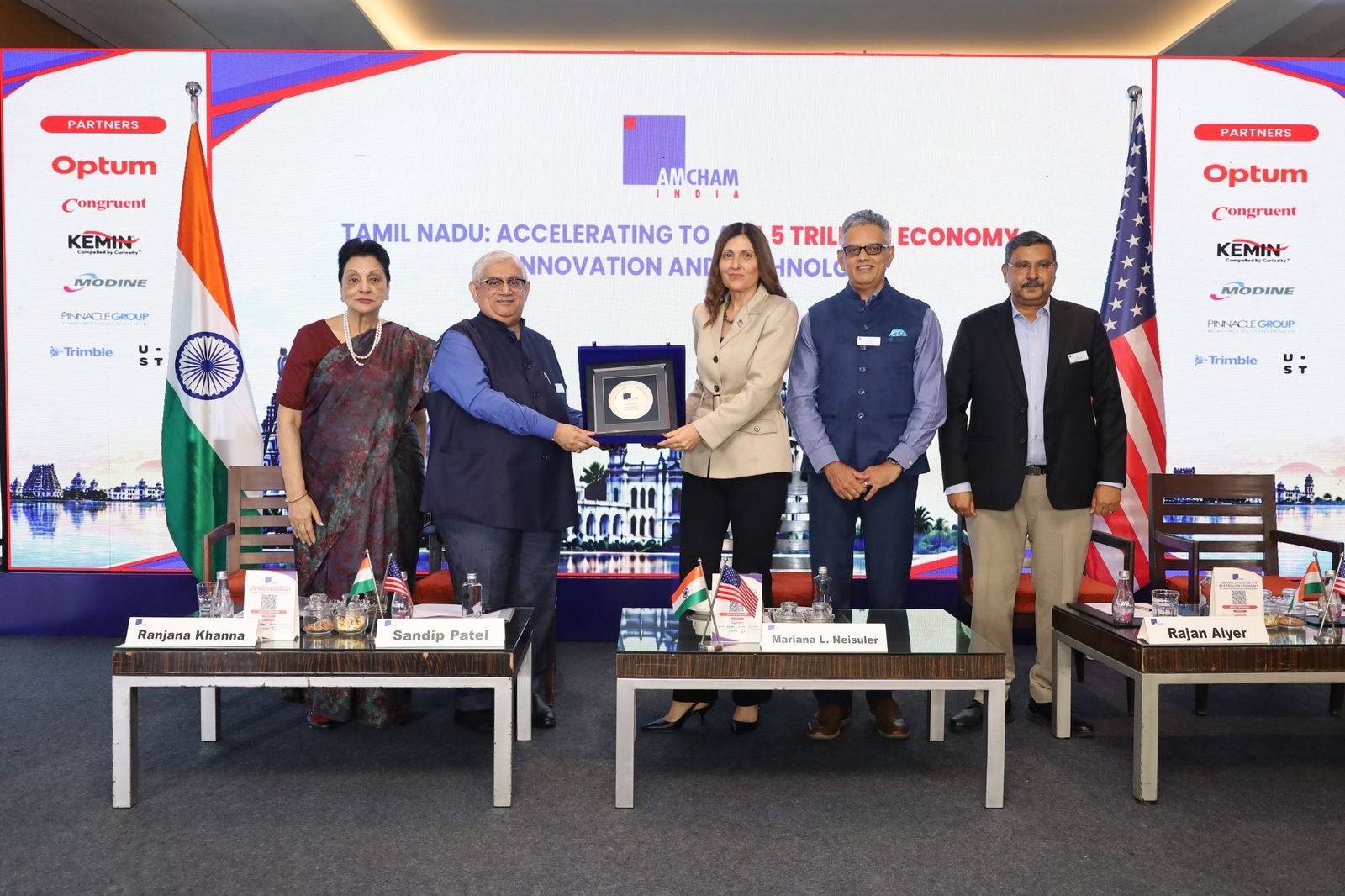
AMCHAM’s Tamil Nadu Chapter signature conference ‘Tamil Nadu: Accelerating to a $1.5 Trillion Economy: AI, Innovation and Technology’ was held on October 30th in Chennai. It brought together business leaders and key stakeholders to deliberate on opportunities and priorities for accelerating Tamil Nadu’s ambition of becoming a $1.5 trillion economy. In her welcome address, Ms. Ranjana Khanna, Director General CEO, AMCHAM, welcomed dignitaries and industry leaders, and set the context for strengthening industry–government engagement and advancing U.S.–India business collaboration in Tamil Nadu. In his opening address, Mr. Sandip Patel, Chairman, AMCHAM and Chairman & Managing Director, IBM India & South Asia, highlighted three key shifts required to accelerate growth: moving from smart to intelligent manufacturing and supply chains; transitioning GCCs from execution centers to innovation and global leadership hubs; and transforming talent availability into talent leadership through continuous learning. He also encouraged companies to explore opportunities in tier-2 and tier-3 cities, including Coimbatore. Mr. Rajan Aiyer, Chairman – Tamil Nadu Chapter, AMCHAM and MD, Trimble India & SAARC, while setting the scene for the conference, highlighted the opportunities arising from technology-led industrial transformation and Tamil Nadu’s economic aspirations.
Ms. Mariana L. Neisuler, Consul General, U.S. Consulate General Chennai, in her special address, reaffirmed the United States’ commitment to taking the bilateral partnership to the next level. She highlighted opportunities in trade, semiconductors, critical minerals, AI, energy, and defense, emphasizing trusted supply chains, innovation protection, and predictable business policies. She also introduced the TRUST Fellowship, promoting research collaboration between American researchers and leading Indian institutions, including IIT Madras. Dr. R. Suresh Kumar, Co-Chairman – Tamil Nadu Chapter, AMCHAM and President, Kemin India, in his concluding remarks, highlighted Tamil Nadu’s strong educational infrastructure and extensive talent pool across the state. He emphasized bridging skill gaps, strengthening industry–academia–government collaboration, and leveraging international research partnerships. The discussions reinforced a shared vision: deeper U.S.–India industry collaboration, technology-led growth, future-ready talent, and wider regional development would be critical in shaping Tamil Nadu’s next phase of economic transformation.
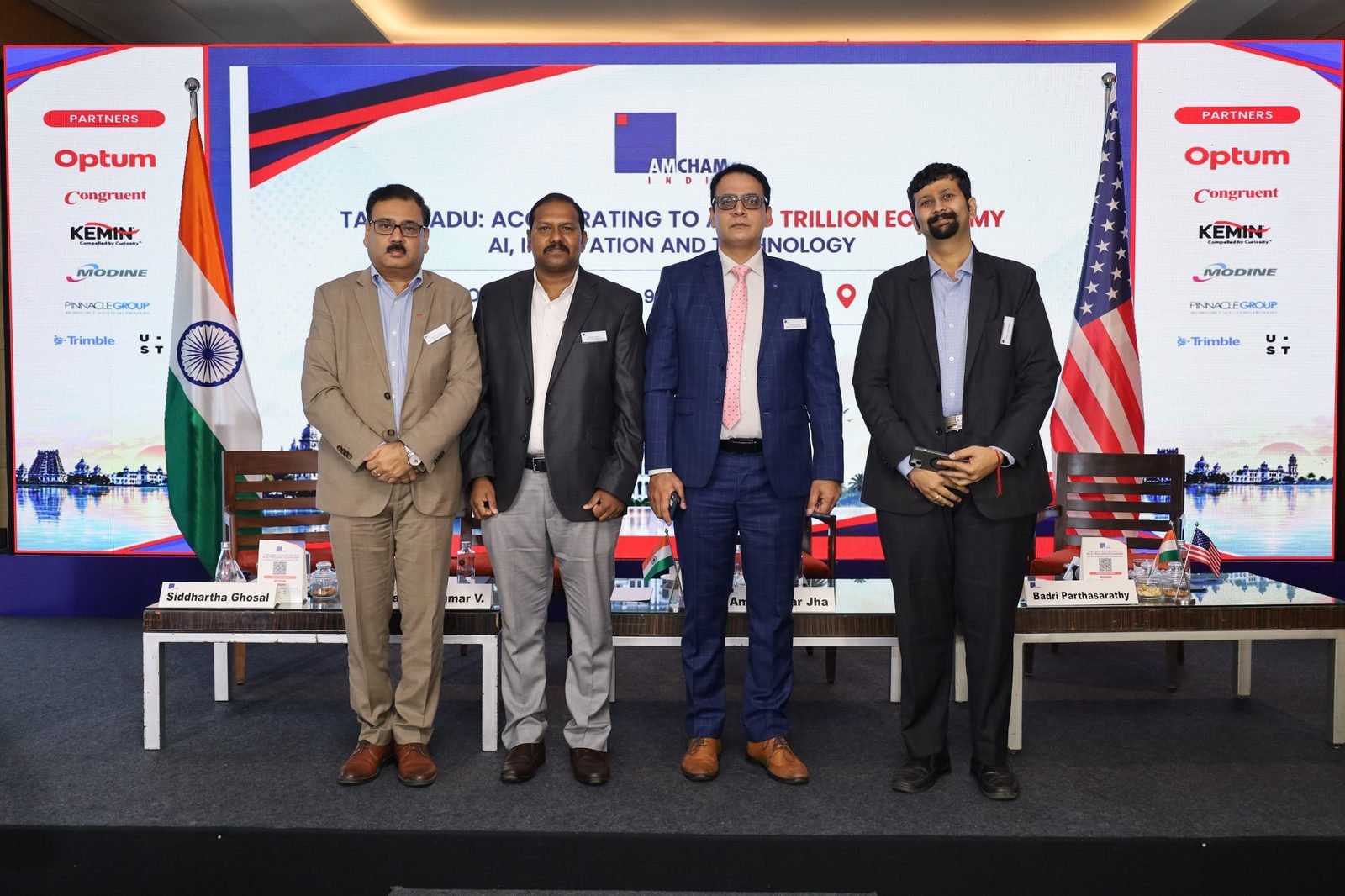
The first session, ‘From Smart to Intelligent Manufacturing,’ explored how AI and advanced technologies are transforming manufacturing and opportunities for Tamil Nadu to strengthen its position as a global manufacturing hub. Moderated by Mr. Badri Parthasarathy, Director, EY, the panel featured Mr. Siddhartha Ghosal, Chairman – Western Region, AMACHAM and CEO & Country President, Dow India, Mr. Sathish Kumar V., Plant Director, Modine Thermal Systems India, and Mr. Amit Kumar Jha, Director & Head – Government Affairs and Public Policy, IMEA, Corning India. The discussion traced manufacturing’s evolution from mechanization and mass production to automation, industry 4.0, and the emerging era of intelligent manufacturing. Speakers highlighted how AI is enabling organizations to move beyond factory-level automation towards integrated operations connecting product development, manufacturing, supply chains, logistics, and procurement. A key focus was the importance of data quality, accuracy, and contextualisation as the foundation for successful AI adoption. Speakers emphasized that collecting large volumes of data alone is insufficient; organizations must ensure that data is reliable, relevant, and actionable to generate meaningful insights.
The panel also examined the appropriate level of autonomy for AI in manufacturing, stressing the need to balance automation with human judgement, accountability and intervention, particularly in critical operational and safety-related decisions. Workforce readiness emerged as another important theme, with speakers underscoring the need to equip employees with the skills to interpret data, validate AI-generated insights, and work effectively alongside intelligent systems. The discussion concluded with a shared perspective that the future of manufacturing will be shaped by the effective integration of people, processes and machines, with AI acting as a powerful enabler of productivity, innovation, and global competitiveness.
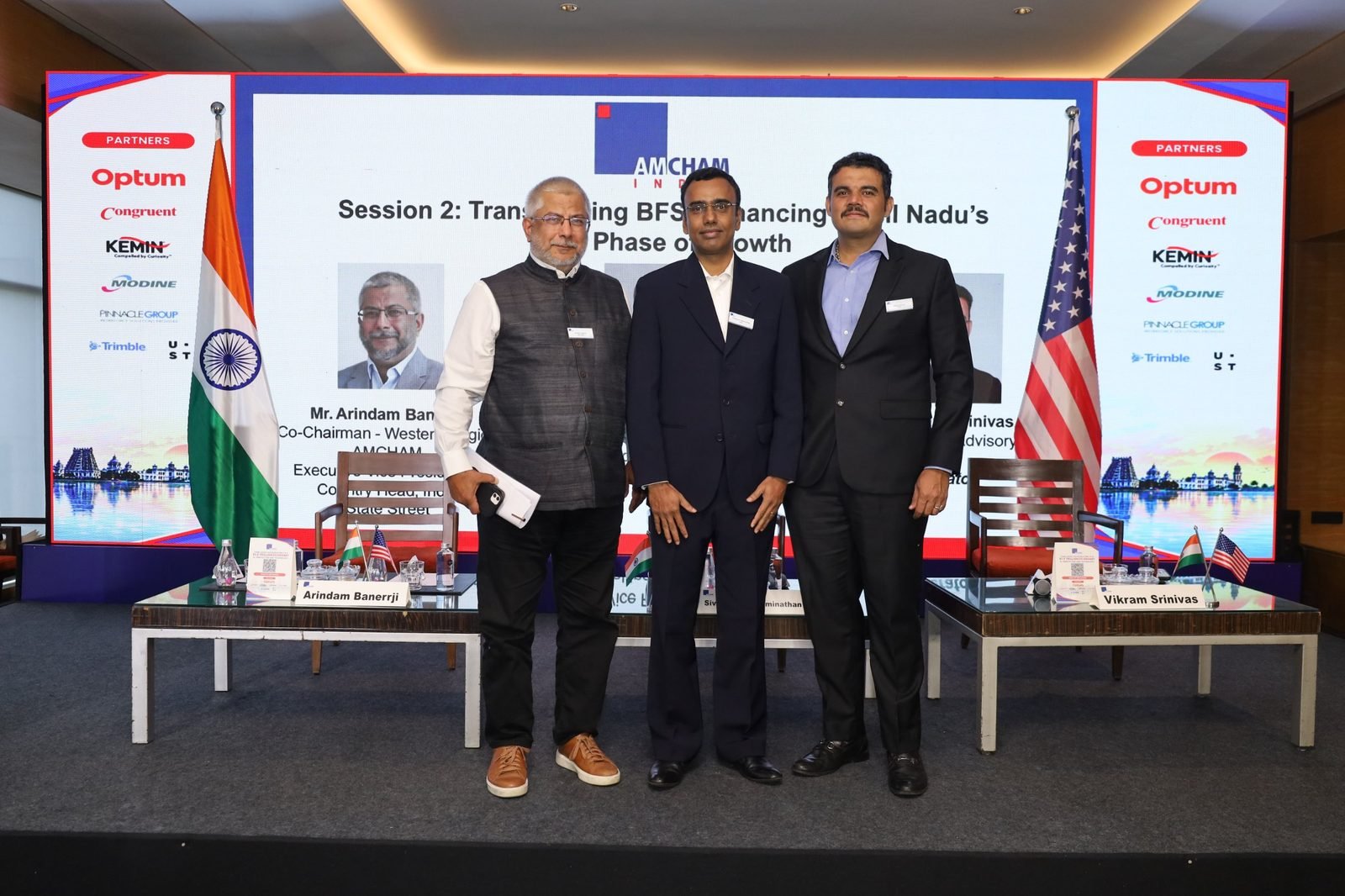
The second session ‘Transforming BFSI: Financing Tamil Nadu’s Next Phase of Growth’ explored how the banking, financial services, and insurance (BFSI) sector can create robust financial architecture, facilitate digital adaptation, and drive market resilience to power Tamil Nadu’s target of becoming a $1.5 trillion economy. Moderated by Mr. Vikram Srinivas, Partner, Deal Advisory, KPMG, the panel featured Mr. Arindam Banerrji, Co-Chairman – Western Region, AMCHAM and EVP & Country Head, India, State Street, and Mr. Sivakumar Swaminathan, Vice President, Financial Institutions Group, Fiserv. The discussion highlighted the vital role of alternative, cash-flow-based underwriting, and robust securitization laws in enabling credit access for the 43 million MSMEs driving nearly half of India’s exports. Speakers encouraged leveraging Tamil Nadu’s strong global capability center (GCC) presence—which handles 60% of financial back-office operations in Chennai—by pairing global domain expertise with local fintechs (e.g., Yubi, Perfios), and academic incubators to co-innovate global financial products. A key focus was the opportunity presented by the current AI reset. Speakers noted that rather than playing a catch-up game with older tech hubs, Tamil Nadu can redefine delivery models by cultivating AI-ready engineering talent and creating a cosmopolitan environment that attracts and retains global talent.
The panel also examined next-generation digital payments infrastructure, stressing that while India’s UPI and T+1 settlement systems are world-class, massive white space remains upstream / downstream solutions such as automated merchant reconciliation and cross-border multi-currency settlement. The discussion concluded with an emphasis on shifting regional savings habits toward dynamic capital markets, streamlining regulatory ease-of-doing-business, and fostering structured knowledge partnerships between global GCCs and regional fintechs to solve complex global financial challenges.
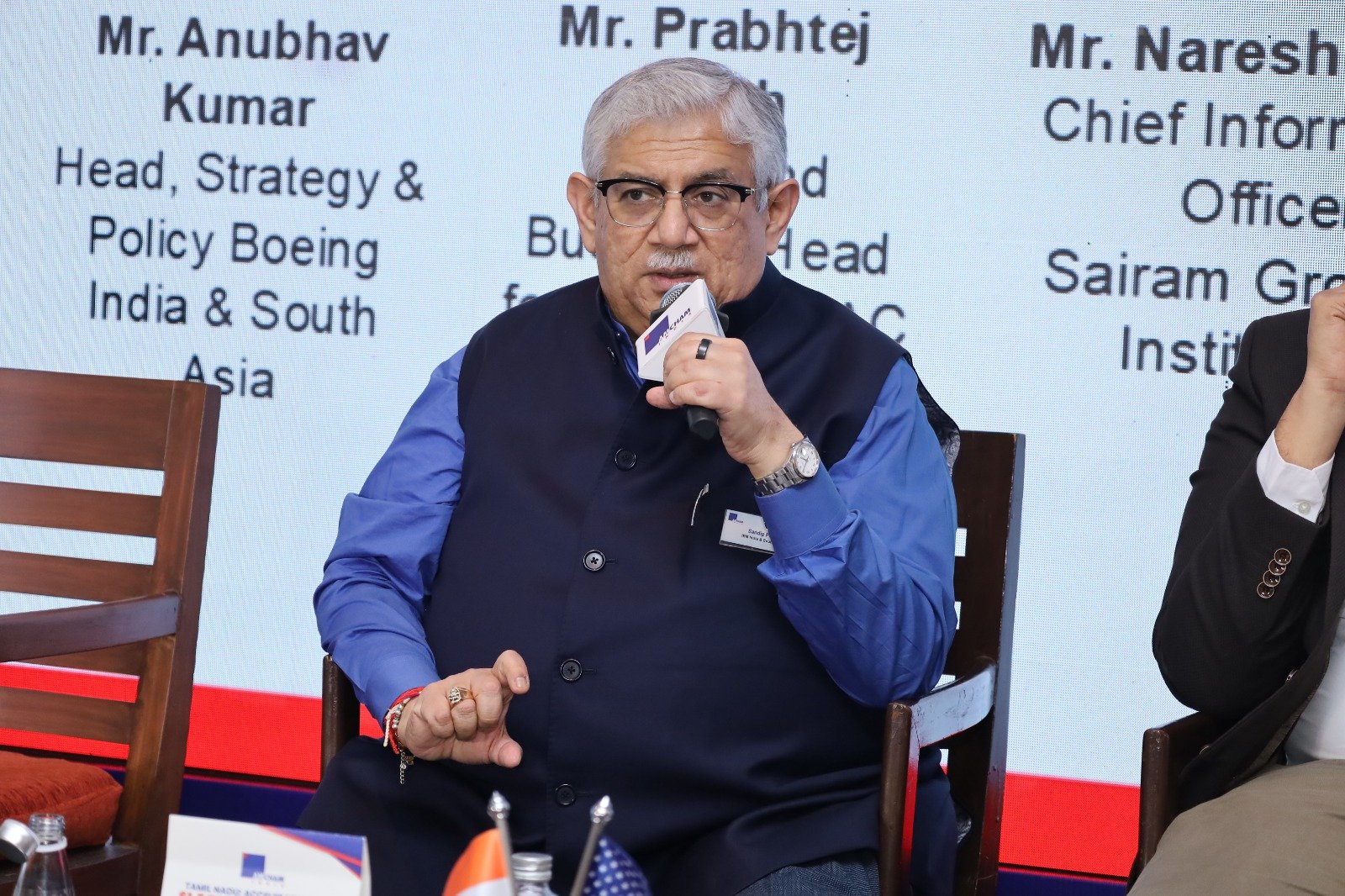
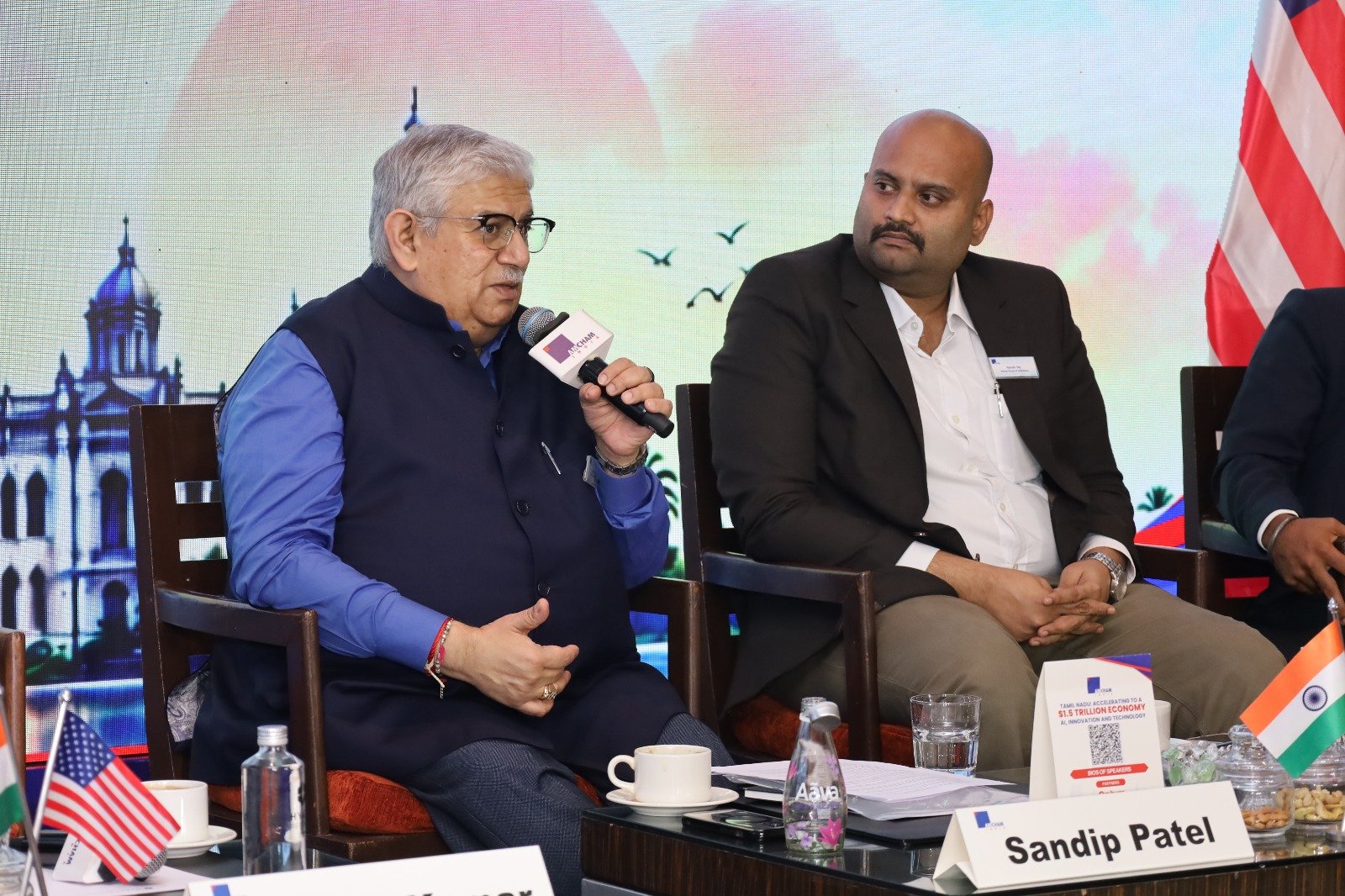
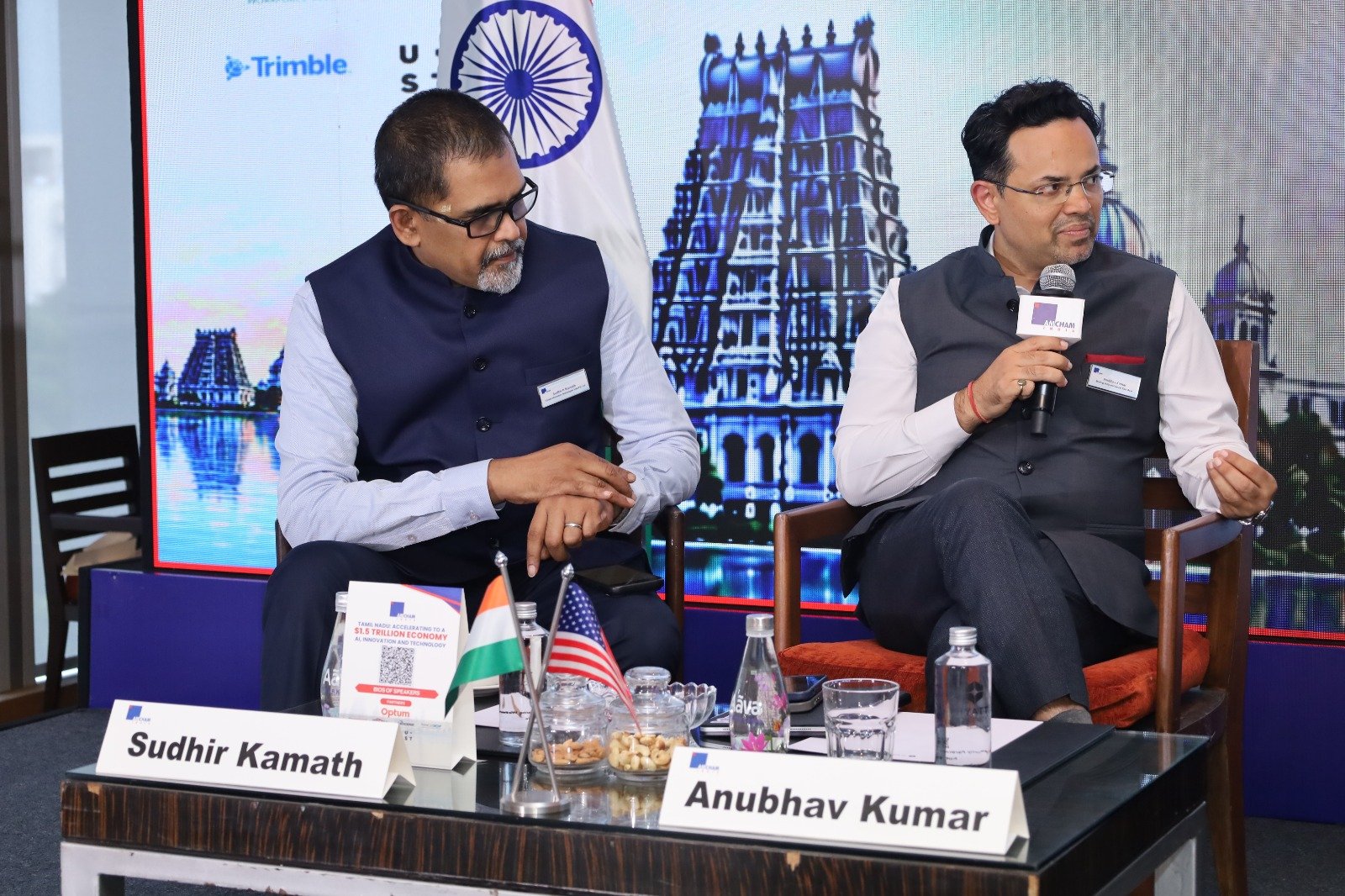
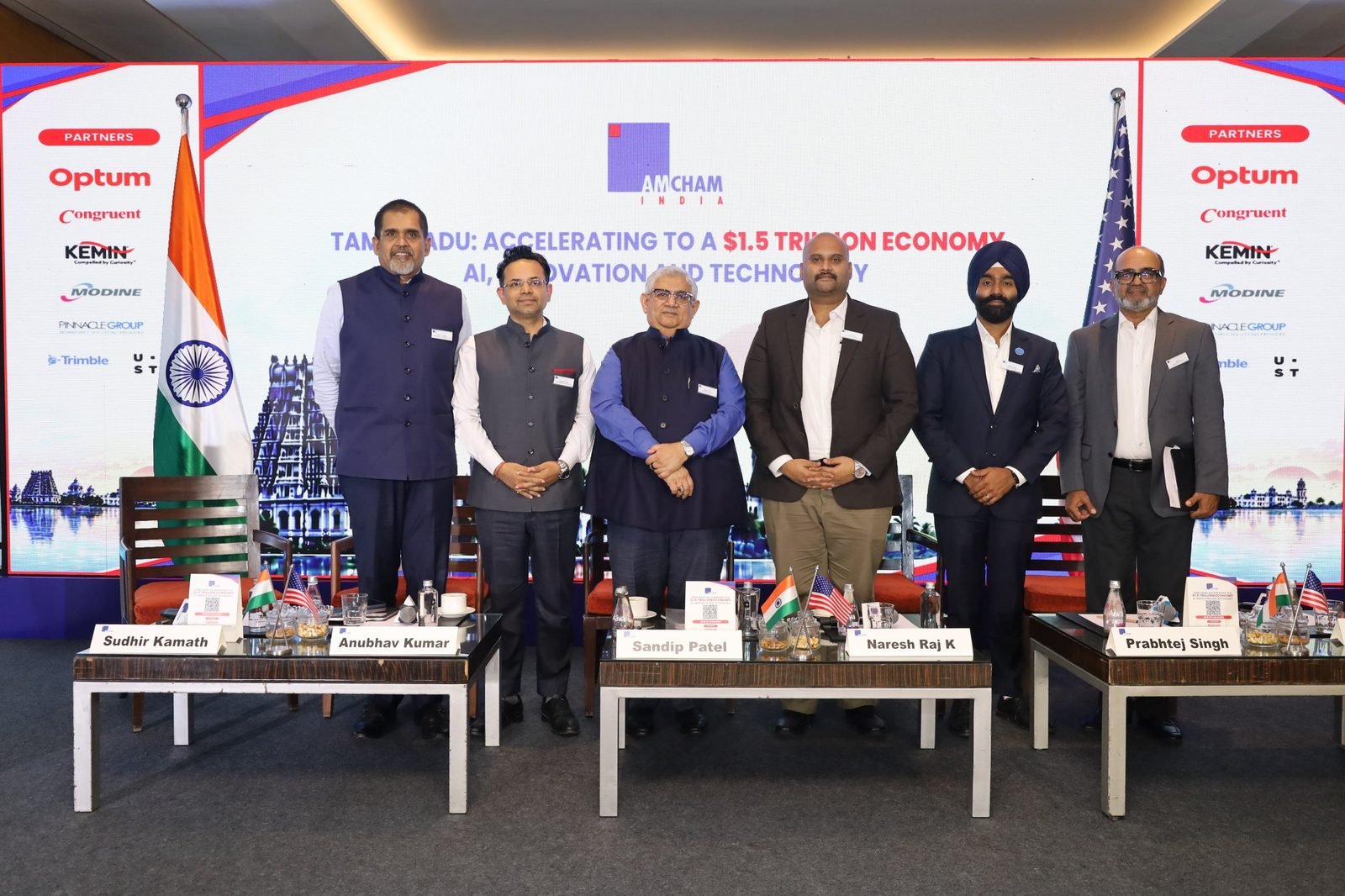
The third panel session, ‘Talent for Tomorrow: Building a Future-Ready Workforce,’ explored strategies to bridge skill gaps, foster continuous learning, and build a future-ready workforce to support Tamil Nadu’s evolving industrial landscape. Moderated by Mr. Ajay Vij, Vice Chairman, AMCHAM and Senior Country Managing Director, Accenture in India, the session featured an esteemed panel of industry leaders and institutional experts: Mr. Sandip Patel, Chairman, AMCHAM and Chairman and MD, IBM India & South Asia, Mr. Anubhav Kumar, Head, Strategy & Policy, Boeing India & South Asia, Mr. Prabhtej Singh, Sales and Business Head for India & APAC, Pinnacle Group India, Mr. Naresh Raj K., Chief Information Officer, Sairam Group of Institutions, and Mr. Sudhir Kamath, Head of Finance, Trimble India. The discussion emphasized moving beyond traditional skilling for the sake of certification toward modular credentials, hands-on project-based learning, and micro-credentials that cultivate real technical confidence and entrepreneurial capabilities. Speakers highlighted the importance of industry-education partnerships, where academic institutions align with corporate problem statements to give students a clear purpose and practical exposure early in their academic journey.
A major focus was placed on the skills of the future in an AI-driven era—highlighting the shift from mere tech consumers to active problem solvers, makers, and “translators” who can bridge technology deployment with human impact. The session also underscored the critical demand for specialized hard skills in sectors like aerospace and manufacturing, alongside soft skills, such as deep customer understanding and empathy. The panel concluded with an emphasis on fostering a culture of lifelong learning and continuous reskilling, supported by corporate-academic ecosystems, open innovation labs, and strategic talent initiatives to ensure long-term employability, and workforce competitiveness.
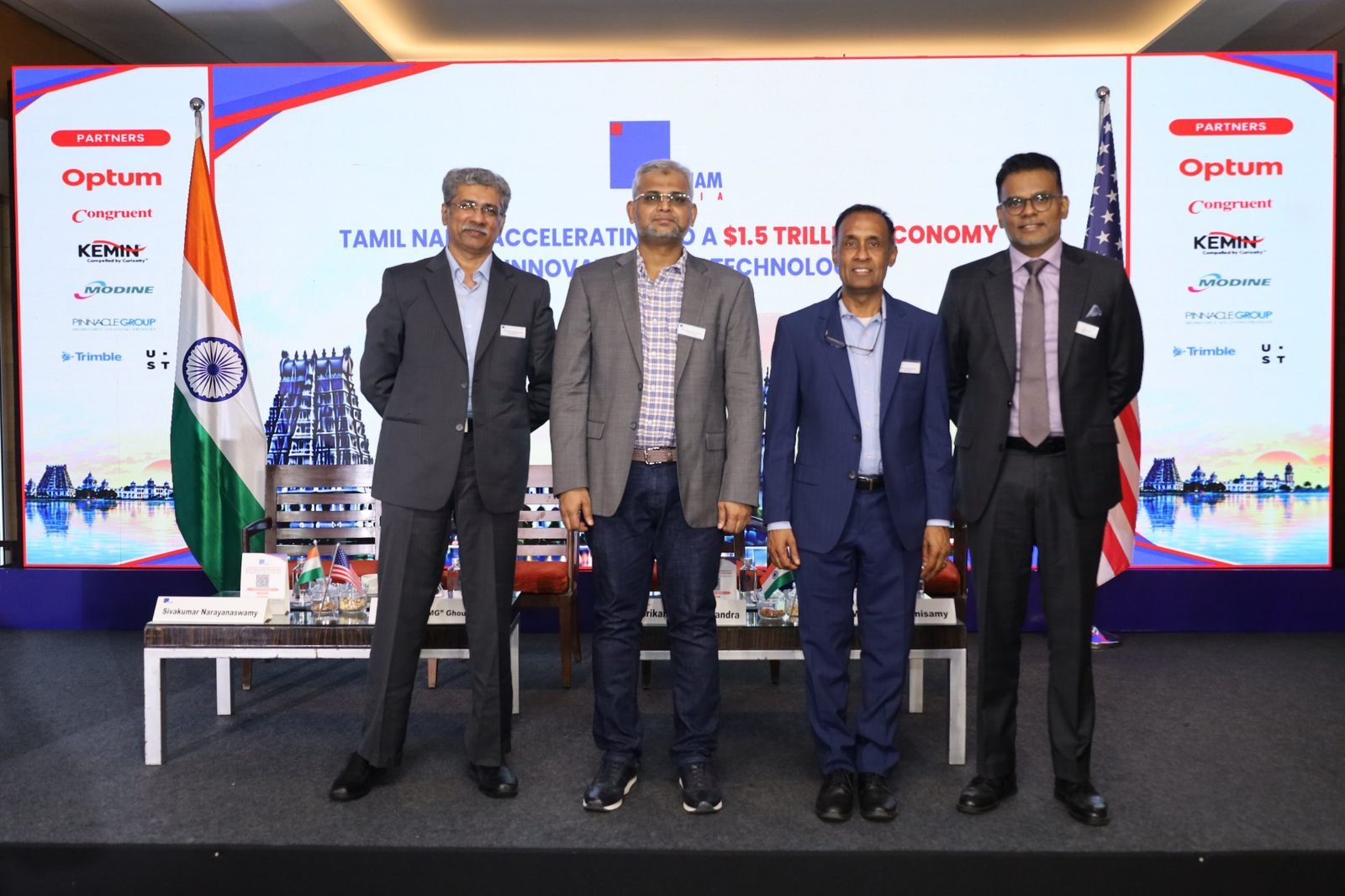
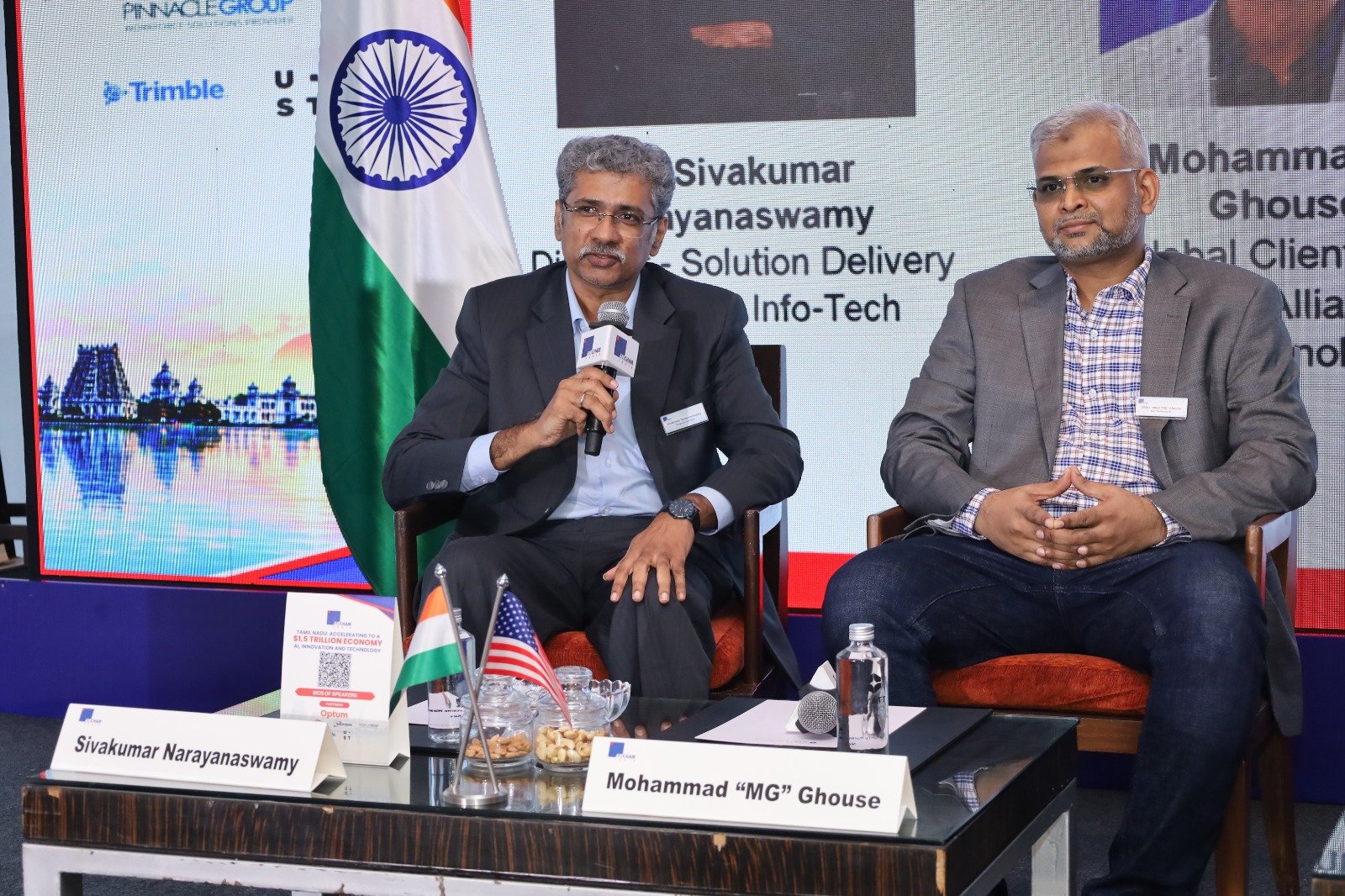
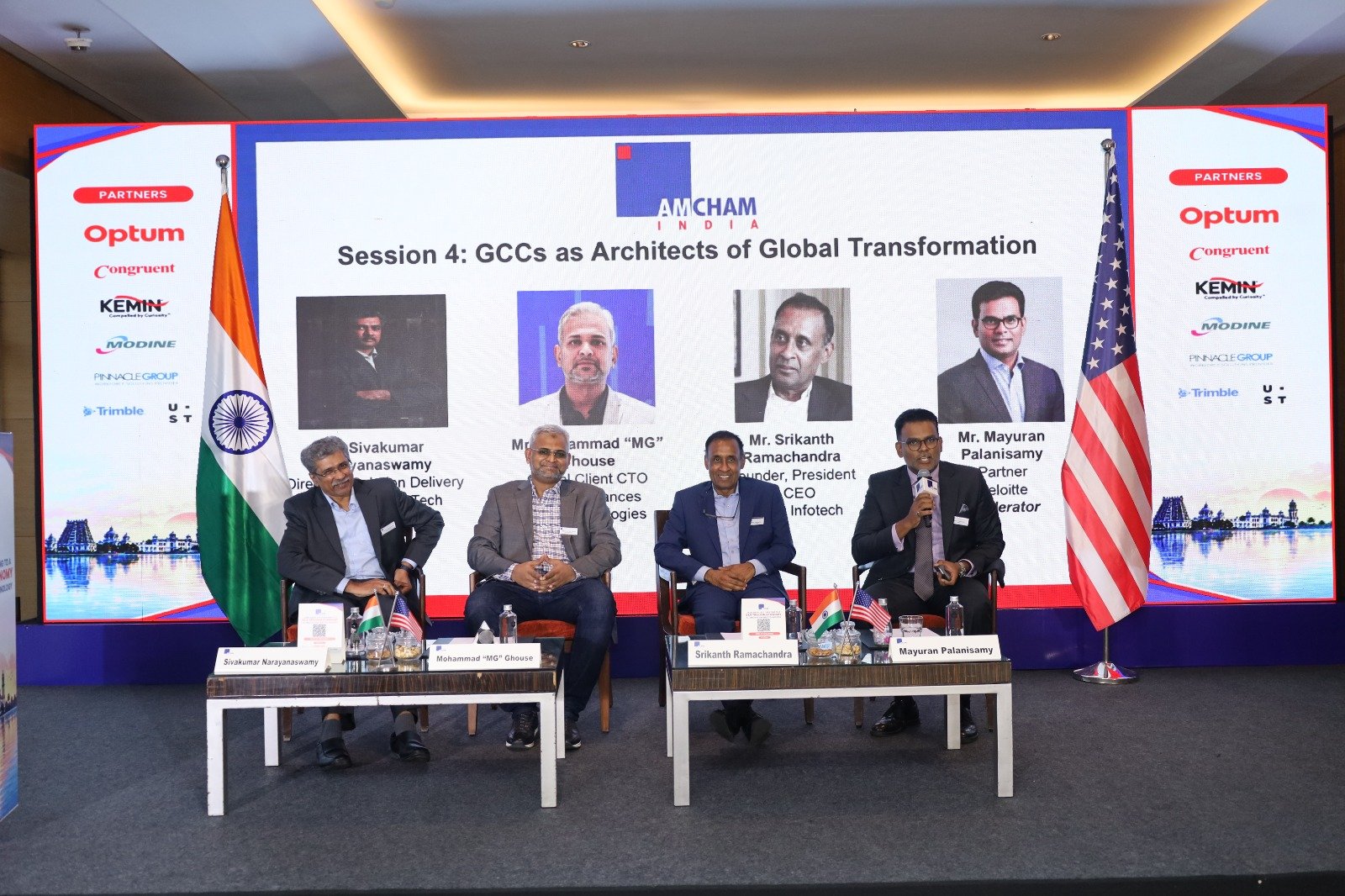
The fourth and final session, ‘GCCs as Architects of Global Transformation’ explored how GCCs have evolved beyond traditional cost-arbitrage hubs to become core strategic drivers of global business transformation, innovation, and enterprise value. Moderated by Mr. Mayuran Palanisamy, Partner, Deloitte, the session featured an expert panel comprising, Mr. Sivakumar Narayanaswamy, Director – Solution Delivery, Congruent Info-Tech, Mr. Mohammad “MG” Ghouse, Global Client CTO, Global Alliances, Dell Technologies, and Mr. Srikanth Ramachandra, Founder, President & CEO, NTrust Infotech. The discussion highlighted the phenomenal growth of India’s GCC ecosystem—scaling to over 2,150 centers and approaching $19 billion in revenue, with projections to reach 5,000 GCCs and up to $110 billion by 2030. Speakers highlighted that modern GCCs must operate as “outcome centers” leveraging artificial intelligence, cloud architectures, and robust automation not just for operational efficiency, but to own end-to-end product development, reduce legacy tech debt, and directly influence global business models.
A major focus was placed on AI adoption and enterprise trust. Speakers stressed that integrating AI requires rigorous governance, clear regulatory compliance, and a shift from fragmented piloting to unified, enterprise-wide AI-driven architectures. Furthermore, the panel addressed the necessity of moving up the value chain by solving complex business challenges, partnering closely with local academic institutions, and tapping into Tamil Nadu’s deep talent pools across tier-1 and tier-2 cities to sustain long-term growth and competitiveness.
The conference was supported by the following partners: Optum, Congruent, Kemin, Modine, Pinnacle Group, Trimble, and UST.