Events
Past Events
GCC Committee Meeting: Skilling and Talent: Navigating Opportunities, Addressing Challenges, and Building Solutions
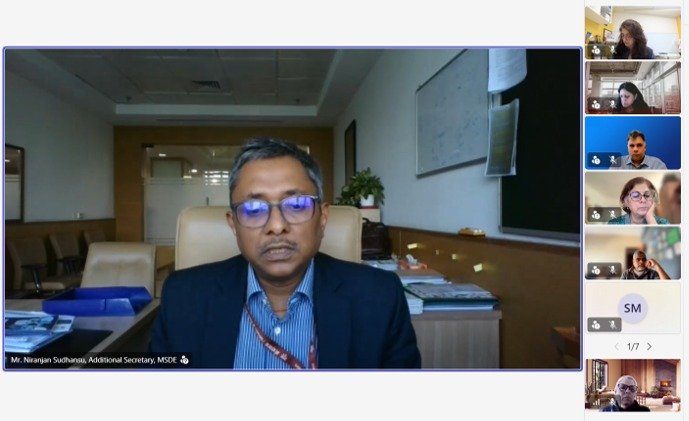
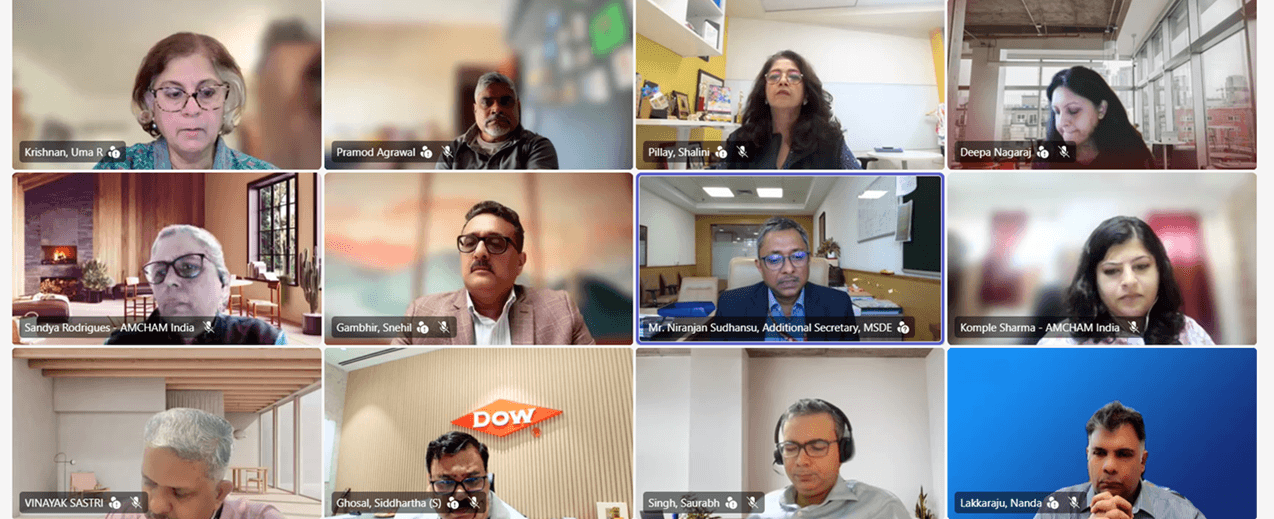
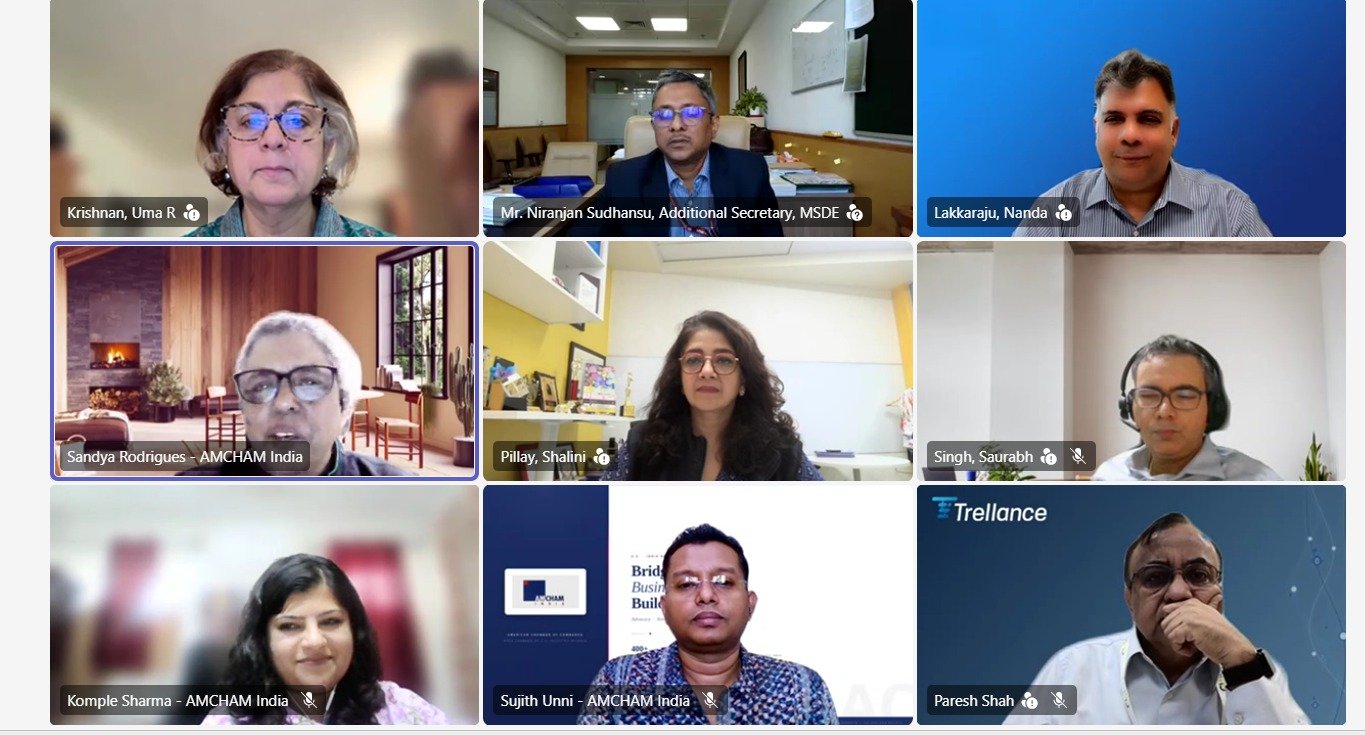
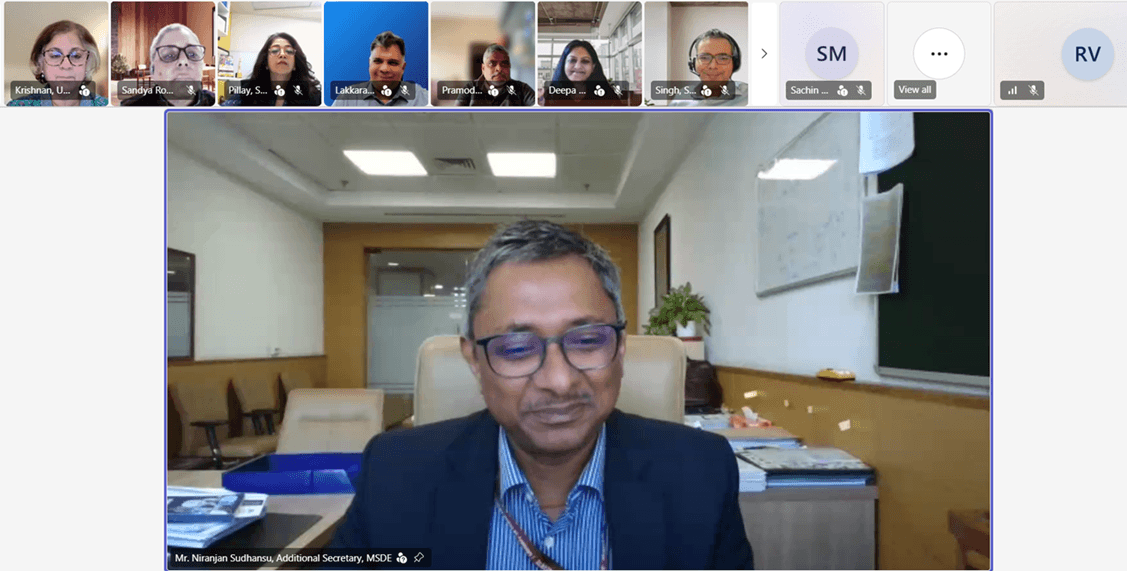
AMCHAM’s GCC Committee organized a virtual meeting on July 23rd under the leadership of Ms. Uma Ratnam Krishnan, Chairperson – GCC Committee, AMCHAM and Managing Director, Optum India and Mr. Nanda K. Lakkaraju, Co-Chairperson – GCC Committee, AMCHAM and Managing Director, Carrier Technologies India Limited. The theme of the meeting was ‘Skilling and Talent: Navigating Opportunities, Addressing Challenges, and Building Solutions’ with Mr. Niranjan Kumar Sudhansu (IAS), Additional Secretary, Ministry of Skill Development & Entrepreneurship, Government of India, as the guest speaker.
The discussion focused on strengthening India’s skilling ecosystem to better meet evolving industry needs in an AI-driven economy. Members emphasized that the focus must shift from measuring the number of individuals trained to improving employability, workforce readiness, and long-term career outcomes. Future skilling initiatives should be outcome-oriented, flexible, and aligned with the pace of technological change. A key concern was the persistent mismatch between available talent and industry demand. While India has a large workforce, employers continue to face shortages of job-ready professionals with the right technical and domain expertise. Participants stressed the need for closer collaboration between government, industry, and academia to bridge this gap and position talent as India’s competitive advantage.
Artificial intelligence was identified as a transformative force reshaping jobs and skill requirements across sectors. The consensus was that AI should be integrated into vocational education and skilling programs, while greater emphasis should be placed on digital literacy, continuous learning, and domain-specific capabilities to prepare the workforce for emerging roles. Industry participation was highlighted as critical to the success of the skilling ecosystem. Employers should play a larger role in curriculum design, competency mapping, training delivery, and apprenticeship opportunities to ensure programs remain relevant to market needs.
Apprenticeships and structured workplace learning were viewed as effective mechanisms for improving employability by providing practical, hands-on experience. Participants also discussed the need for a more agile skilling framework through modular learning pathways, micro-credentials, and stronger integration between vocational and higher education. This would enable learners to continuously upgrade their skills and adapt to changing workforce requirements throughout their careers. Beyond technical expertise, the discussion underscored the growing importance of soft skills, learning agility, adaptability, and cross-functional capabilities. Special attention was given to the needs of global capability centers (GCCs) and MSMEs, with recommendations to strengthen industry partnerships, simplify participation in government initiatives, and create more flexible, industry-responsive training models.
The meeting concluded that India’s future competitiveness will depend on building an agile, industry-led skilling ecosystem supported by stronger public-private partnerships, expanded apprenticeships, sustainable funding models, and a sustained commitment to lifelong learning. The overarching objective should be to develop a workforce that is not only skilled but also adaptable, employable, and prepared for the demands of a rapidly evolving global economy. The discussion was moderated by Ms. Uma Ratnam Krishnan, Chairperson – GCC Committee, AMCHAM and Managing Director, Optum India and Mr. Nanda K. Lakkaraju, Co-Chairperson – GCC Committee, AMCHAM and Managing Director, Carrier Technologies India Limited.