Events
Past Events
AI Impact: Innovation and Implementation
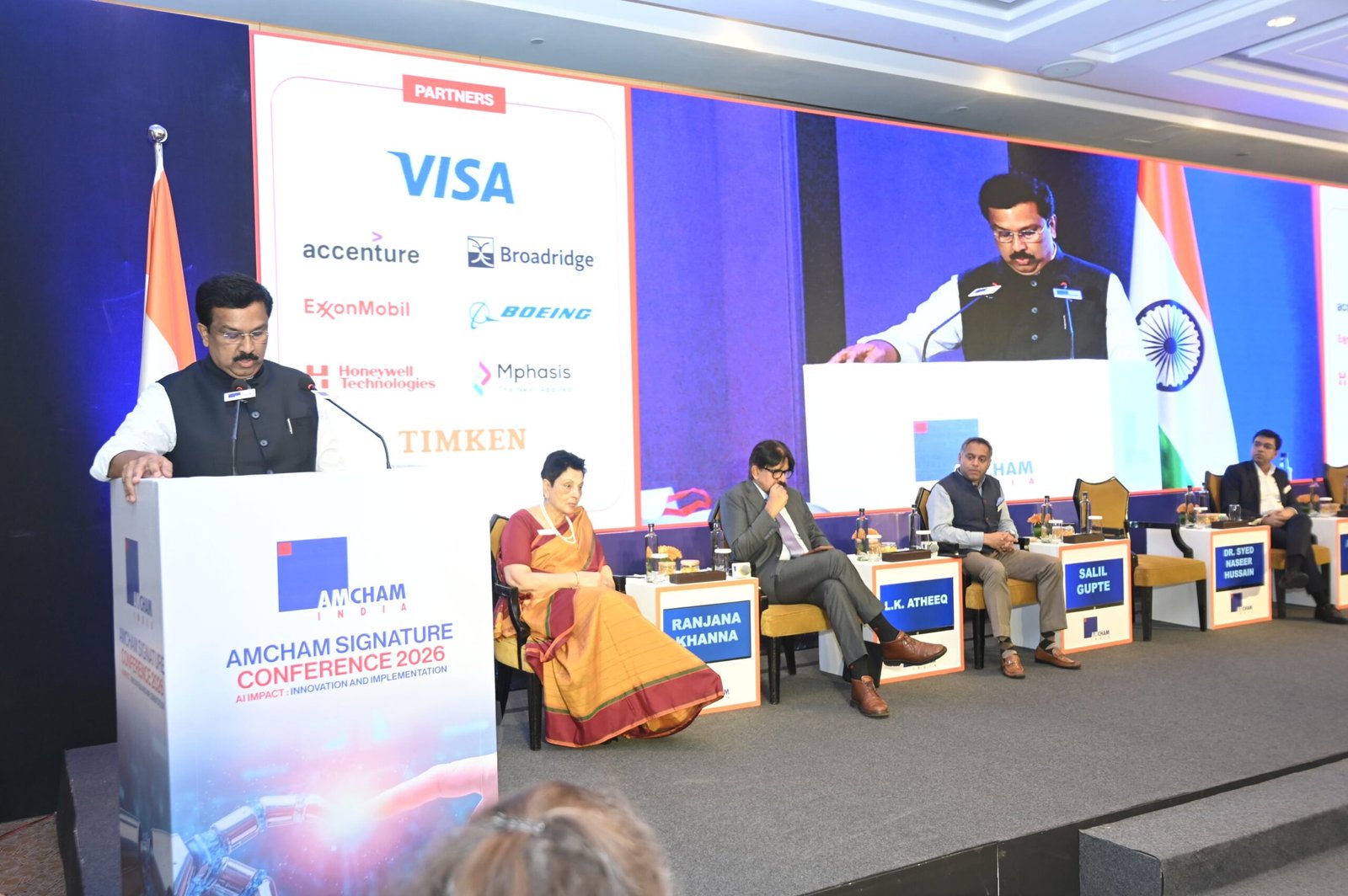
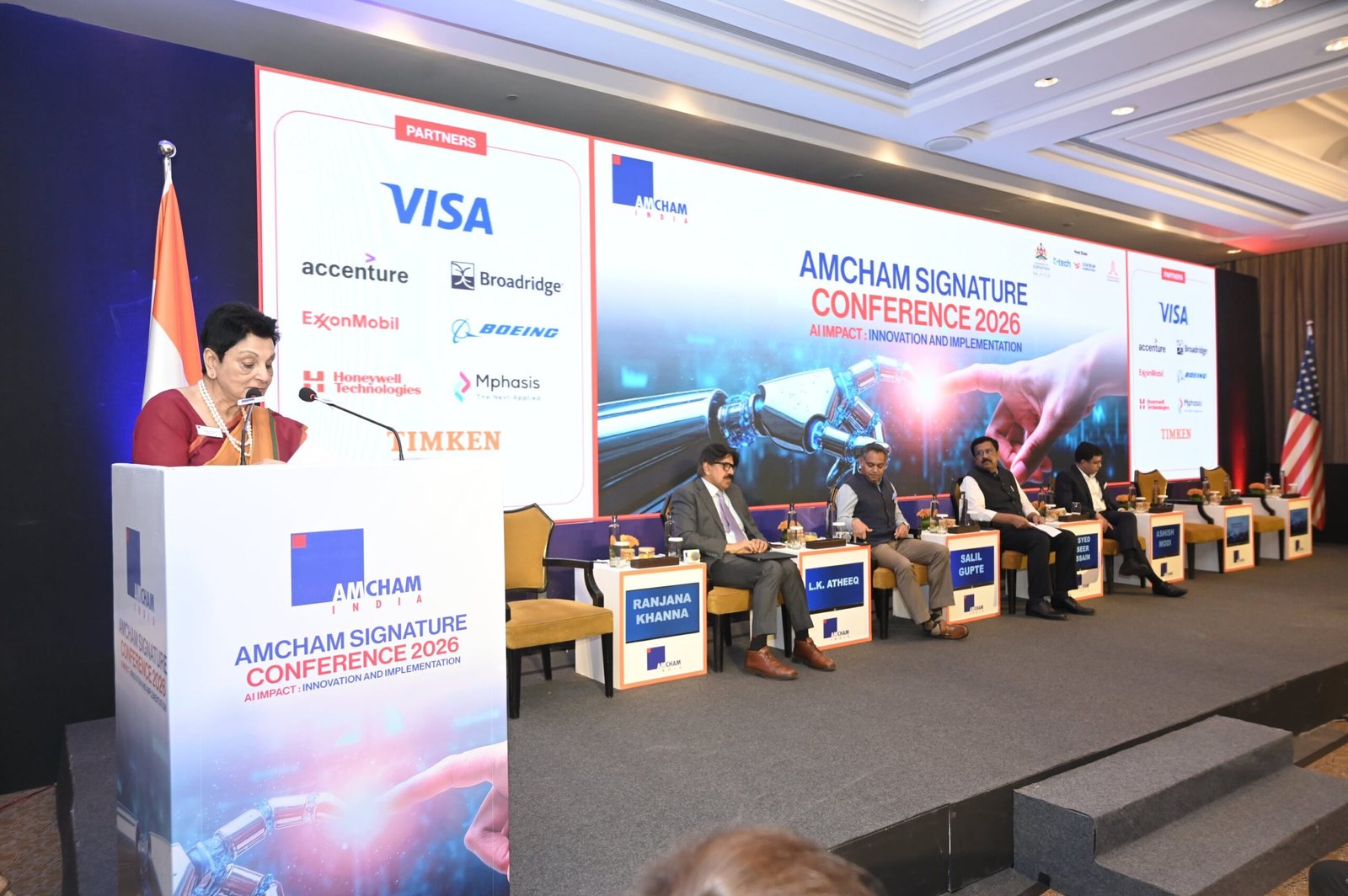
AMCHAM’s signature conference for the Karnataka Chapter, was held on August 25th at the Shangri-La, Bengaluru, convening key government officials and industry leaders to deliberate on the theme ‘AI Impact: Innovation and Implementation.’ The conference was hosted in collaboration with the Department of Electronics, IT, BT & Science and Technology, Government of Karnataka. The inaugural session set the context around AI, technology, innovation, manufacturing, skills and the U.S.–India partnership. Ms. Ranjana Khanna highlighted India’s rapid AI growth and U.S. industry’s role as a key partner. Mr. Salil Gupte Chairman, AMCHAM India and President, Boeing India & South Asia, outlined India’s evolution into a strategic hub for engineering, innovation and advanced manufacturing. Sri L.K. Atheeq, Finance Advisor to the Hon’ble Chief Minister, Government of Karnataka, in his special address, emphasized balanced regional growth, responsible data use and sustainable infrastructure. In his keynote address, Dr. Syed Naseer Hussain, Member of Parliament, Rajya Sabha, Karnataka, General Secretary, All India Congress Committee, and Member, Congress Working Committee, called for India to become a developer and co-creator of AI, with trust and responsible governance at its core. Mr. Ashish Modi, Chairman – Karnataka Chapter, AMCHAM and President, Honeywell India & Asia Pacific, brought together the themes of AI, digital transformation, cyber security, skills and manufacturing, highlighting the practical challenges of AI implementation. Overall, the session underscored the importance of government–industry collaboration in building a trusted, skilled and future-ready Karnataka.
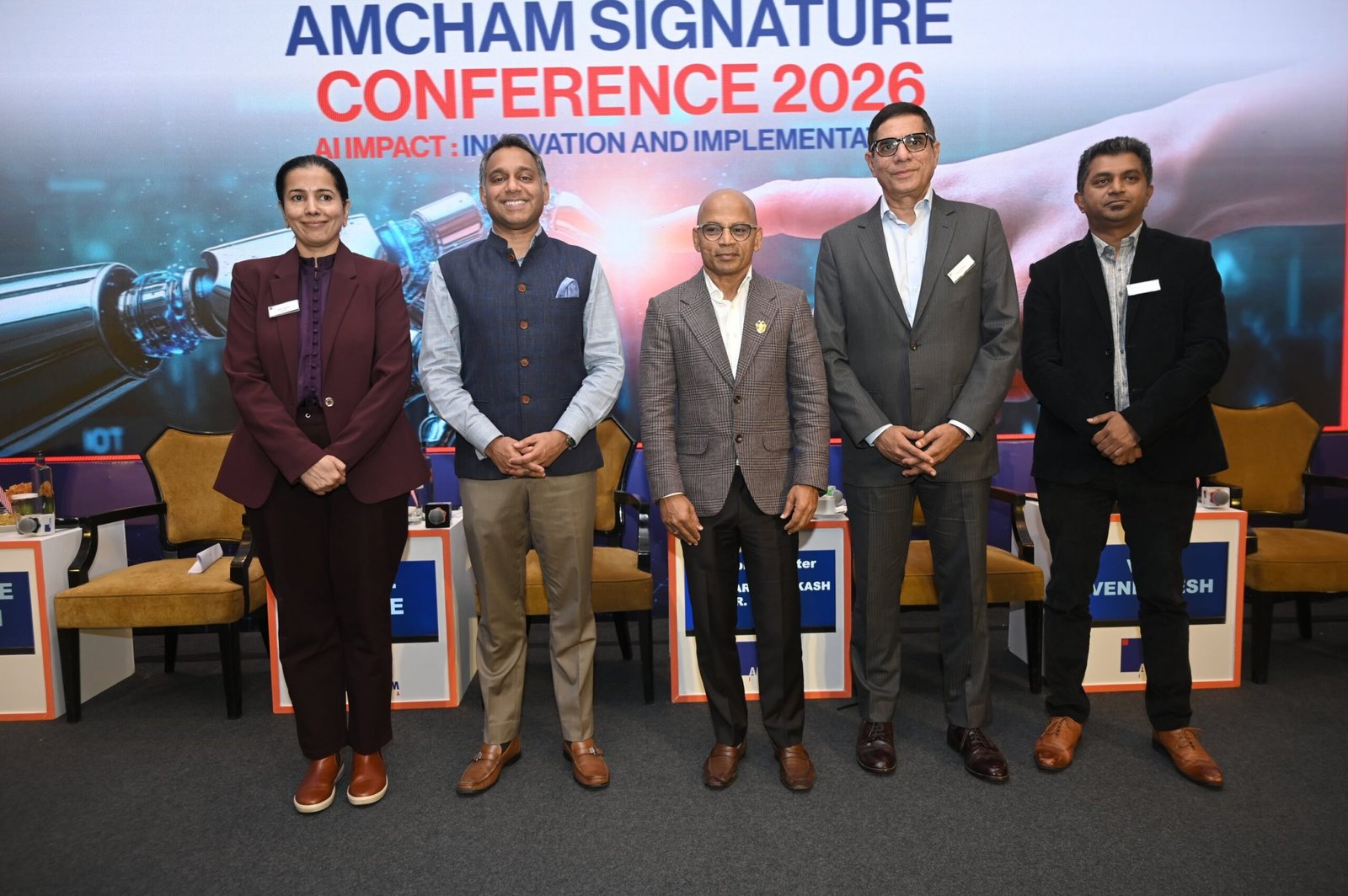
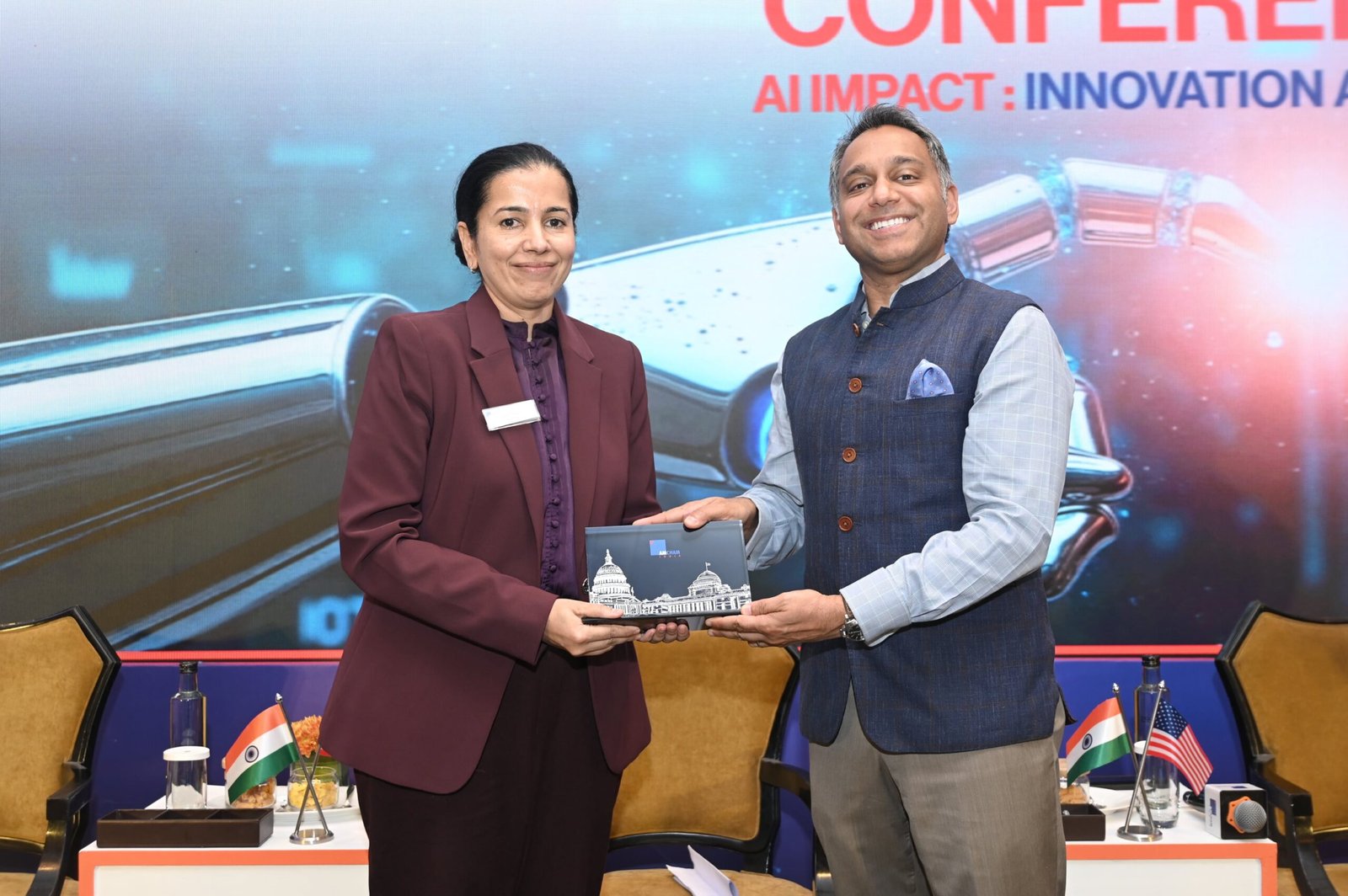
In the first session, ‘Building a Skill-Ready Workforce,’ Dr. Sharanprakash R. Patil, Hon’ble Minister for Medical Education, Skill Development, Entrepreneurship & Livelihood, Government of Karnataka, gave a keynote address that highlighted the mismatch between education and industry requirements and called for a more demand-driven and industry-aligned skilling ecosystem. He emphasized stronger industry participation in curriculum development, greater student exposure to workplaces and vocational training as a pathway to employability. He also highlighted the need for greater investment in AI centers of excellence and healthcare education. The panel discussion with Mr. Salil Gupte, Chairman, AMCHAM and President, Boeing India & South Asia, Mr. Vinu Venkatesh, Group CFO & Chief Administrative Officer, Apexon, and Mr. Prabhakar Vijayaprakash, Director, Customer Partner, Kyndryl, was moderated by Ms. Swati Sharma, Chief Strategy & Growth Officer, Accenture LearnVantage. The session examined how Karnataka and India can build a workforce equipped for rapid technological transformation. Speakers highlighted the widening gap between emerging technology requirements and available skills, stressing that reskilling and upskilling must become strategic business priorities. The discussion called for stronger industry–academia partnerships, practical training, apprenticeships and demand-driven curricula. Karnataka’s GCC ecosystem was also highlighted as it evolves from execution-led operations towards R&D, innovation, product development and global decision-making.
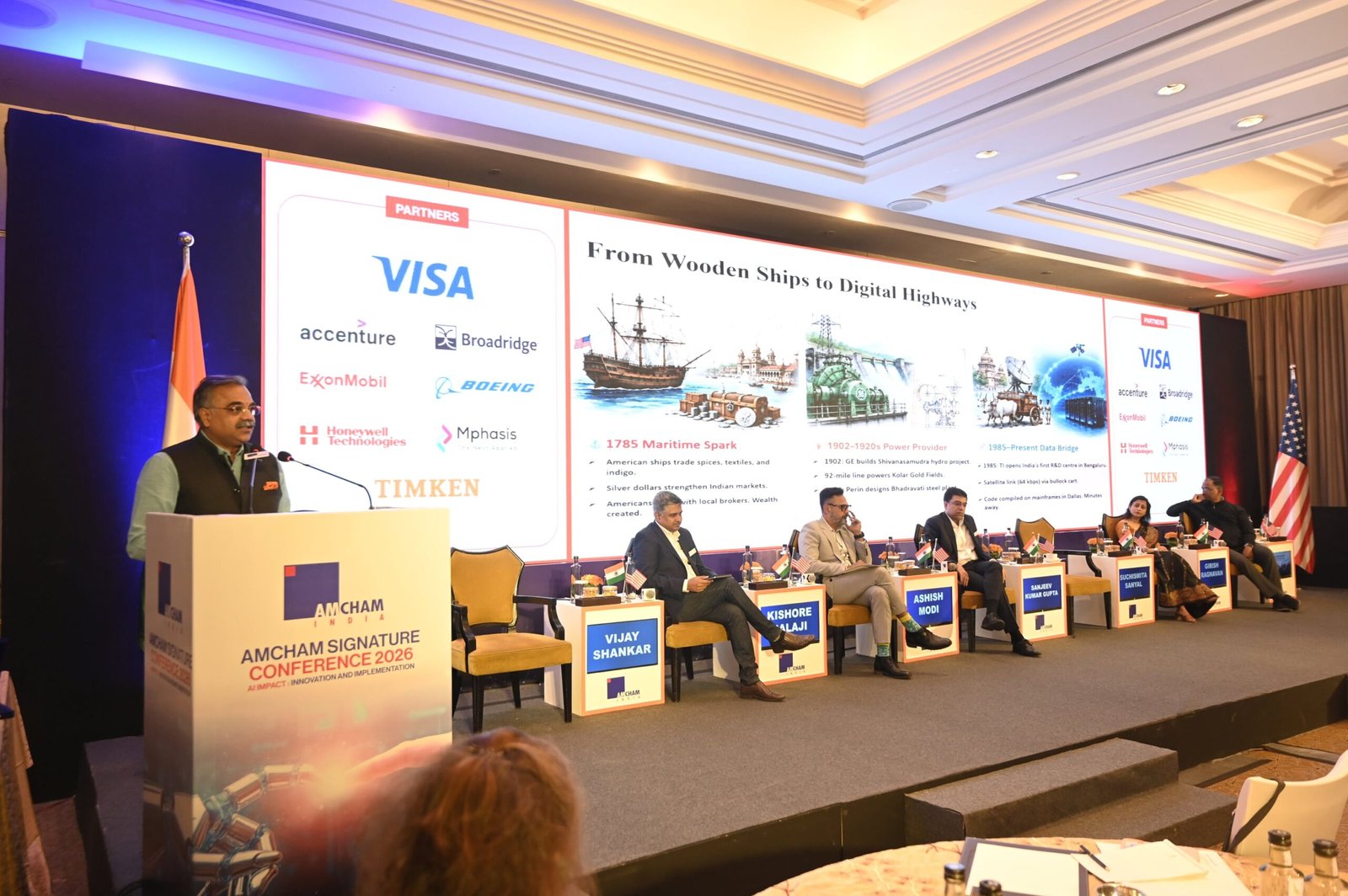
Session 2, ‘Digital Transformation, AI & Advanced Analytics’ began with a special address by Mr. Sanjeev Kumar Gupta, CEO, Karnataka Digital Economy Mission (KDEM). He highlighted the deepening U.S.-India technology and business partnership in Karnataka, noting that the relationship is increasingly moving from service delivery towards co-creation and innovation. He identified opportunities across AI, semiconductors, aerospace, advanced manufacturing, healthcare, fintech, quantum and cyber security, supported by Karnataka’s strong talent base and GCC ecosystem. He emphasized Karnataka’s potential to become a platform where Indian and U.S. talent, technology and capital come together to develop solutions for India and global markets. The panel discussion featured Mr. Ashish Modi, Chairman – Karnataka Chapter, AMCHAM and President, Honeywell India & Asia Pacific, Ms. Suchismita Sanyal, Head, India Strategy, ExxonMobil, Mr. Girish Raghavan, Chief Technology Officer, GE Healthcare, and Mr. Kishore Balaji, Executive Director – Government & Regulatory Affairs, IBM, with moderation by Mr. Vijay Shankar, Partner and Practice Leader, GCC Business Consulting and Intelligent Automation & AI. EY in India. The panel explored how organizations are moving from digital adoption towards AI-led business transformation, with applications across productivity, customer experience, operations and new business models. Speakers stressed that successful AI deployment requires strong data foundations, cyber security, privacy, responsible AI, governance and future-ready talent. The discussion highlighted Karnataka’s opportunity to become a global hub for responsible and scalable AI innovation, supported by its talent, GCC ecosystem and strong U.S.–India business linkages.
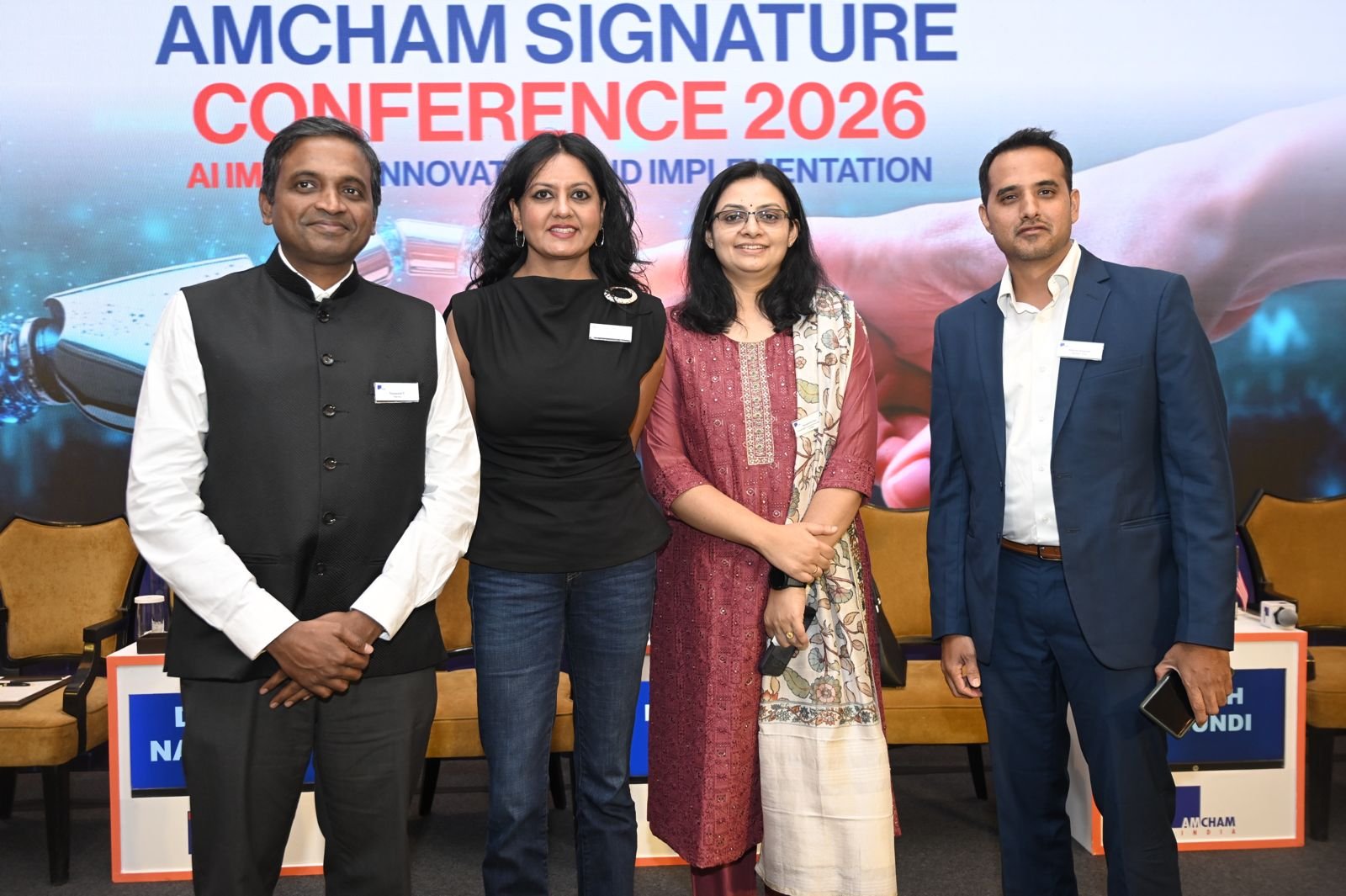
The 3rd session, ‘Trust, AI & Quantum in BFSI’ featured speakers Ms. Ranjeetha Raja, Head of Product – Enterprise Platforms, Broadridge India, Ms. Deepa Nagaraj, Senior Vice President & Global Head – ESG, Sparkle Innovation Ecosystem, and Communications, Mphasis, Mr. Manish Kogundi, Head of Digital Assets and AI Technology – APAC, Northern Trust and moderator Mr. Rajagopal P., Head – Agentic and Digital Solutions, India and South Asia, Visa Inc. The discussion examined how AI, quantum technologies and digital finance are reshaping financial services while creating new requirements for trust, security and resilience. Speakers highlighted the shift from AI experimentation to responsible, enterprise-scale adoption, with opportunities across customer experience, fraud detection, risk management, operations and financial decision-making. Strong data governance, cyber security, privacy and regulatory oversight were identified as essential to responsible adoption. The panel also discussed quantum computing and quantum-safe security, legacy modernization and the need for specialized talent combining technology, finance, risk and regulatory expertise.
In a special address on ‘Building a Secure, AI-Driven Digital Karnataka,’ Dr. N. Manjula, IAS, Secretary, Department of Electronics, IT, BT & Science and Technology, Government of Karnataka, outlined Karnataka’s ambition to become India’s first AI-native state, building on its technology ecosystem, talent, start-ups and GCC presence. She highlighted the proposed AI University and AI Hub, NIPUNA Karnataka and Centers of Excellence in AI, deep tech, quantum and related areas. She emphasized responsible AI, data privacy, cyber security and ethical deployment alongside innovation. Initiatives such as KEO, AI Akshara Abhiyana and Coding Gurukula were highlighted as examples of taking AI and digital skills into education and underserved communities. She also stressed the importance of deeper U.S.–India collaboration in AI, talent, R&D, digital infrastructure and responsible technology.
Next was a fireside chat on ‘Strategic Cyber Security for the Modern Enterprise’ with Ms. Kaku Nakhate, National Executive Board Member, AMCHAM and Chair, India, BofA Securities India and Ms. Urvashi Vaid Chhibber, Head – Digital Natives and Global Capability Centers, India & SAARC, Fortinet. The chat examined cyber security as a strategic business and board-level priority amid accelerating digital transformation and AI adoption. The discussion highlighted AI’s dual role in enabling sophisticated cyber-attacks while strengthening threat detection, automation and response. Speakers emphasized the importance of guardrails and governance for emerging agentic AI, accessible cyber security solutions for SMEs, and stronger protection of manufacturing and digital supply chains. The conversation also stressed the need to build cyber resilience, business continuity and specialized cyber security talent, while strengthening U.S.–India collaboration in trusted technologies and capacity building.
In a keynote address on ‘AI for Manufacturing: Building a Future-Ready Karnataka,’ Dr. M. B. Patil, Hon’ble Minister for Large & Medium Industries & Infrastructure Development, Government of Karnataka, shared Karnataka’s ambition to become a global hub for advanced manufacturing, technology and innovation. He emphasized the State’s strengths in AI, deep tech and talent, alongside investments in industrial infrastructure, semiconductors, electronics and data centers. Future-ready skilling was a key focus, including the transformation of ITIs into centers of excellence and upgrading of training infrastructure. He also highlighted investment facilitation, ease-of-doing-business reforms and the growing opportunity to expand industrial growth beyond Bengaluru. Mr. Salil Gupte Chairman, AMCHAM India and President, Boeing India & South Asia, shared his perspective and Mr. Siddhartha Ghosal, Chairman – Western Region, AMCHAM and CEO & Country President, Dow India, Dow Chemical International, gave the vote of thanks.
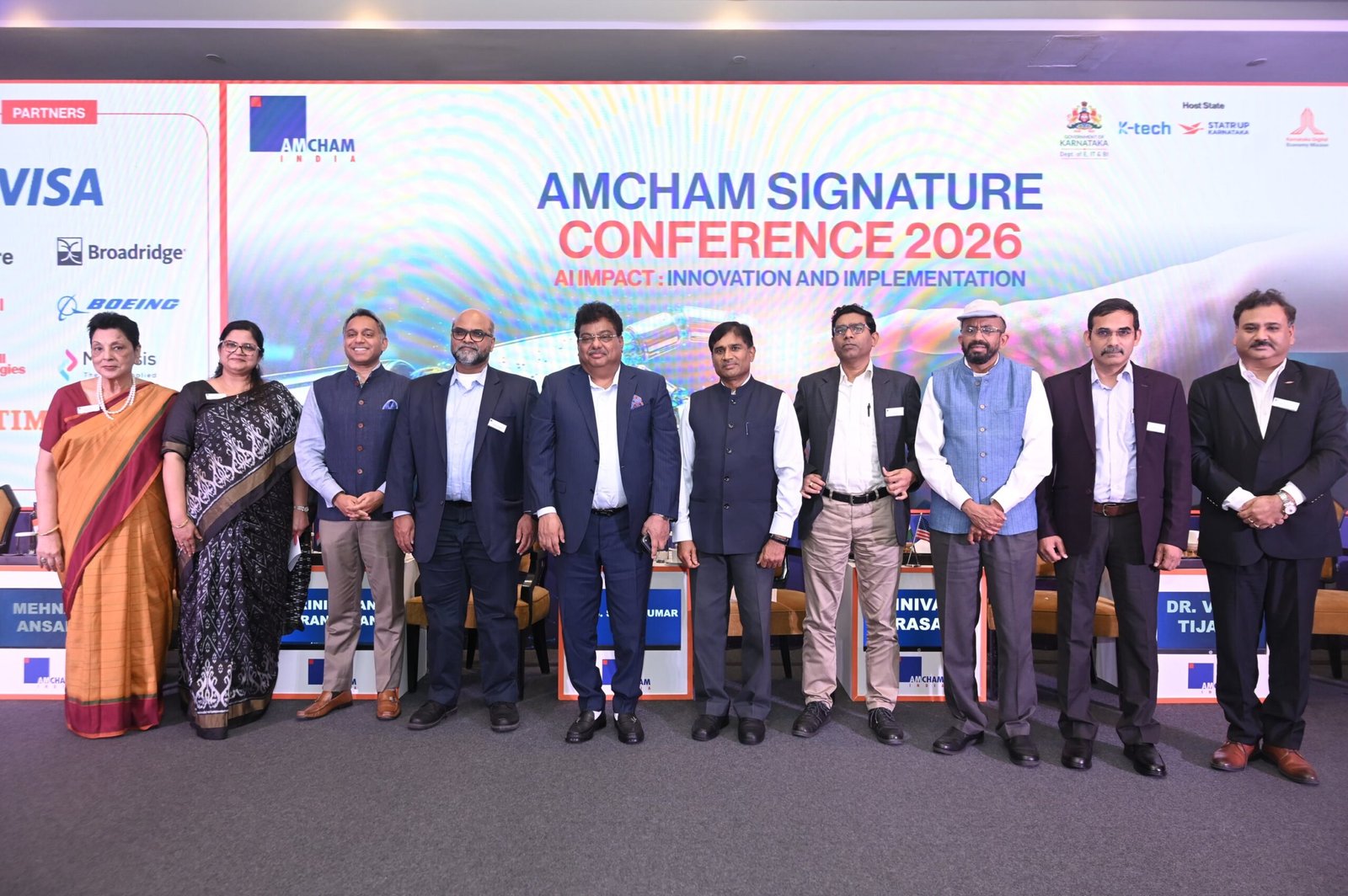
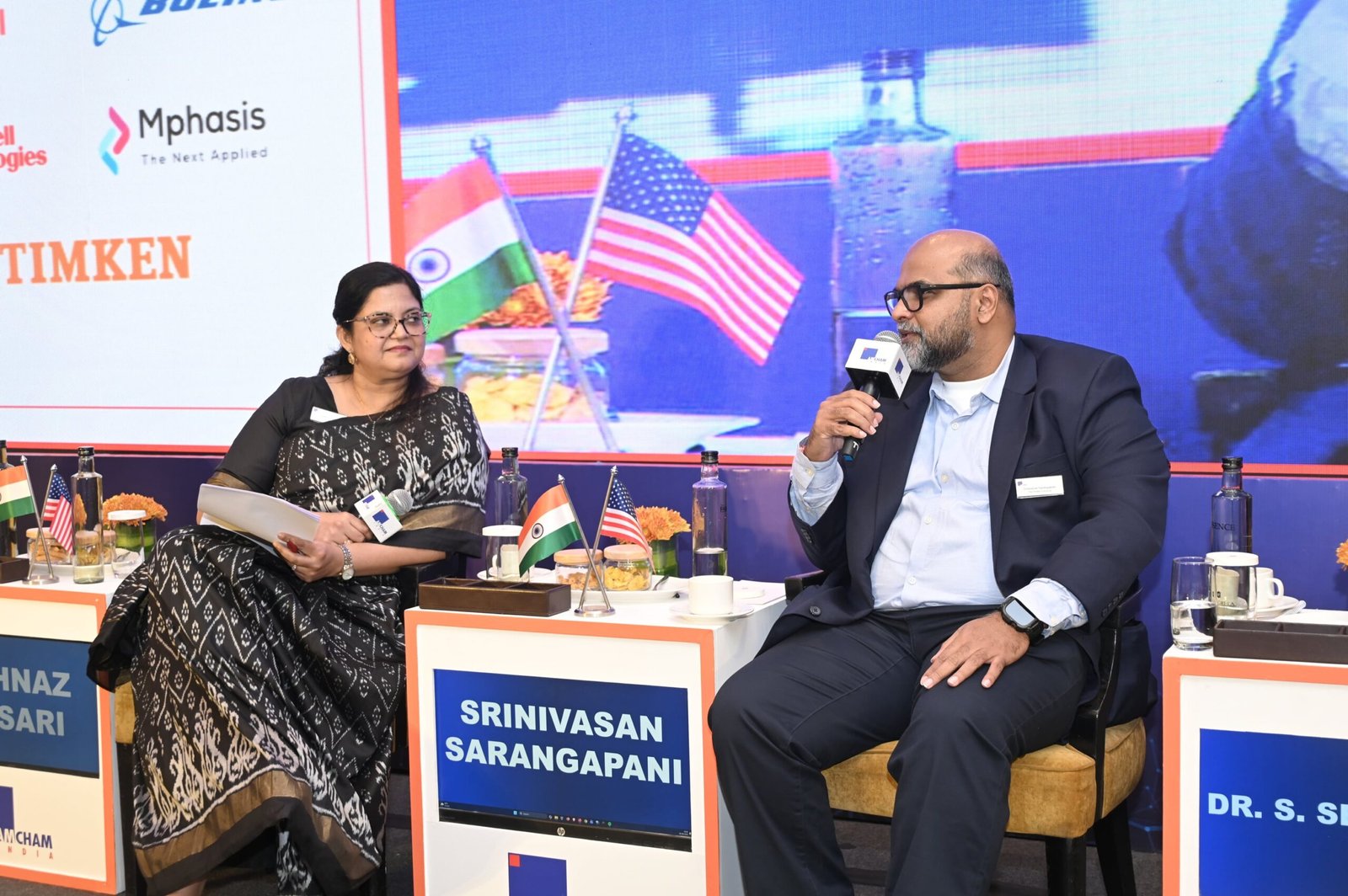
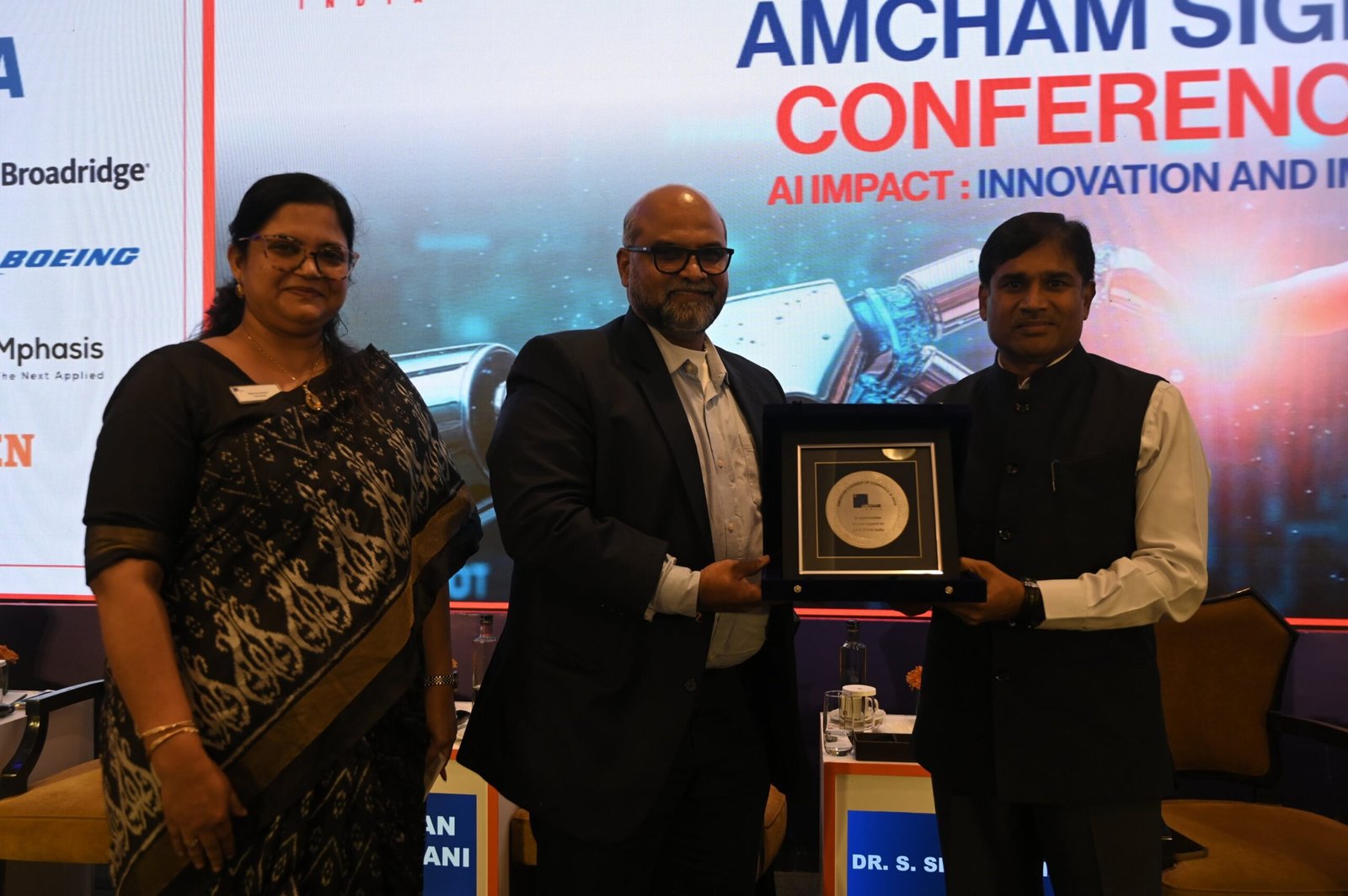
The last session, ‘AI for Manufacturing’ began with a special address by Dr. S. Selvakumar, IAS, Principal Secretary, Department of Commerce & Industry, Government of Karnataka. He highlighted Karnataka’s expanding electronics, semiconductor, AI and advanced manufacturing ecosystem, covering the value chain from chip design and fabrication to packaging, testing and downstream manufacturing. He emphasized AI applications in manufacturing and MSMEs, including predictive maintenance, machine vision, quality control, smart supply chains and energy efficiency. He also highlighted opportunities for deeper U.S.-India collaboration across AI, semiconductors, trusted supply chains, quantum, biotechnology, energy and space, supported by industry-aligned skilling and stronger government–industry engagement. The industry panel discussion featured speakers Mr. Anand Bhat, Senior Director, Product Engineering (Manufacturing), Global Operations & Technology, Analog Devices Inc., Dr. Vijay Tijare – Senior Director – Engineering, Dover India Innovation Center, Mr. Srinivasa Prasad, India R&D Site Head, TnM Business, Emerson, Mr. Srinivasan Sarangapani (Shrini), Director – Supply Chain, The Timken Company, and moderation by Ms. Mehnaz Ansari, Founder & Managing Director, AeroInfraStratgix (AISX). The panel demonstrated how AI is moving manufacturing from Industry 4.0 connected factories towards cognitive and increasingly autonomous operations. Speakers shared examples of AI improving predictive maintenance, quality, product development, design, testing, supply chains and time-to-market. A key message was the need to move beyond isolated pilots and link AI investments to measurable business outcomes, including productivity, quality, energy efficiency, cost reduction and revenue growth. The discussion also emphasized AI’s role in augmenting human capability, the need for continuous skills development and India’s opportunity to move GCCs and engineering centers from execution towards co-innovation, product development and global technology leadership. Ms. Ranjana Khanna, Director General CEO, AMCHAM closed the program and thanked all the speakers and attendees.