Events
Past Events
Cyber Security for Critical Infrastructure 3.0: U.S.-India Partnership
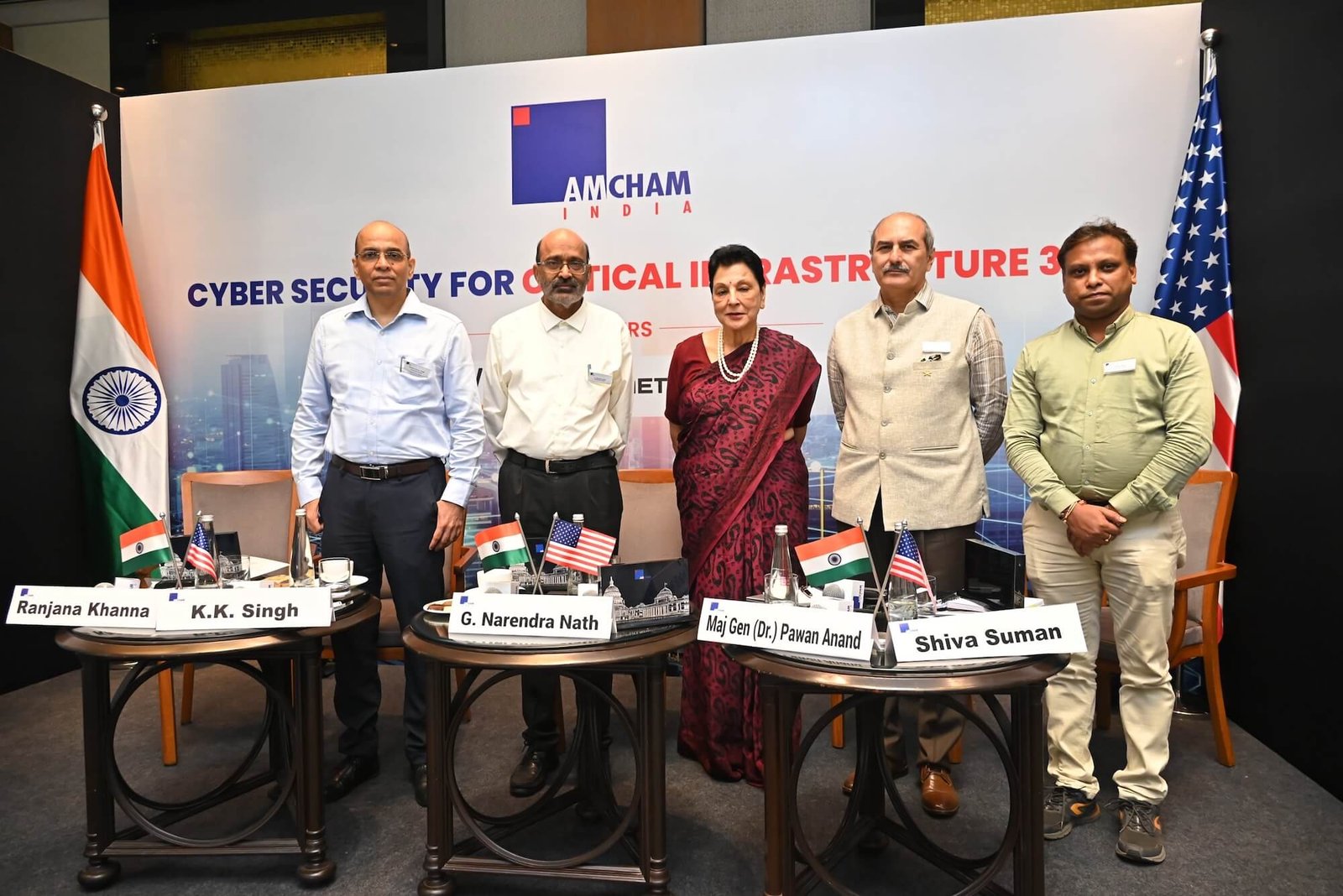
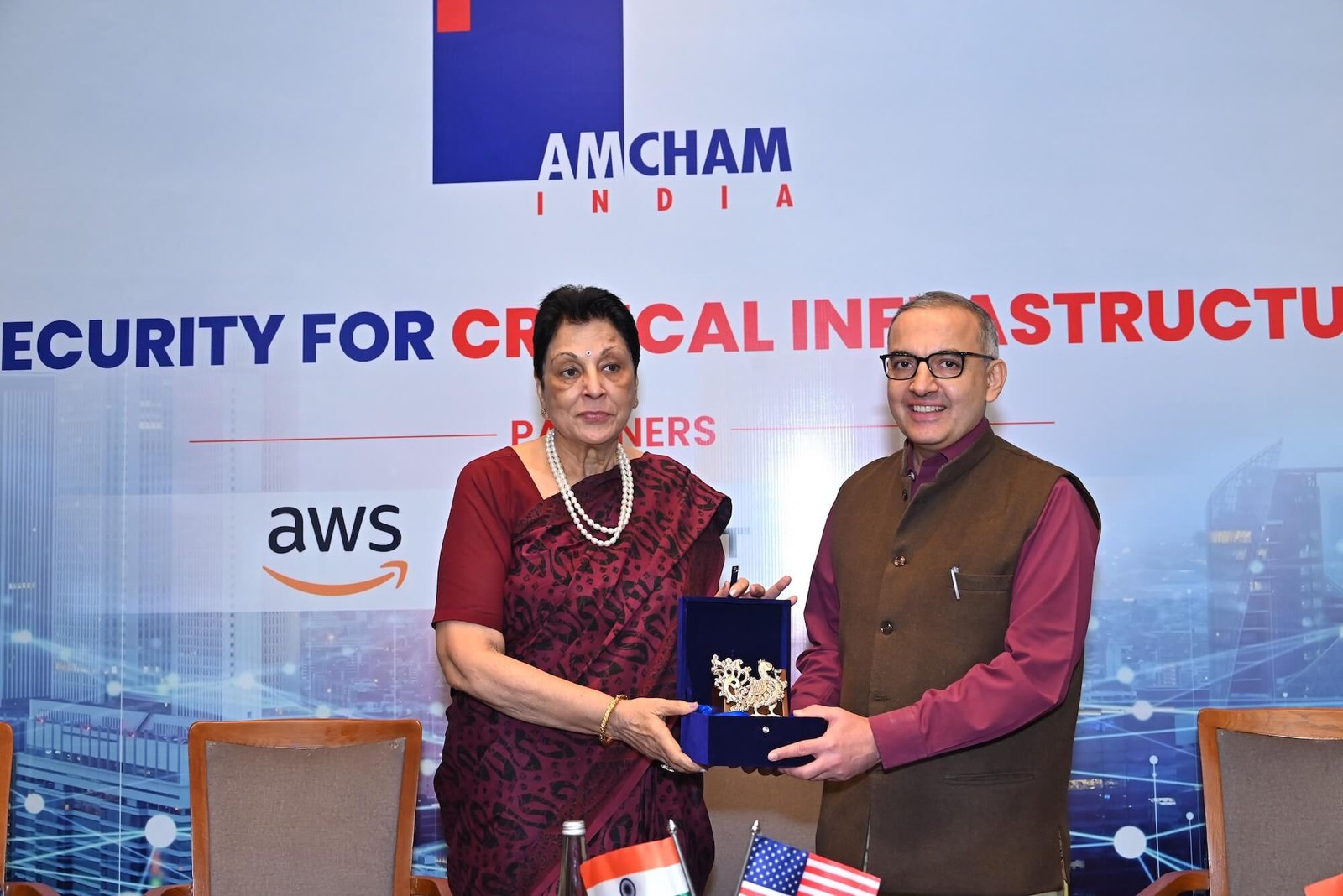
AMCHAM organized the third edition of its ‘Cyber Security for Critical Infrastructure’ conference, on September 3rd bringing together senior policymakers, regulators and industry leaders to discuss how AI is reshaping the defense of India’s power, financial, and telecom infrastructure. The inaugural session themed ‘AI-Driven Cyber Resilience for Critical Infrastructure’ featured the inaugural keynote address by Mr. G. Narendra Nath, Joint Secretary, National Security Council Secretariat, Government of India, who called for ‘resilience by design’ building redundancy and recovery capabilities. In the keynote address, Mr. Krishan Kumar Singh, Joint Secretary, Ministry of Electronics & Information Technology, Government of India, framed cyber security as primarily a governance and risk-management responsibility, pointing to India’s strong global standing on cyber security preparedness alongside the ongoing need to grow the country’s cyber security workforce. Mr. Shiva Suman, Director, Cyber Security Division, Central Electricity Authority and CSIRT Power, Ministry of Power, Government of India, outlined the power sector’s progress on cyber security as critical infrastructure, including new sector regulations and Maj Gen (Dr.) Pawan Anand, AVSM (Retd), Director, Centre for Emerging Technologies for Atma Nirbhar Bharat (USI-CETANB), spoke on building AI-enabled, human-governed cyber resilience for critical infrastructure, emphasizing a continuous cycle of anticipating, monitoring, responding to and learning from incidents.
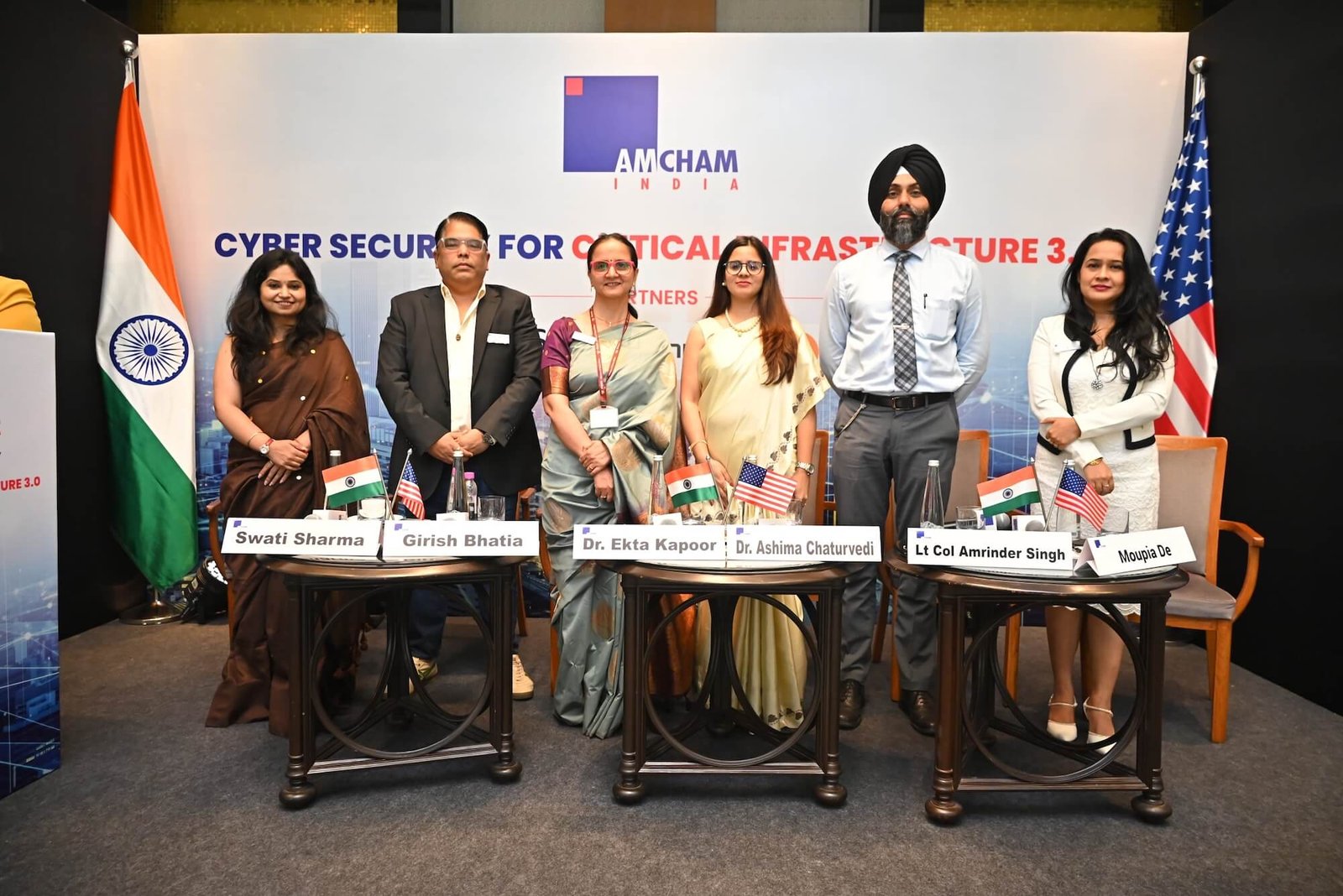
The first session, ‘Security by Design: Quantum Safe and Subsea Cables,’ was anchored by a keynote address from Dr. Ekta Kapoor, Head, Frontier and Futuristic Technologies Division, Department of Science & Technology, Government of India, who detailed the National Mission on Interdisciplinary Cyber-Physical Systems (NMICPS). While Lt Col Amrinder Singh, OSD (Cyber), NITI Aayog, Government of India, emphasized on architecting critical infrastructure to remain secure over decades of operational life even as cryptographic standards, AI capabilities, and quantum computing evolve. Dr. Ashima Chaturvedi, Scientist, Centre for Development of Telematics (C-DOT), Government of India, emphasized the vulnerability of subsea cables, which carry more than 95% of intercontinental data traffic, warning of a ‘harvest now, decrypt later’ threat in which adversaries may already be storing encrypted traffic for future decryption, and highlighted C-DOT’s quantum systems alongside a hybrid architecture combining quantum key distribution and post-quantum cryptography. The panel that followed was moderated by Ms. Swati Sharma, Vice President, Business Information Security Office, S&P Global, with Mr. Girish Bhatia, Senior Director & Head of Sales Engineering, India, Ciena, and Ms. Moupia De, Data & AI, Data Governance and AI Governance Solutions Leader, IBM, flagged that roughly 95% of India’s internet traffic passes through a corridor of just a few kilometers around Mumbai’s Versova cable-landing cluster, discussed newer landing stations emerging on India’s eastern and western coasts, and cited a previous subsea cable outage that took three weeks to repair at an estimated cost of $600 million.
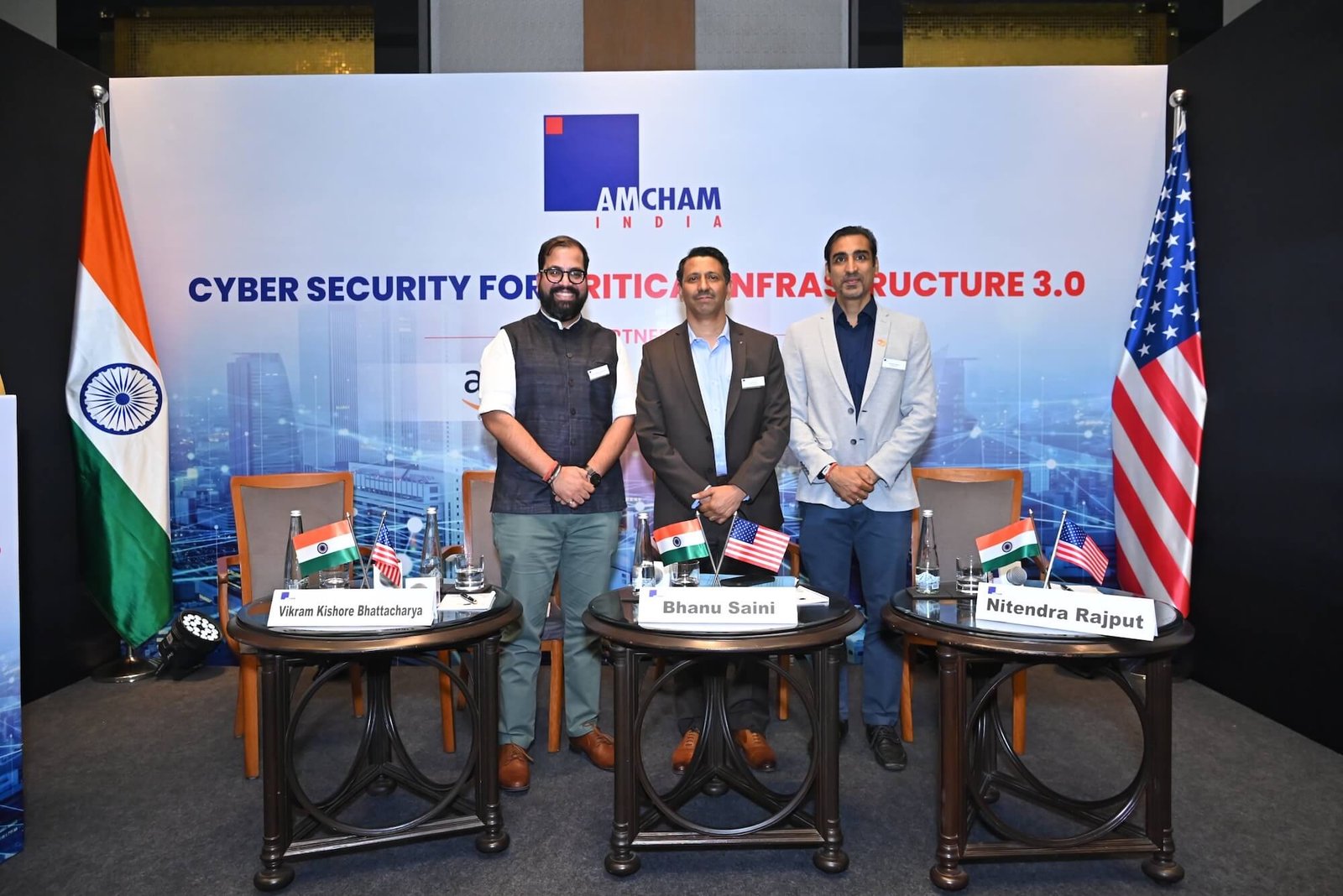
The second session, ‘Cyber Security: Finance & BFSI,’ featured a panel moderated by Mr. Vikram Kishore Bhattacharya, Principal, Public Policy, AWS, with Mr. Nitendra Rajput, Senior Vice President and Head of AI Garage, Mastercard, and Mr. Bhanu Saini, Director and Head of Public Policy and Government Affairs for India & South Asia, Palo Alto Networks, that opened by framing India’s roughly 14 billion monthly UPI transactions and 100 crore Aadhaar authentications against an expanding attack surface. Mr. Saini argued that the most underestimated BFSI risk is not ransomware but unmanaged APIs and unmonitored non-human identities, citing an estimated ratio of roughly 82 machine identities for every human identity in a typical enterprise. Mr. Rajput described how generative AI now allows institutions to simulate synthetic fraud before it occurs, flag compromised cards pre-emptively, and identify fraudulent merchant websites before they scale. Speakers referenced CERT-In’s six-hour incident-reporting requirement and the RBI’s and SEBI’s continuous-monitoring expectations, called for explainable AI with auditable logs and a maker-checker model for high-impact decisions, and recommended government-industry sandboxes to stress-test AI-enabled security tools before deployment in critical financial infrastructure.
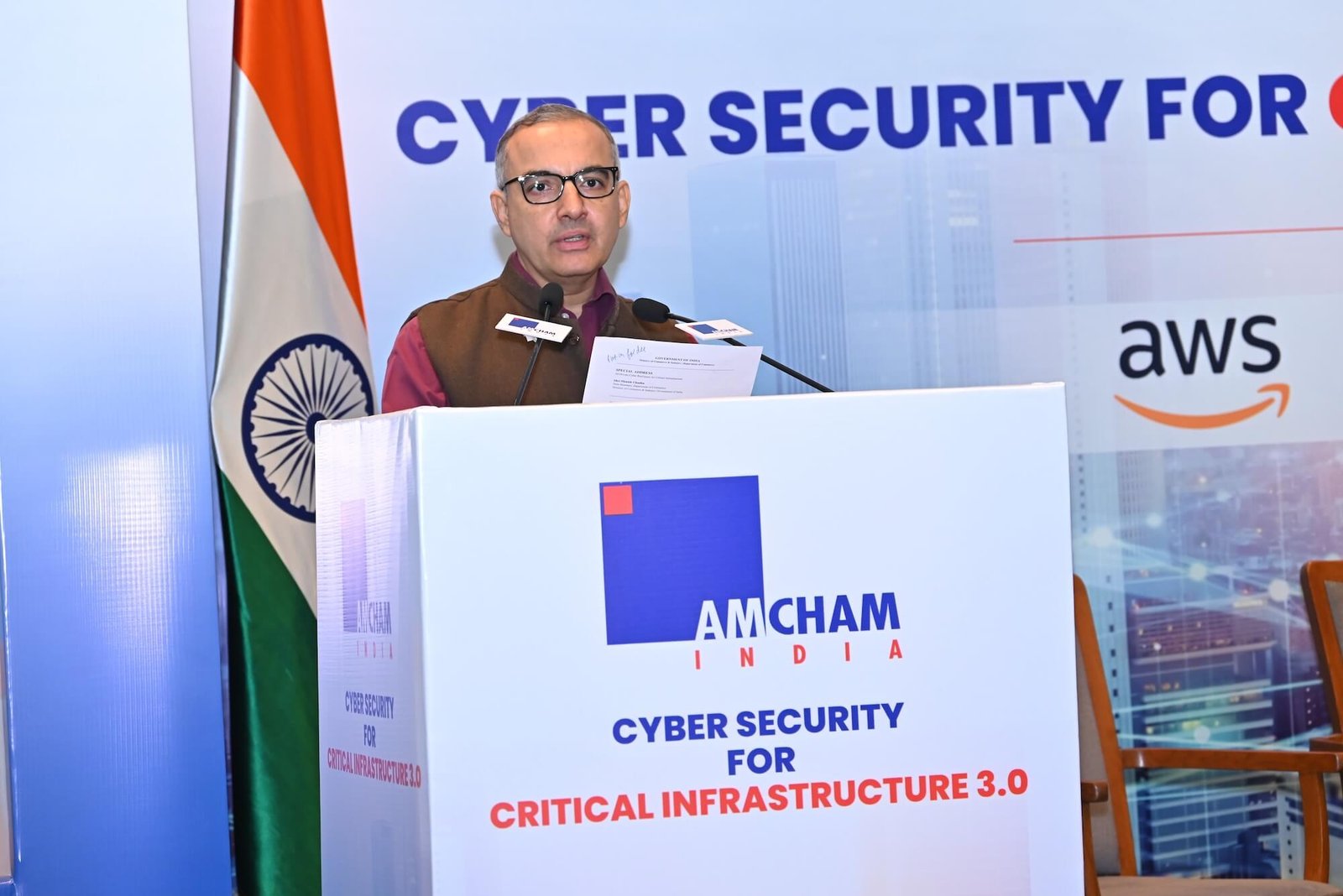
In the valedictory address, Mr. Manish Chadha, Joint Secretary, Department of Commerce, Ministry of Commerce & Industry, Government of India, connected the day’s discussions to India’s digital trade ambitions, pointing to the proposed TradeNet platform, India’s record $863 billion in exports in FY 2025–26 against a $2 trillion target by FY 2030–31, and the ₹25,000 crore Export Promotion Mission’s focus on MSMEs and first-time exporters, and called for cyber security to be built into digital trade infrastructure from the outset.
Throughout the conference, a consistent theme emerged: AI is simultaneously expanding the threat surface confronting India’s critical infrastructure and providing the most realistic route to defending it at machine speed. Speakers across sessions called for closer alignment between U.S. and Indian cyber security standards, faster post-quantum migration, and sustained investment in cyber security talent as foundations of a deeper U.S.-India partnership on critical-infrastructure resilience. The summit was supported by: AWS, Fortinet, and Mastercard.