Events
Past Events
14th Healthcare Conference: Shaping the Future of Healthcare: Innovation, Collaboration and Global Impact
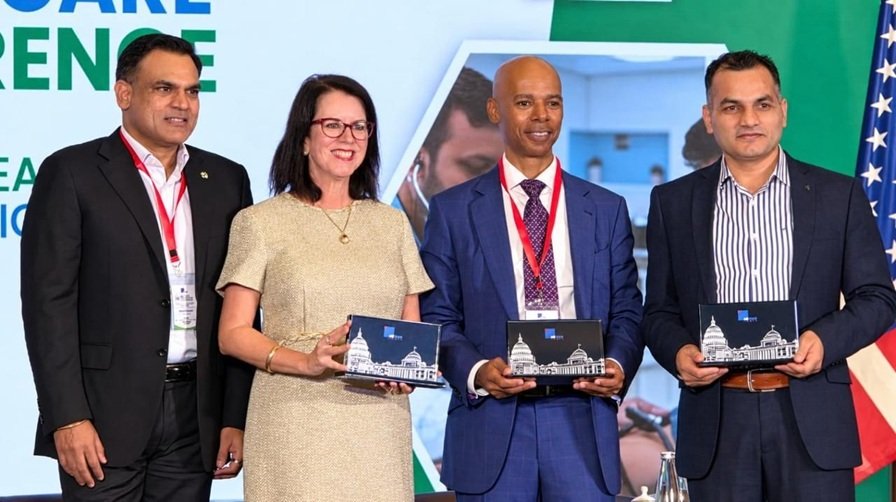
AMCHAM’s 14th Healthcare Conference was held at the Sheraton Gachibowli, Hyderabad, on September 24th themed ‘Shaping the Future of Healthcare: Innovation, Collaboration and Global Impact.’ Mr. Murali Krishna, Chairman – Hyderabad Chapter, AMCHAM and Country Head, Providence India, welcomed the gathering and spoke on the critical role of technology, talent and collaboration in shaping the future of healthcare. AI and digital solutions are transforming care delivery by enabling more patient-centric, preventive, home-based, and efficient models of care. The importance of data security, regulatory expertise, healthcare talent, and trust was emphasized as essential to scaling digital transformation. Key challenges such as workforce shortages, clinician burnout, operational pressures and reimbursement inefficiencies also present opportunities for technology-enabled solutions. Hyderabad and India have an opportunity to evolve from traditional capability centers into global hubs for healthcare expertise, skills, and leadership, supported by collaboration across healthcare, technology, life sciences, government, and academia. The overarching focus is on delivering healthcare at scale while improving accessibility, affordability, equity, and sustainability.
Ms. Laura Williams, Consul General, U.S. Consulate General Hyderabad, in her address, highlighted Hyderabad’s growing role as a global hub for healthcare and life sciences innovation and the importance of strengthening U.S.–India collaboration at the subnational level, where policy is translated into practical solutions. She emphasized the U.S.–India strategic partnership in healthcare, including resilient pharmaceutical supply chains, research and innovation partnerships, trusted AI, drug discovery, and advanced medical technologies. Hyderabad was cited as a strong example of this collaboration, with its deep talent pool, global capability centers, research ecosystem, manufacturing infrastructure, and growing life sciences start-up ecosystem. The discussion also highlighted the increasing use of AI and advanced technologies in drug discovery, clinical care, medical devices, and healthcare operations, creating opportunities to improve efficiency and accelerate innovation. Hyderabad’s evolving capabilities across biologics, biosimilars, cell and gene therapies and other advanced life sciences areas were noted as key drivers of future growth.
Mr. Winselow Tucker, National Executive Board Member, AMCHAM and GM and President Eli Lilly India, emphasized that the future of healthcare will depend on harnessing innovation, strengthening collaboration and translating scientific advances into better patient outcomes. The convergence of AI, biotechnology, digital infrastructure, and scientific discovery is creating new opportunities to transform prevention, diagnosis, and treatment. India was highlighted as being well positioned to contribute to this transformation through its scientific talent, innovation ecosystem, digital infrastructure, and expanding healthcare sector, supported by initiatives such as Ayushman Bharat and the Ayushman Bharat Digital Mission. A key challenge identified was bridging the “last-mile gap” between developing innovative medicines and technologies and ensuring that patients receive timely diagnosis, appropriate treatment, and sustained care. The discussion stressed that innovation must extend beyond discovery to improving care pathways, coordination, and clinical adoption. Mr. Tucker emphasized that technology, including AI, combined with human expertise and cross-sector collaboration, can help scale healthcare solutions and improve outcomes. The future of healthcare should therefore move beyond measuring access alone to focusing on meaningful health outcomes and healthier lives.
Mr. Sarvesh Singh, Director & CEO Life Sciences, Government of Telangana, highlighted Telangana’s emergence as an integrated life sciences and healthcare ecosystem, driven by its strengths across pharmaceuticals, vaccines, technology, research, healthcare, academia, and start-ups. He noted the growing shift towards preventive healthcare and digital health, while highlighting Telangana’s significant contribution to global healthcare, including its role in pharmaceutical and vaccine manufacturing and exports. A key focus was the importance of an integrated ecosystem, bringing together global and Indian pharmaceutical companies, technology firms, research institutions, medical device companies, start-ups, incubators, and skilled talent. Hyderabad’s concentration of these capabilities was presented as a distinctive strength supporting innovation and healthcare delivery. The address also highlighted Telangana’s dedicated life sciences and technology clusters, research infrastructure, talent base, and long-term development plans, aimed at strengthening manufacturing, innovation, and global healthcare capabilities. Mr. Singh concluded by emphasizing the opportunity for greater industry collaboration and investment in Telangana, positioning the state as a potential global hub for healthcare and life sciences.
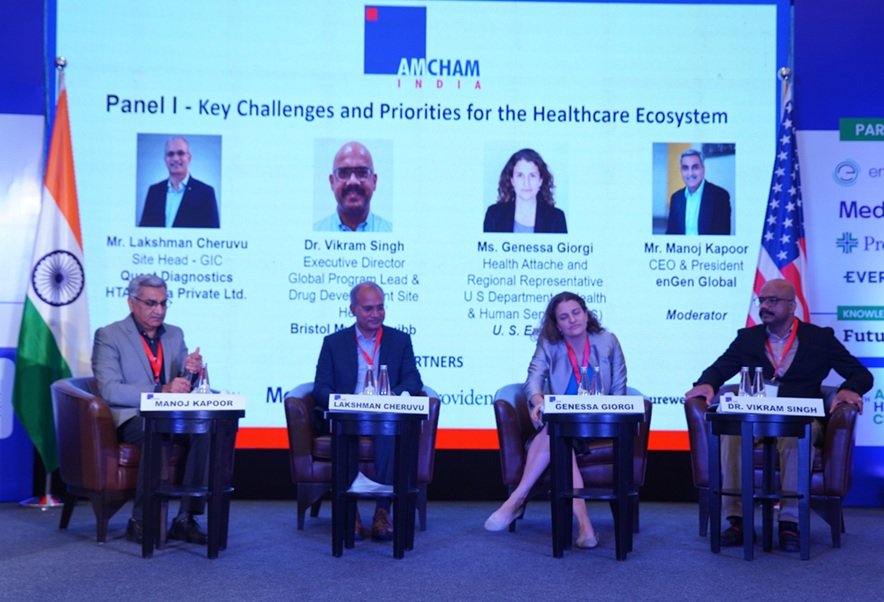
The first session, ‘Key Challenges and Priorities for the Healthcare Ecosystem,’ was moderated by Mr. Manoj Kapoor, President & CEO, enGen Global with Mr. Lakshman Cheruvu, Site Lead, Quest Diagnostics, Ms. Genessa Giorgi, Health Attache and Regional Representative, U.S. Department of Health & Human Services, U.S. Embassy, and Mr. Vikram Singh, Executive Director Global Program Lead & Drug Development Site Head, Bristol Myers Squibb. The session explored the growing U.S.–India partnership in healthcare, with a focus on innovation, clinical research, diagnostics, digital health, and precision medicine. Speakers highlighted the opportunity for greater collaboration to address common challenges and improve patient outcomes. India’s growing role in global clinical research and drug development, supported by its diverse patient population and expanding research capabilities, presents significant opportunities. Hyderabad is emerging as an important hub for clinical development. However, further progress is needed in regulatory efficiency, site readiness, patient enrolment, and clinical-trial processes. The discussion highlighted the potential of real-world data, AI, and advanced analytics to improve patient identification, site selection, and clinical-trial efficiency. Strengthening digital health infrastructure, longitudinal health records, registries, and data interoperability will be critical to fully realizing this potential.
Speakers also emphasized the importance of U.S.–India regulatory and research collaboration, including streamlined approval, and ethical-review processes, while maintaining high standards of safety and quality. Diagnostics and precision medicine were identified as important drivers of better healthcare outcomes. Advanced diagnostics can provide actionable insights to clinicians, empower patients with greater access to their health information, and support more targeted therapies. Greater collaboration between diagnostic companies, biopharma, healthcare providers, and technology organizations can further accelerate drug development and patient care. Overall, the session emphasized that stronger partnerships, digital transformation, high-quality health data, advanced diagnostics, and regulatory collaboration can help translate healthcare innovation into improved access, quality, and patient outcomes.
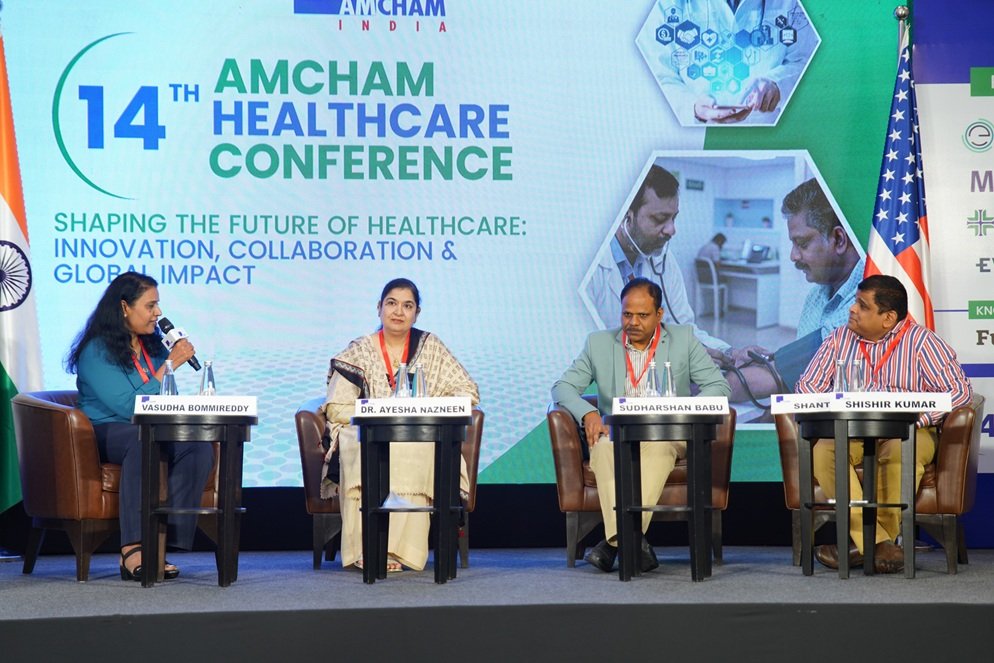
Session two, ‘India to the World: Innovative Solutions Addressing Healthcare Challenges,’ was moderated by Ms. Vasudha Bommireddy, GVP Engineering, Providence India with Dr. Ayesha Nazneen, COO, Apollo Health Axis, Mr. Shishir Kumar, VP Healthcare Life Sciences, Optum Advisory, Mr. Sudharshan Babu, Director Software & Systems, Cardiac Rhythm Management, Medtronic and Mr. Shanthan Ramasahayam, Sr. Vice President, Cotiviti. The discussion highlighted India’s growing potential to become a global healthcare innovation hub, with Hyderabad positioned as a key center for healthcare technology, clinical expertise, and innovation. A major focus was the need for a stronger, integrated healthcare ecosystem connecting providers, technology companies, start-ups, academia, government, payers, and medical-device organizations. A proposed Hyderabad healthcare innovation consortium could support collaborative problem-solving, solution development, clinical validation, and global deployment. AI and digital technologies were identified as key enablers of healthcare transformation, with applications across population health, preventive care, clinical decision-making, remote monitoring, healthcare operations, and patient engagement. The panel emphasized that innovation should be problem-led and outcome-focused, rather than technology-led.
The discussion also highlighted the shift from reactive to preventive and proactive healthcare, supported by telehealth, predictive analytics, remote monitoring, and digital care. Affordability, accessibility, reliability, and scalability remain essential, particularly for India’s diverse population and underserved communities. A key challenge is moving successful innovations from pilot projects to large-scale implementation. Solutions need to be repeatable, scalable, configurable, and supported by appropriate clinical evidence, data infrastructure, and regulatory frameworks. Responsible AI adoption will require clinical oversight, governance, auditing, and safety mechanisms, while high-quality healthcare data and stronger industry–academia–government collaboration will be critical for research and validation. Speakers stressed that technology alone is insufficient. A strong culture of innovation, supported by collaboration, entrepreneurship, hackathons, innovation champions, and continuous capability building, is essential for sustained transformation. Hyderabad has an opportunity to evolve from a technology and services hub into a global healthcare innovation and transformation hub. Achieving this will require an integrated ecosystem that can identify real healthcare challenges, develop, and validate solutions, and scale successful innovations from India to global markets. Develop healthcare solutions in India, for India, and ultimately for the world.
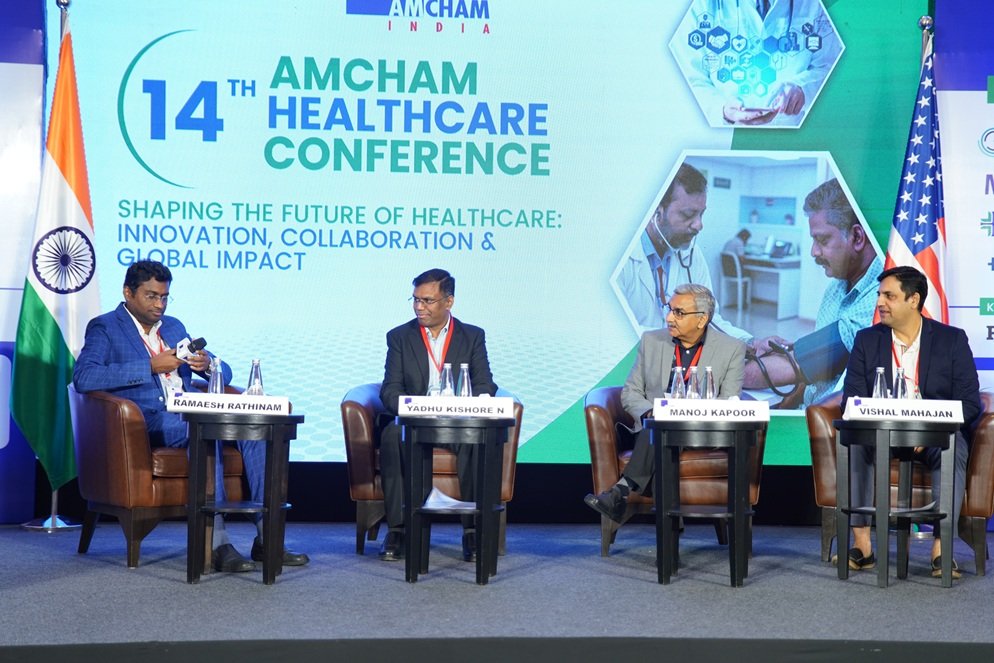
The third session themed ‘Translating Innovation into Impact at Scale’ was moderated by Mr. Ramaesh Rathinam, Sr. Director, Medtronic Engineering & Innovation Center with Mr. Manoj Kapoor, President & CEO, enGen Global, Mr. Vishal Mahajan, Sr. Director Technology, Carelon Global Solutions, and Mr. Yadhu Kishore N., Head HR, Evernorth Health Services. The discussion focused on the challenges and opportunities involved in scaling innovation, particularly AI and digital technologies, across the healthcare sector. A key theme was that innovation should not simply mean introducing new technology; it must be scalable, sustainable, and capable of solving real healthcare problems. Speakers emphasized the importance of taking a holistic approach to healthcare. Patient outcomes are influenced not only by medical conditions but also by factors such as access to food, transportation, mental health support, and timely care. Technology and AI can help identify and close these gaps, improve patient experiences, reduce costs, and support better clinical outcomes. Another major focus was trust and workforce readiness. Successful implementation requires collaboration between business, technology, healthcare professionals, and employees. AI should be used to augment human capabilities rather than simply replace people. Employees need to be involved in pilot programs, provided with appropriate training and reskilling opportunities, and given a clear understanding of how technology will support their work.
The discussion also highlighted the importance of having a structured innovation process. Organizations should establish clear objectives, measurable success criteria, stage-gate reviews, and defined points at which an initiative should either be scaled or stopped. Healthcare innovation should be evaluated through multiple measures, including financial impact, clinical outcomes, patient or member experience, operational efficiency, and total cost of care. Overall, successful healthcare innovation depends on more than technology. It requires solving the right problem, building trust, preparing the workforce, protecting data and security, measuring meaningful outcomes, and creating strong collaboration across the organization.