Events
Past Events
Annual Leadership Summit: Towards the Resilient Supply Chain
Statutory AGM
AMCHAM held its 34th Statutory Annual General Meeting at The Oberoi, New Delhi on Thursday May 21st, 2026. Ms. Ranjana Khanna, Director General CEO, AMCHAM welcomed members and presented the Annual Report for 2025-26. She gave the highlights of 117 interactions organized pan India across sectors which included engagements with the Government of India, U.S. Mission representatives, interactive meetings at various levels between members, U.S. government officials, and state governments officials. Meetings were continuously held on aspects impacting U.S. industry in India. AMCHAM released 8 publications and submitted a large number of policy representations addressing ease of doing business challenges. She also mentioned that AMCHAM is preparing for its signature advocacy outreach, the annual door knock, to Washington, DC in June 2026. In his address, Mr. Sandip Patel, Chairman, AMCHAM and Managing Director, IBM India & South Asia, acknowledged the invaluable leadership and contributions of the National Executive Board and the Regional Chairpersons, whose commitment and vision have been instrumental in advancing AMCHAM’s objectives and initiatives across sectors. Mr. Sanjay Bhutani, Honorary Secretary & Treasurer, AMCHAM presented the financials and audited accounts for FY 2025-26. The financials and audited accounts, proposed by Mr. Ajay Vij, Senior Country Managing Director, Accenture in India, and seconded by Mr. Mandeep Singh Kumar, Vice President & Managing Director, Medtronic, India Subcontinent Countries (ISC) were passed by members. Appointment of M/s. Walker Chandiok Co. LLP, as the statutory and tax auditors of the American Chamber of Commerce in India for the financial year 2026-27, as per resolution by the National Executive Board in its meeting held on 27th February 2026, was ratified by members. This was proposed by Mr. Sanjay Bhutani, Managing Director – India & SAARC, Bausch & Lomb India and seconded by Mr. Arindam Banerrji, Country Head, India, State Street Corporate Services Mumbai. The composition of the National Executive Board was announced. Members of the National Executive Board 2026-27 were congratulated and requested to attend at least two board meetings in person. Mr. Michael Fernandez, Vice Chairman, AMCHAM and India Country Head and South Asia Lead, Lockheed Martin welcomed the members of the newly constituted NEB and sought their leadership and cooperation in furthering the objectives of AMCHAM. Mr. Salil Gupte, Immediate Past Chairman AMCHAM and President, Boeing India & South Asia, shared a vote of thanks to all present.
Inaugural Session
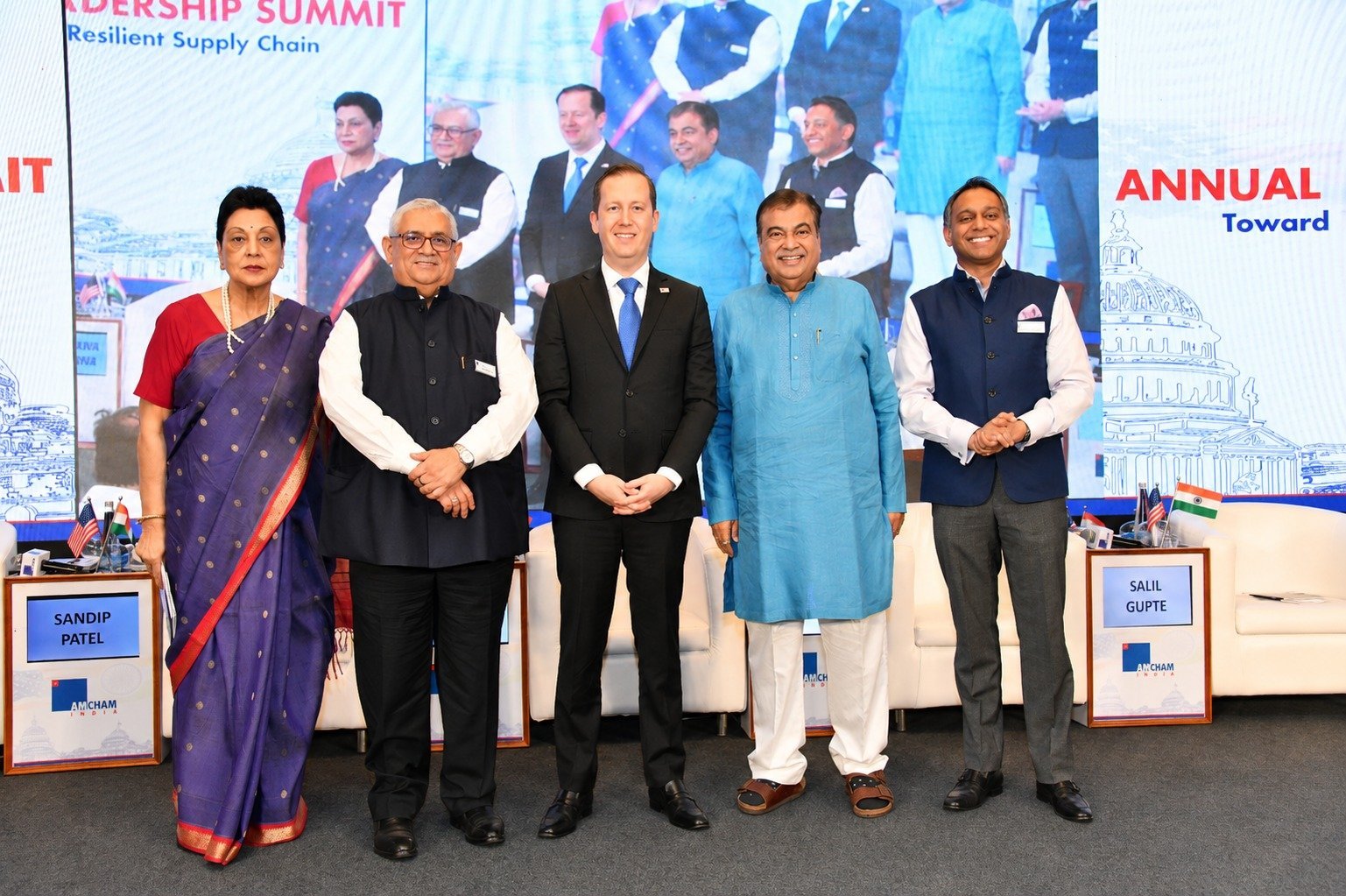
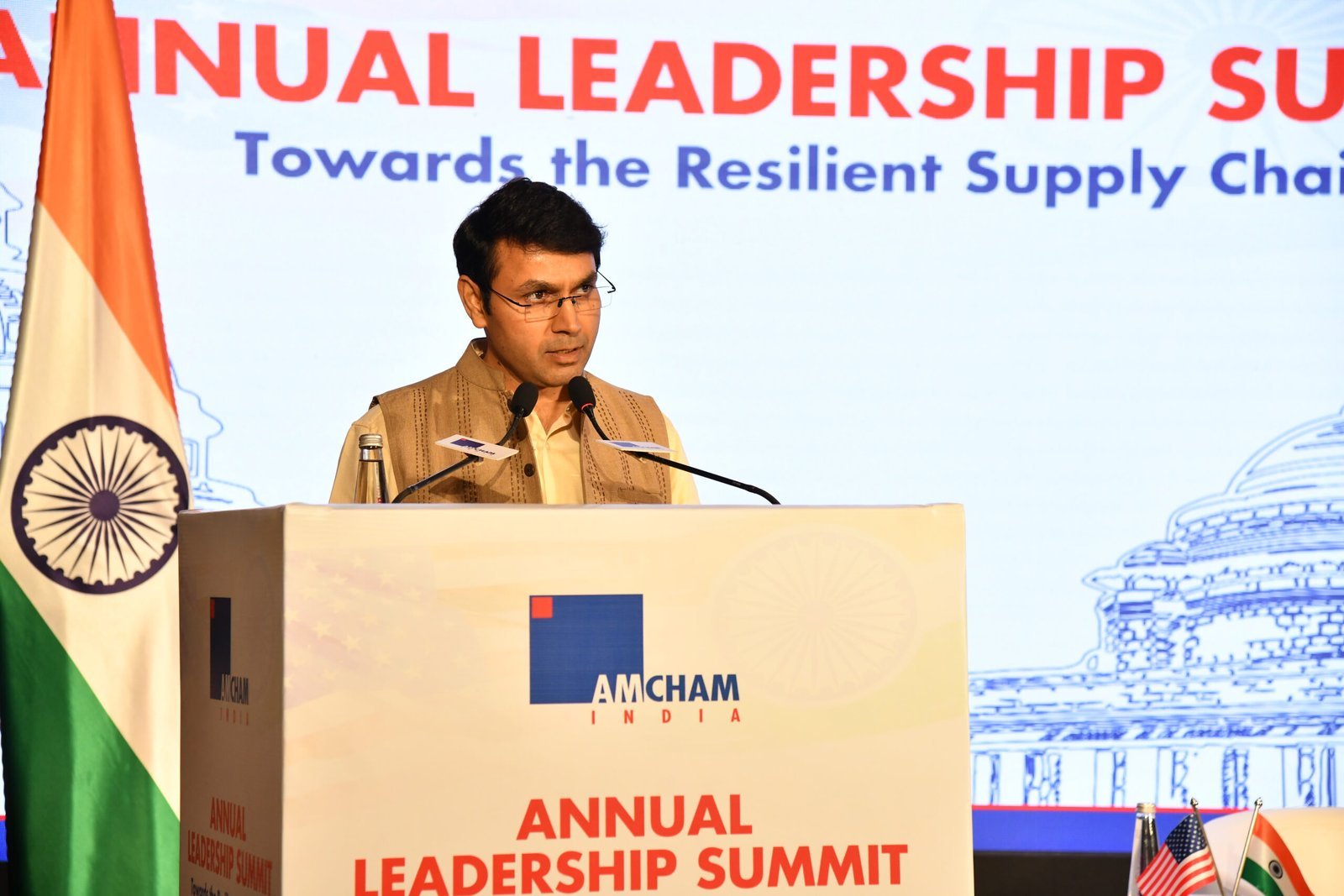
Ms. Ranjana Khanna, Director General CEO, AMCHAM, welcomed members and guest speakers to the Annual Leadership Summit themed ‘Towards the Resilient Supply Chain.’ Mr. Sandip Patel, Chairman, AMCHAM and Managing Director, IBM India & South Asia, in his opening remarks, highlighted the growing need for resilient supply chains supported by strong cyber security frameworks, sovereign data platforms, and trusted digital infrastructure. In his keynote address, Honorary President of AMCHAM, Ambassador Sergio Gor, spoke about the deepening U.S.-India strategic partnership, underscoring the focus on tangible outcomes and expanding collaboration in energy, artificial intelligence, biotechnology, aviation, advanced manufacturing, and research. He noted the remarkable growth in bilateral trade from nearly $20 billion to more than $220 billion over the last two decades and reiterated the shared ambition of progressing toward a $500 billion economic partnership by 2030.
Delivering the inaugural keynote address, Mr. Nitin Jairam Gadkari, Hon’ble Union Minister of Road Transport & Highways, Government of India, emphasized that India continues to remain one of the world’s fastest-growing economies and stressed the importance of deeper joint ventures and collaborations between Indian and U.S. companies. Highlighting India’s growing focus on sustainability and circular economy practices, he spoke about innovative road construction methods integrating waste plastic, bio-bitumen, and recycled materials into national infrastructure development. He further noted the significant transformation in India’s logistics ecosystem, with logistics costs reducing from nearly 16% toward single-digit levels through investments in expressways, access-controlled highways, tunnels, multimodal infrastructure, and improved transport efficiency across the country. The Minister reiterated that green mobility and alternative fuels would define the future of transportation, identifying hydrogen as a transformational fuel for India’s long-term energy security and mobility ambitions. He also highlighted ongoing efforts to reduce hydrogen production costs, scale bio-CNG projects utilizing agricultural residue, and accelerate India’s clean energy transition to address challenges such as urban pollution. Reflecting on the rapid growth of India’s electric mobility ecosystem, he described electric mobility as one of India’s major success stories, while also emphasizing the government’s focus on waterways and multimodal transport as critical pillars of future logistics growth. Concluding the session, Mr. Salil Gupte, Past Chairman, AMCHAM and President, Boeing India & South Asia, remarked that this is India’s moment to demonstrate resilience amid evolving geopolitical realities and contribute meaningfully toward shaping the future global economic order, while encouraging U.S. companies to actively participate in this transformational journey. The session closed with a video address by Senator Mark Warner, Co-Chair, Senate India Caucus.
Redesigning Resilience: Building Secure, Sustainable, and Smart Supply Chains for a Dynamic World
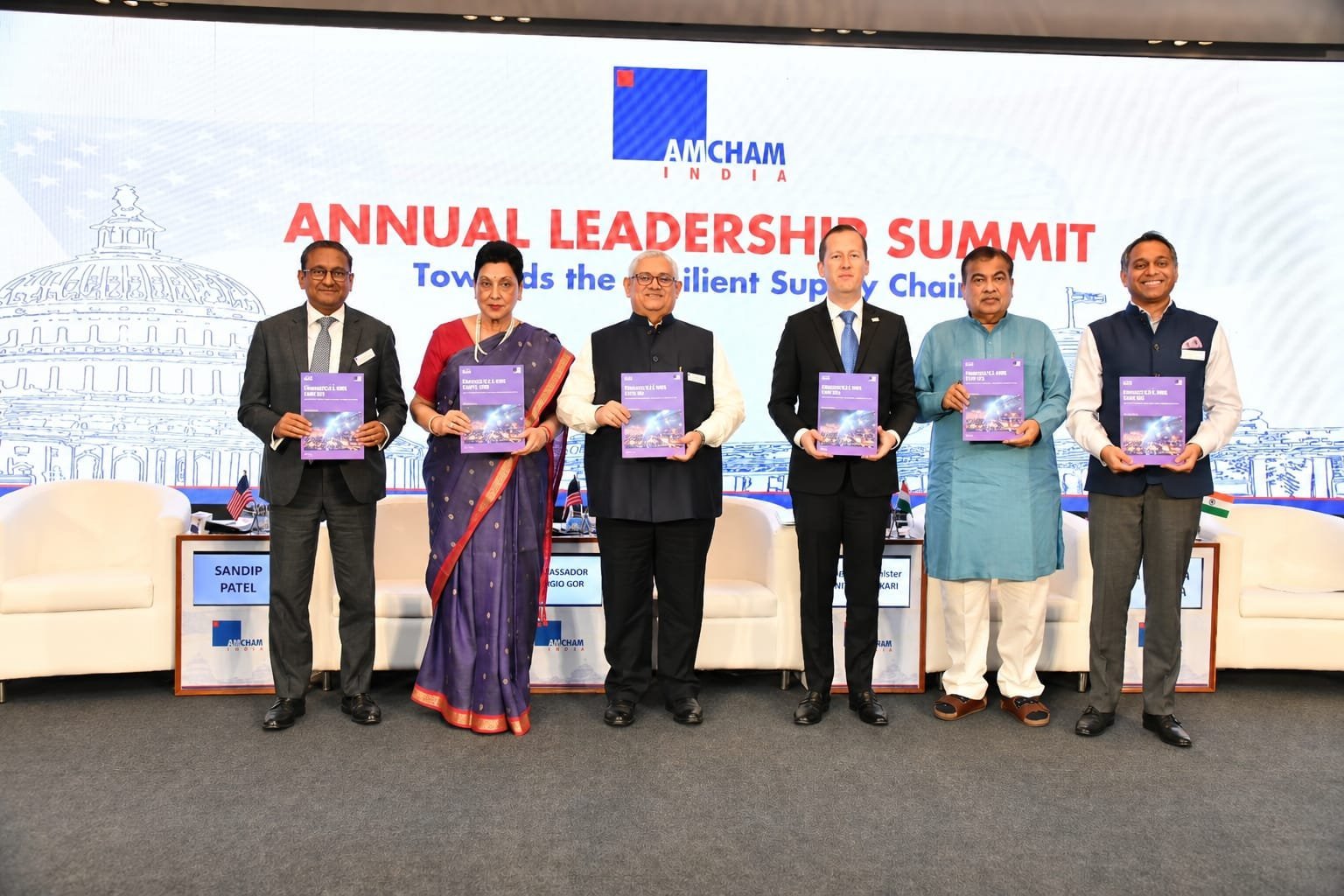
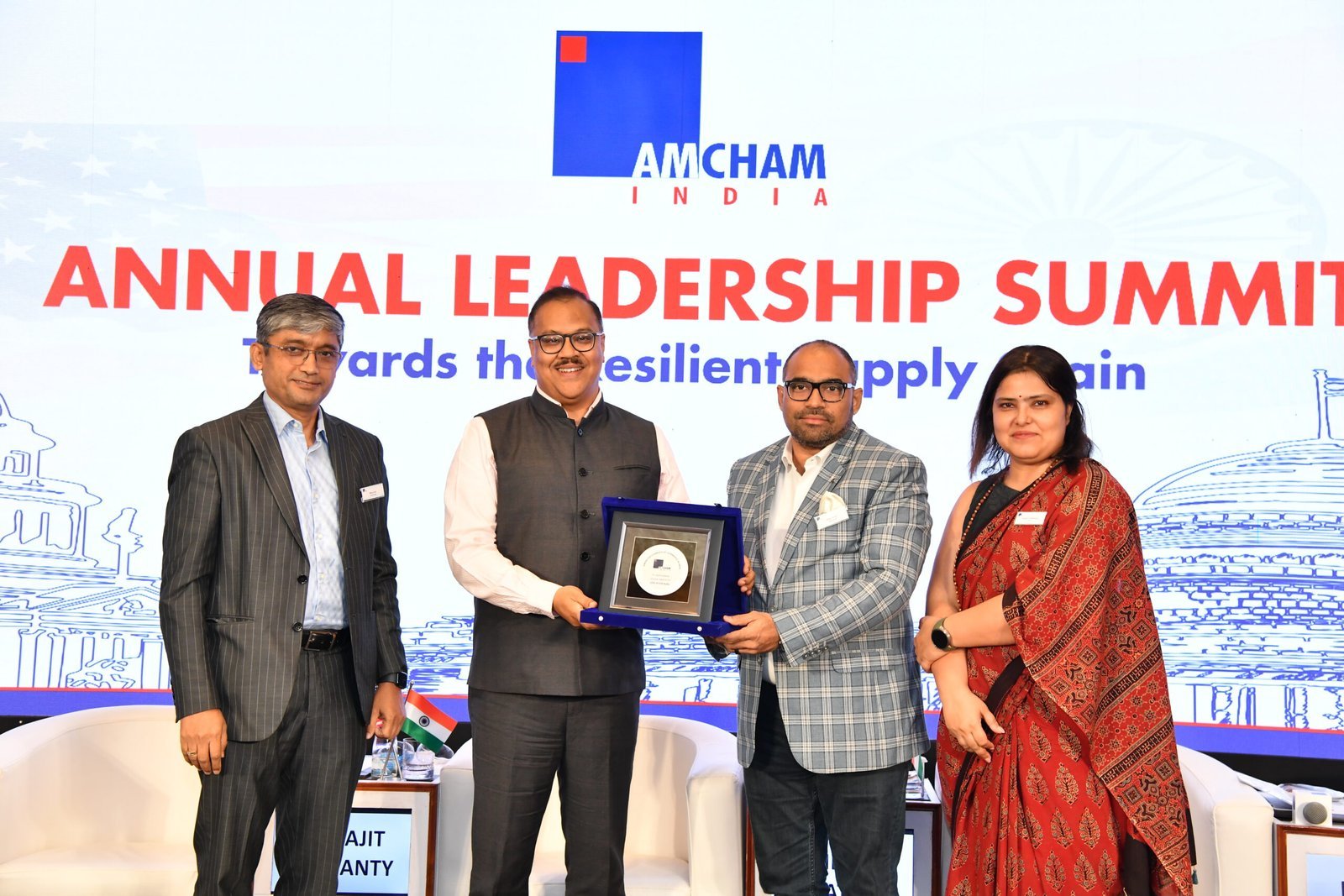
In his special address, Mr. Sushil Pal, Joint Secretary, Ministry of Electronics & Information Technology, Government of India, highlighted India’s emergence as a trusted global manufacturing and technology partner, driven by strong policy support, engineering talent, semiconductor ambitions, and rapid growth in electronics manufacturing and AI innovation and focused on the urgent need to reimagine global supply chains in the face of growing geopolitical uncertainty, technological disruption, and sustainability challenges. The industry panel was moderated by Mr. Siddhartha Ghosal, National Executive Board Member, AMCHAM and CEO & Country President, Dow India, with Mr. Sundeep Bajikar, Corporate Vice President, Corporate Strategy and Marketing, Applied Materials and Mr. Kishore Balaji, Executive Director – Government Affairs, IBM India/South Asia. Discussions emphasized that future supply chains must move beyond cost efficiency to prioritize resilience, diversification, trusted partnerships, and ecosystem-based collaboration between governments and industry. Panelists identified semiconductors, rare earth materials, energy infrastructure, and grid modernization as critical vulnerabilities and opportunities shaping the next generation of global supply chains. They underscored the importance of public-private partnerships, frictionless trade mechanisms, skilled human capital, and investment in clean energy and advanced manufacturing ecosystems. The discussion concluded with a shared vision of India playing a leading role in the future global technology landscape through resilient energy systems, next-generation semiconductor supply chains, and trusted international collaborations. AMCHAM, in collaboration with Applied Materials, released the whitepaper ‘Pax Silica: Chip to Grid.’
Fireside Chat
A fireside chat featured Mr. Piyush Goyal, Hon’ble Union Minister of Commerce & Industry, Government of India, in conversation with Mr. Sandip Patel, Chairman, AMCHAM and Managing Director, IBM India & South Asia and Mr. Salil Gupte, Past Chairman, AMCHAM and President, Boeing India & South Asia. The discussion focused on India’s emergence as a trusted global supply chain and innovation hub amid shifting geopolitical realities. The Minister highlighted over $60 billion in recent data center commitments and emphasized the growing strategic partnership between India and the United States, combining American innovation with Indian talent, scale, and reliability. Discussions centered on India’s transition from an assembly-based economy to one driven by design, R&D, IP creation, and advanced manufacturing, supported by initiatives such as Make in India, Startup India, and Digital India. The session also underscored India’s rapid digital transformation, including one of the world’s fastest 5G rollouts, the expansion of global capability centers, and the country’s clean energy and digital infrastructure advantages. Significant attention was given to strengthening MSMEs through certification support, technology upgradation, skilling, and timely payments, while initiatives like PM GatiShakti were presented as key to improving logistics and infrastructure efficiency. Concluding the discussion, the Minister outlined the vision of Viksit Bharat 2047, aiming to transform India into a developed nation with strong global economic integration and a projected per capita income of $20,000.
Cyber Security for Critical Infrastructure
In his special address, Dr. Gaurav Gupta, Scientist F, Cyber Security, Ministry of Electronics and Information Technology, Government of India, highlighted the transformation in the cyber threat landscape and increased risks for cyber physical systems, fuelled by frontier model capabilities, unbreakable encryption and limited technologies for data extraction, requiring an urgent need for digital forensics. The industry panel was moderated by Mr. Michael Fernandez, Vice Chairman, AMCHAM and India Country Head and South Asia Lead, Lockheed Martin with Mr. Abhishek Lahiri, Vice President & Head of Government Affairs, India & South Asia, Mastercard and Mr. Bhanu Saini, Director & Head of Public Policy and Government Affairs, India, Palo Alto Networks. The discussion focused on India’s digital ecosystem as an opportunity provider and innovation driver that is increasingly exposed to risks. A robust approach to securing systems would entail capacity building for MSMEs while balancing compliance costs. Appropriate safeguards like increased security investments, evolution of current reactive policy, and operational frameworks to proactive and autonomous defence, would be necessary strength building measures. Ultimately, policy makers must address concerns through governance frameworks clarifying AI use in critical and financial sectors and maintaining human oversight and control for autonomous counter-attack capabilities.
Future-Proofing India’s Data Centers: Resilient Supply Chains and Opportunities
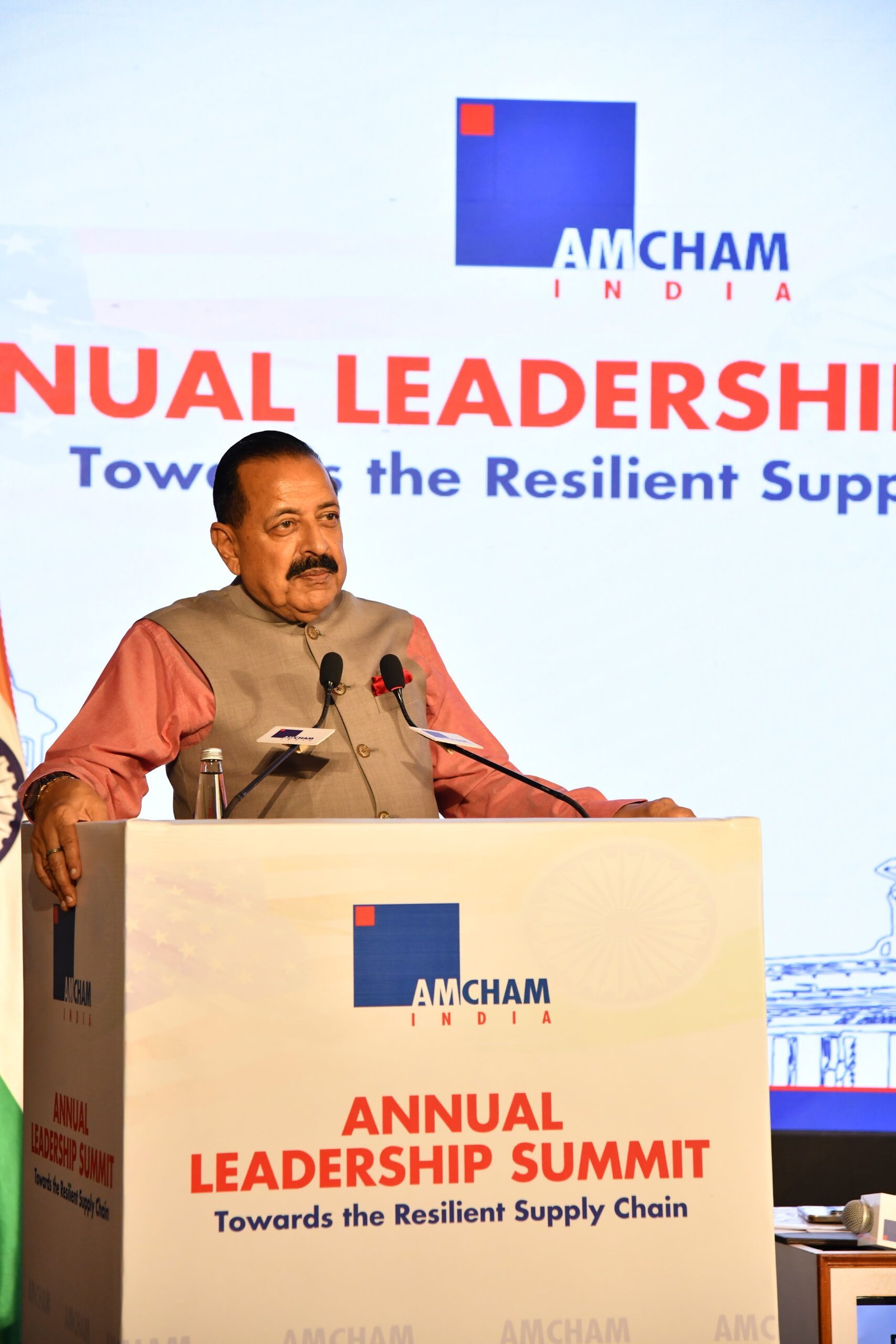
The session highlighted the growing importance of data centers as the backbone of India’s digital economy and critical infrastructure for future technological growth. In her welcome remarks, Ms. Ranjana Khanna, Director General CEO, AMCHAM, noted that India is at the cusp of major technological disruptions, with digital infrastructure emerging as a key engine of growth. She emphasized the opportunity for India to build a large-scale data center ecosystem and referred to the proposal for a dedicated ‘Data Center Mission’ to the Government of India. In his opening remarks, Mr. Sandip Patel, Chairman, AMCHAM and Managing Director, IBM India & South Asia, observed that data centers are becoming central to India’s economic transformation. He highlighted the need for India to align its expanding data center ecosystem with global best practices while scaling up capacity to meet future requirements. In the keynote address, Dr. Jitendra Singh, Hon’ble Union Minister of State (I/C) for Science & Technology and Earth Sciences, Minister of State for the Prime Minister’s Office and Personnel, Public Grievances & Pensions, Minister of State for Department of Atomic Energy and Department of Space, Government of India, highlighted the strong potential for India to develop a globally competitive and future-ready data center ecosystem. He stated that the sector is projected to generate substantial employment opportunities in the coming years and reiterated the importance of the proposed Data Center Mission. The Minister stressed the need for collaboration among government, industry, institutions, and civil society to strengthen the ecosystem. He also referred to enabling government measures, including support through Reserve Bank of India (RBI) policy initiatives relating to the sector, and emphasized that private sector investment would be critical for sustained growth. He identified two key pillars for the future of India’s data center ecosystem: strong public-private partnership and an enabling policy framework.
In his special address, Mr. Satyajit Mohanty, Joint Secretary, Ministry of Defence, Government of India, underlined the strategic significance of resilient digital infrastructure. He described data centers as complex “systems of systems” that require strong resilience against vulnerabilities such as ransomware and cyber threats. Stressing the importance of data sovereignty, he called for greater localization of data and global capability operations (GPOs) in India. He also highlighted ongoing government initiatives such as the Quantum Mission, Semiconductor Mission, and AI Mission, and emphasized the importance of integrating renewable energy, AI-enabled power management, and robust power grids into the DC ecosystem. Mr. Nilam Patel, Chairman – Data Centers Committee, AMCHAM and Managing Director, India Operations, S&P Global, moderated the panel session with Mr. Manoj Paul, Managing Director, Equinix India and Ms. Dipakshi Mehandru, Director – Government Affairs, Intel. The session highlighted the sharp increase in demand for data centers due to the growth of artificial intelligence and driven equally by hyperscalers and enterprises. The discussion underscored India’s significant cost advantage and improved delivery timelines, position the country as an attractive destination for building data center infrastructure. India has potential to build data centers catering to global demand hence speakers noted the critical role of reliable power infrastructure in enabling growth.
Skills for Tomorrow: Aligning Policy, Practice, and Pedagogy
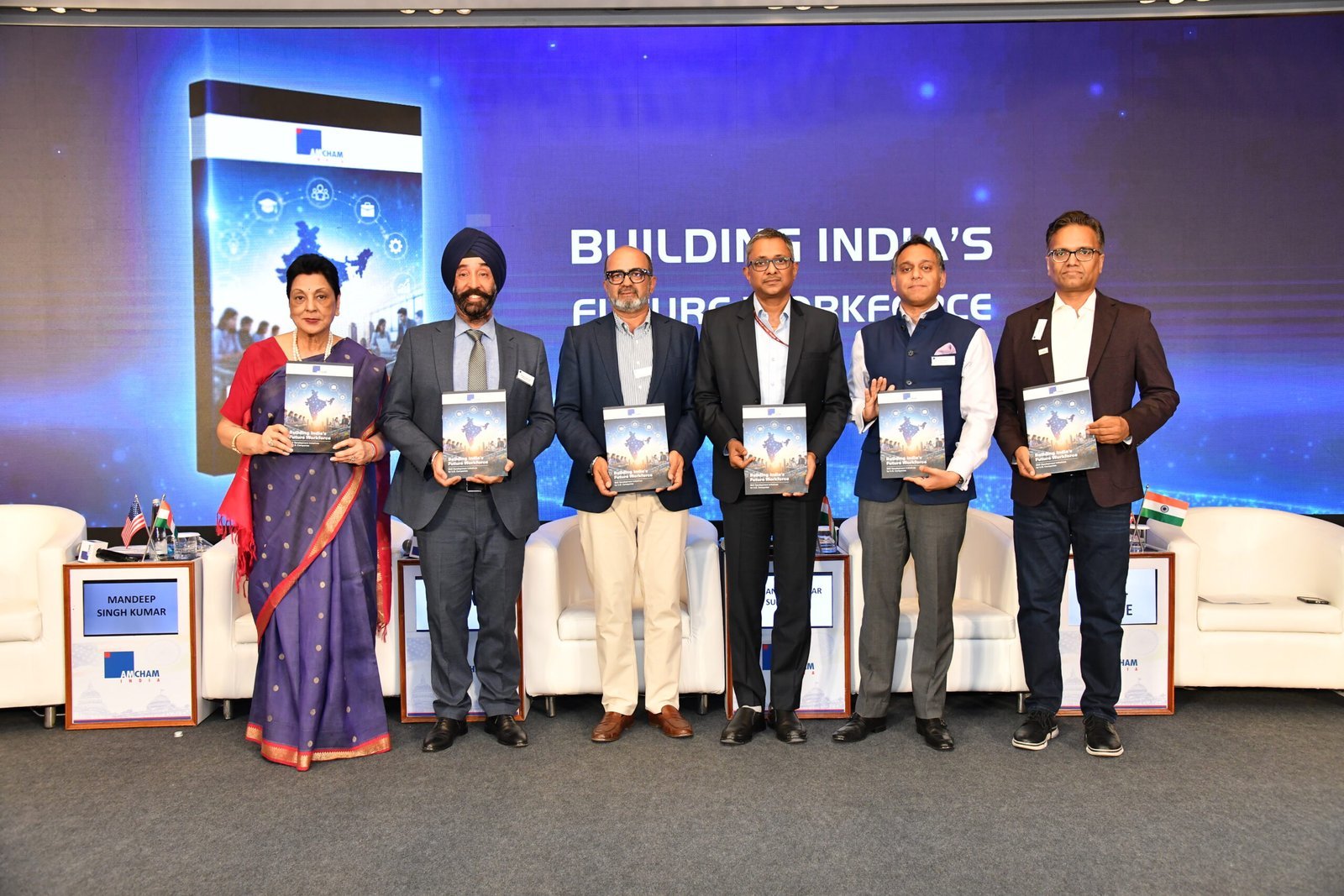
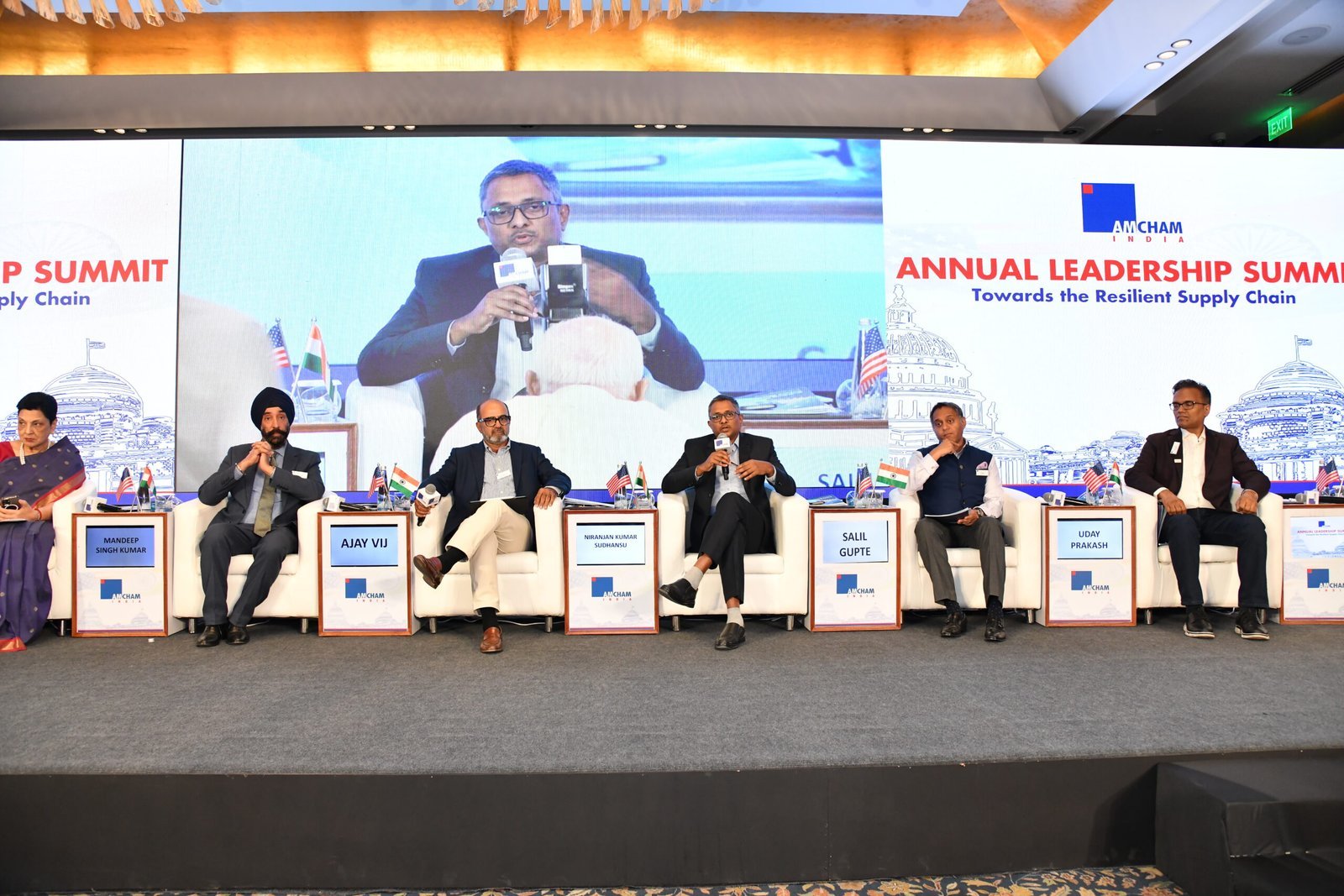
Ms. Ranjana Khanna, Director General CEO, AMCHAM, welcomed speakers for the session: Mr. Niranjan Kumar Sudhansu, Additional Secretary, Ministry of Skill Development & Entrepreneurship, Government of India, Mr. Salil Gupte, Past Chairman, AMCHAM, President, Boeing India & South Asia, Mr. Mandeep Singh Kumar, National Executive Board Member, AMCHAM and Vice President & Managing Director, Medtronic, India Subcontinent Countries (ISC), and Mr. Uday Prakash, VP – Strategy & Implementation, India, Herbalife. It was moderated by Mr. Ajay Vij, National Executive Board Member, AMCHAM and Senior Country Managing Director, Accenture in India. The panel discussed on bridging India’s skilling gap amid rapid technological change and evolving global supply chains. Speakers emphasized that future workforce readiness will require stronger alignment between government, industry, and academia to identify emerging skill needs and create industry-relevant training frameworks. Discussions highlighted the Government of India’s efforts to modernize the skilling ecosystem through apprenticeship reforms, industry partnerships, faculty upskilling, integrated skilling pathways, and support for private skilling institutes and centers of excellence. Industry participation was identified as critical in scaling workforce development and improving formal skill certification. Speakers stressed that human capabilities such as trust, adaptability, empathy, and continuous learning will remain essential, reinforcing the need for an “AI-human amalgamation” approach to skilling. The panel also emphasized the importance of making skilling aspirational and accessible across tier 2, tier 3, and rural India. The discussion concluded with an appeal to industry to move beyond being consumers of talent to becoming active creators of future-ready talent for India and the world. AMCHAM released its in-house publication, Building India’s Future Workforce: Skill Development Initiatives by U.S. Companies, which highlighted how U.S. companies have contributed to workforce transformation through skilling, apprenticeships, digital training, and academic partnerships. The report showcased the growing role of U.S. industry in supporting India’s demographic dividend, with nearly 10 million individuals reached through initiatives focused on AI, cyber security, cloud computing, and other future-ready capabilities.
Advancing the U.S.-India Trade and Economic Partnership
Ms. Ranjana Khanna, Director General CEO, AMCHAM India gave welcome remarks. Mr. Darpan Jain, Additional Secretary, Department of Commerce, Ministry of Commerce & Industry, Government of India, in his special address, spoke about the immense untapped potential of the U.S.-India economic partnership, noting that while India’s exports to the U.S. reached nearly $90 billion, India still accounts for less than 3% of total U.S. imports. He highlighted significant growth opportunities across sectors such as engineering goods, chemicals, plastics, pharmaceuticals, and auto components. Describing the relationship as highly complementary, he stated that the U.S. brings strengths in innovation, advanced technologies, and high-end manufacturing, while India offers skilled talent, cost-effective manufacturing, and growing capabilities in technology and services. He reiterated the shared ambition of expanding bilateral trade from $250 billion to $500 billion. Mr. Jain positioned India as a strategic manufacturing and export hub, supported by its expanding network of FTAs and strong domestic growth trajectory. He highlighted major economic reforms—including GST, tax rationalization, labour reforms, and digital public infrastructure—as key drivers improving ease of doing business and attracting global investment. He also emphasized ongoing progress in bilateral trade negotiations, including tariff reductions and efforts to address non-tariff barriers through standards harmonization and regulatory alignment. He stressed that deeper collaboration across AI, semiconductors, energy, and critical technologies supported by frameworks such as TRUST and QUAD will strengthen resilient supply chains and further elevate the U.S.-India strategic partnership.
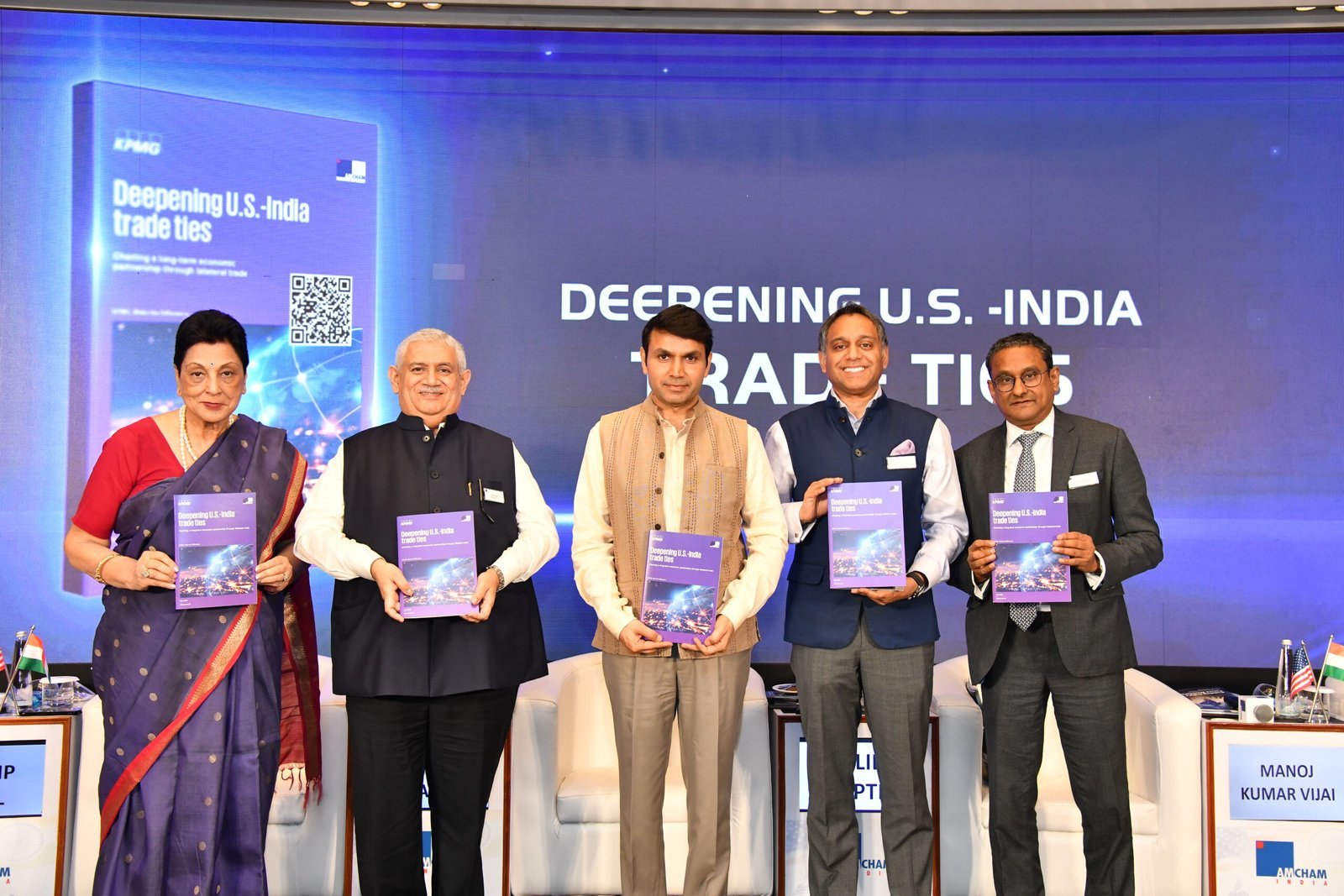
Mr. Manoj Kumar Vijai, Non-Executive Chairman, Office Managing Partner – Mumbai & Head – Risk Advisory, KPMG in India, gave an overview of the AMCHAM – KPMG white paper ‘Deepening U.S-India Trade Ties’ which was released during the session. He highlighted the strong growth in U.S.-India trade, with India’s exports to the U.S. reaching $87.3 billion in FY26 and a shared ambition to achieve $500 billion in bilateral trade by 2030. He emphasized key opportunities in supply chains, digital and advanced manufacturing, and stressed the need for stronger trade frameworks, investment flows, and regulatory alignment to accelerate this growth. Mr. Sandip Patel, Chairman, AMCHAM and Managing Director, IBM India & South Asia, in his remarks spoke about the evolution of the U.S.-India corridor beyond trade into a broader partnership driven by trusted technology, resilient supply chains, talent collaboration, and co-innovation. He also shared views on how India is transitioning from a talent hub to a strategic capability partner, with strong opportunities in resilient and digital supply chains, AI-driven systems, and innovation-led ecosystems supported by deeper industry investment and collaboration. In his concluding remarks, Mr. Salil Gupte, Past Chairman, AMCHAM and President, Boeing India & South Asia, expressed his appreciation to speakers and delegates for their valuable contributions to the discussion on advancing the U.S.-India trade and economic partnership.
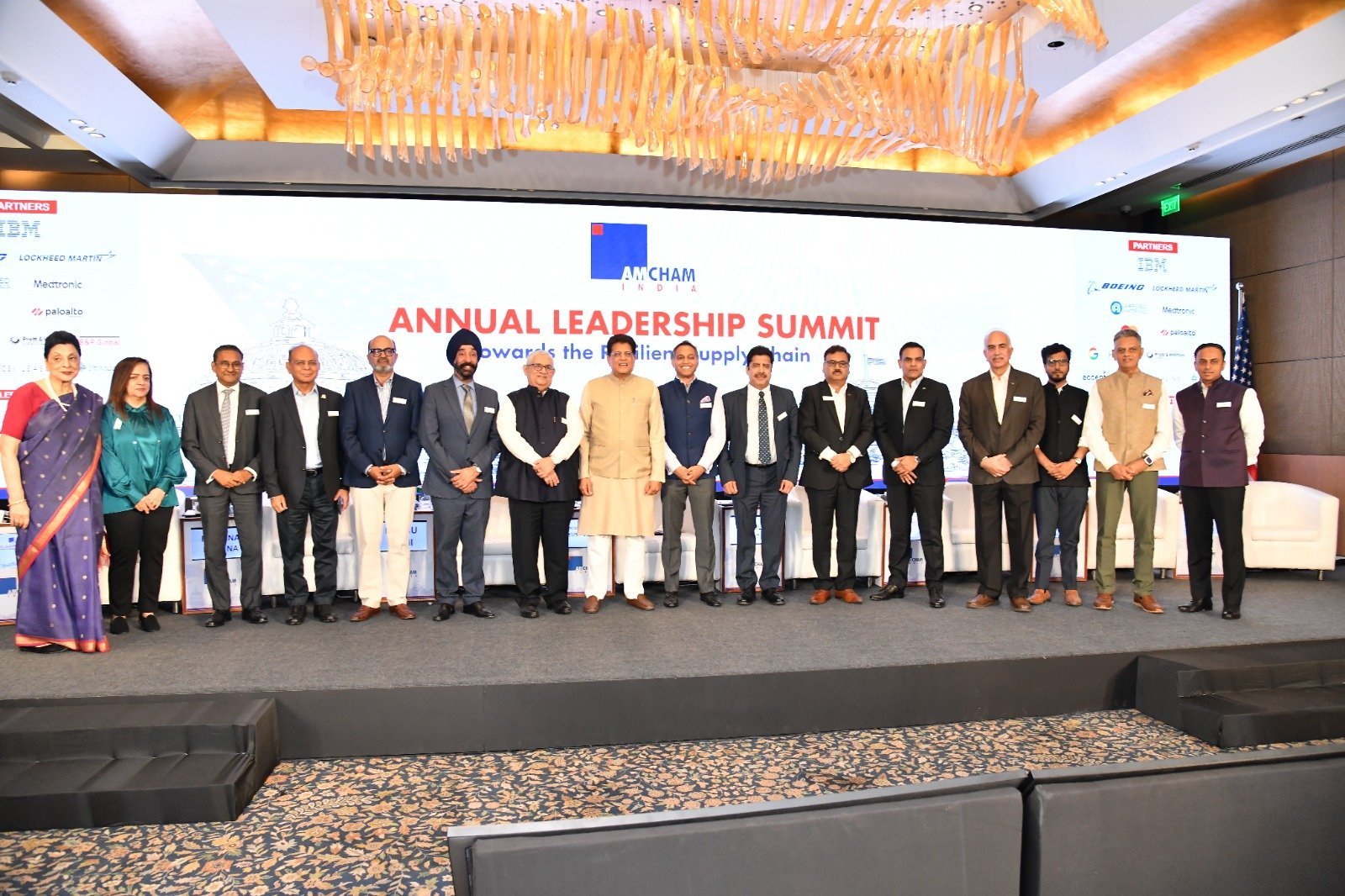
AMCHAM’s Annual Leadership Summit was made possible through the generous support of the following partners: IBM India, Boeing India, Lockheed Martin India, Applied Materials India, India Medtronic, Mastercard India Services, Palo Alto Networks (India), Google India, Herbalife International India, Pratt & Whitney, United Technologies Corporation India, S&P Global, Accenture Solutions, CSI Leasing Inc., Providence Global Center, LLP, and knowledge partner: KPMG Assurance and Consulting Services LLP.